This case presents a minimalist, whole‑house design. Let’s take a look at it together with BOSNIE’s editor!
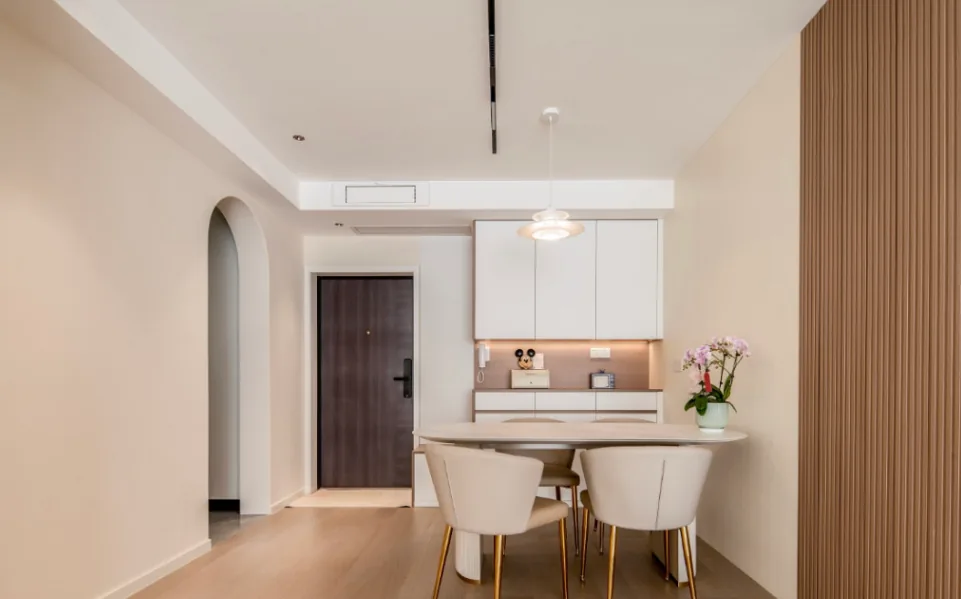
To the east of the entrance door is a set of tall-and-low cabinets: the lower section serves as a shoe-changing stool and also holds everyday footwear, while the space above it conveniently accommodates the light switch.
The living room’s TV-wall cabinet features a floating design; this not only extends the distance between the sofa and the TV, but also allows a floor‑cleansing robot to operate underneath, making daily maintenance more convenient.
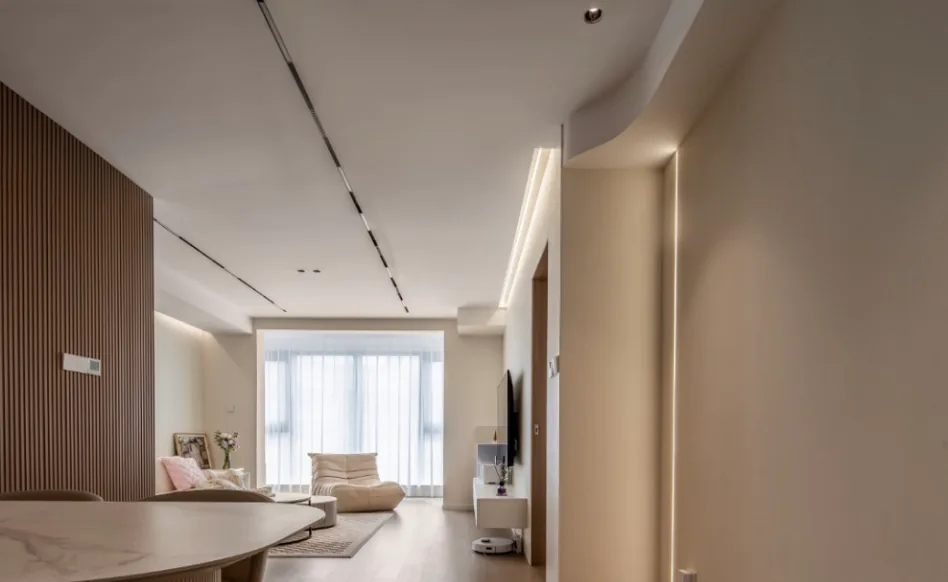
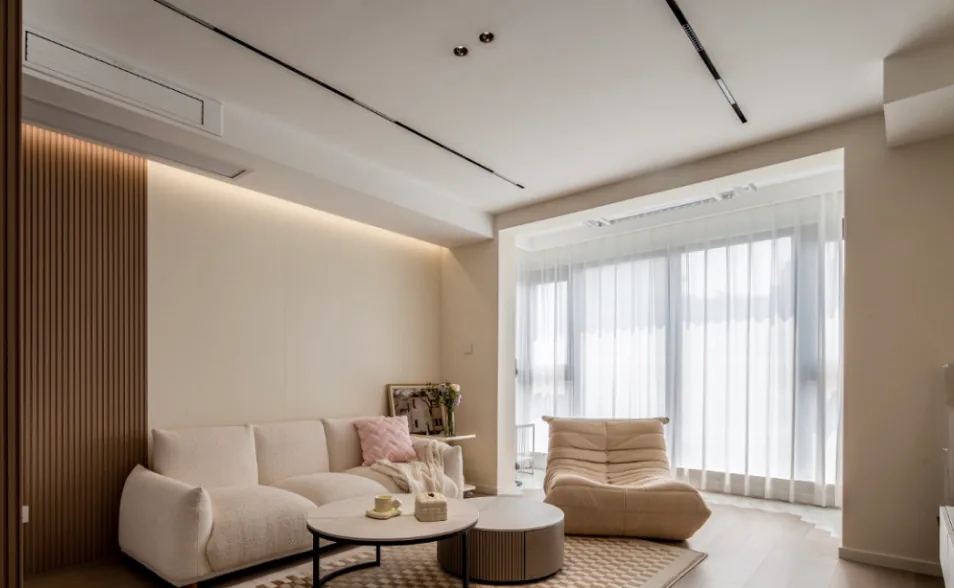
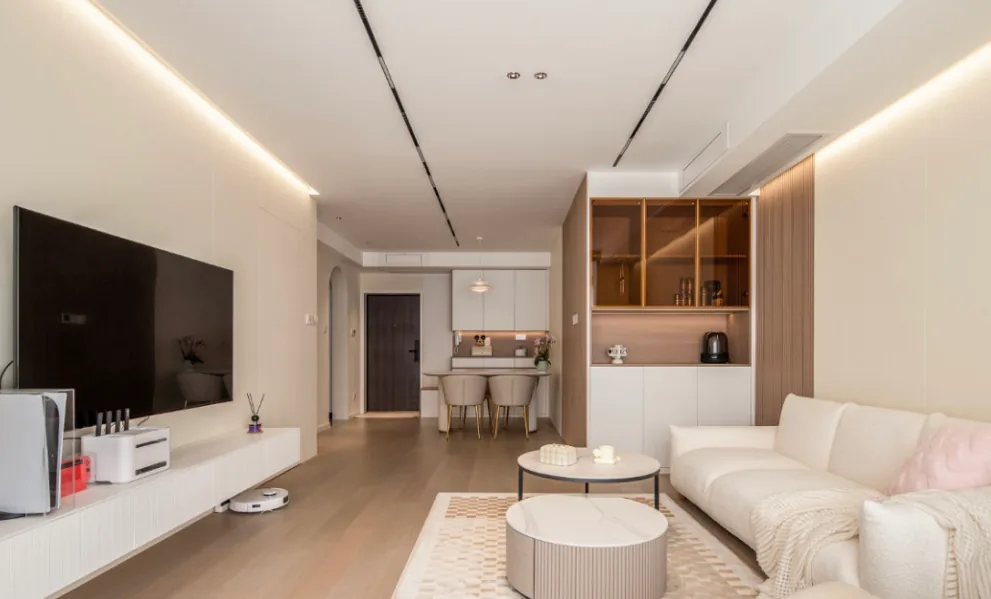
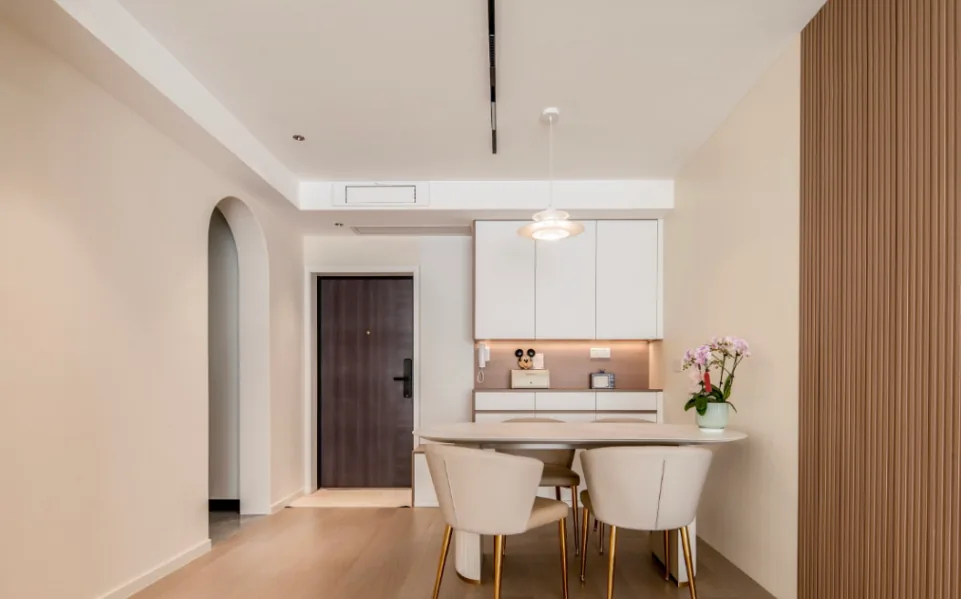
In the dining area, storage along the entry‑side wall takes the form of tall-and‑low cabinets: the lower units supplement the shoe cabinet, the countertop provides additional space for small appliances, and the upper cabinets can hold miscellaneous items. The dining table and chairs feature striped legs that echo the lines of the wall‑mounted hidden doors.
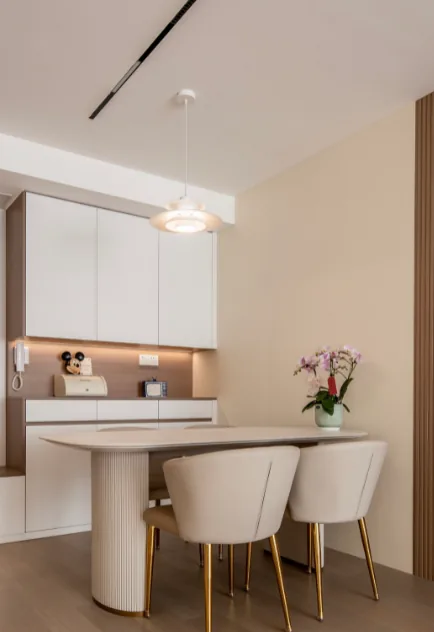
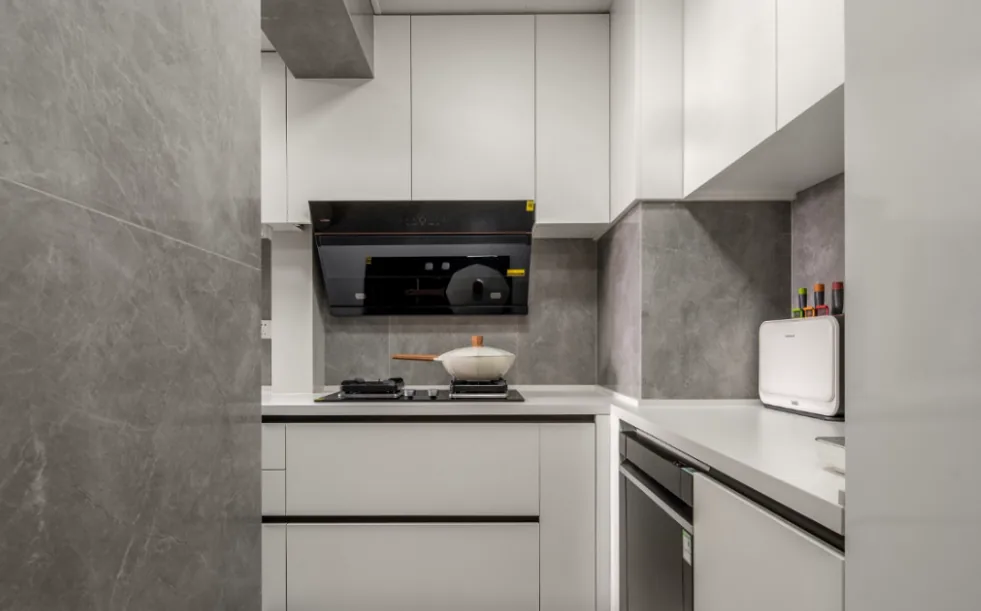
The kitchen countertop is ample enough to meet everyday cooking needs.
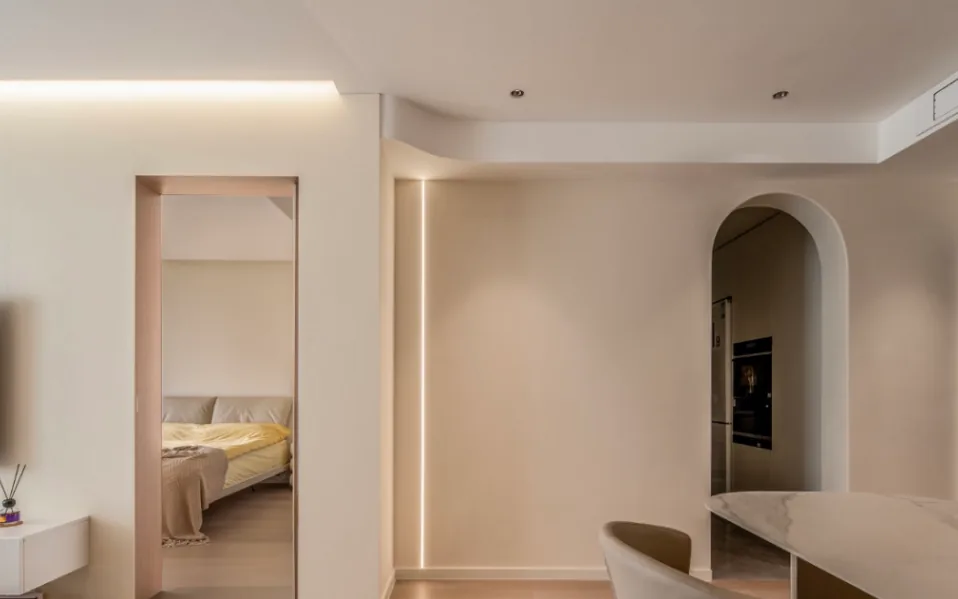
The master bedroom incorporates a hidden door, which visually extends the living room’s TV backdrop, lending the wall a more spacious and imposing presence—while subtly shifting the focus to highlight the curved archway on the north side.
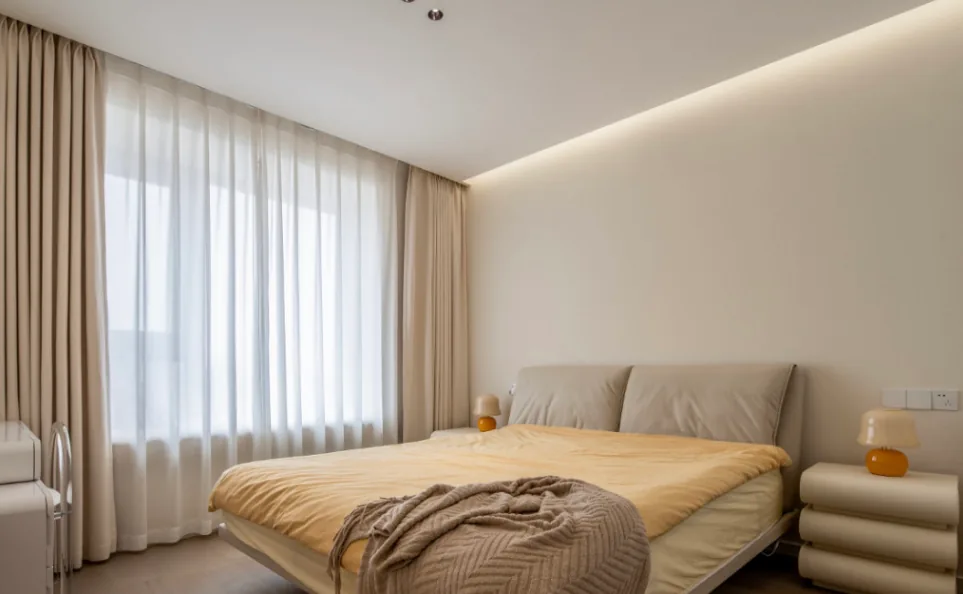
The master bedroom employs several shades of yellow—on the curtains, wall paint, bedside tables, and even the bed linens—paired with 3,500K warm‑tone lighting, infusing the compact space with a generous sense of warmth and comfort.
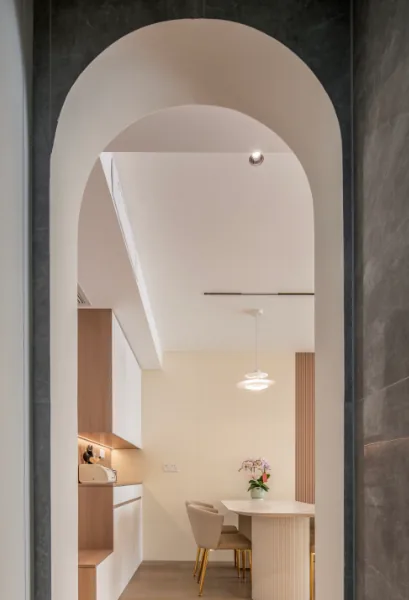
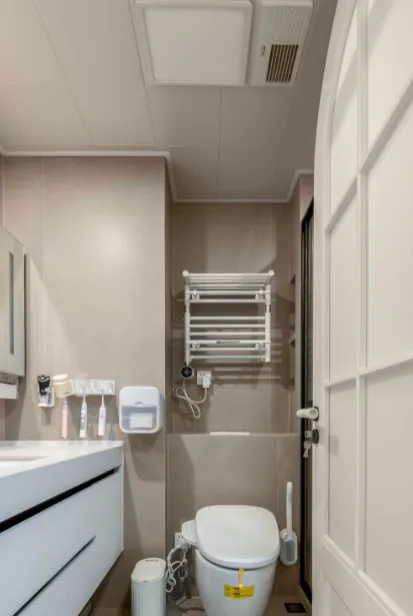
The bathroom’s arched doorway echoes the arched motif in the hallway; passing through these two arches each day enhances the room’s French‑style ambiance.
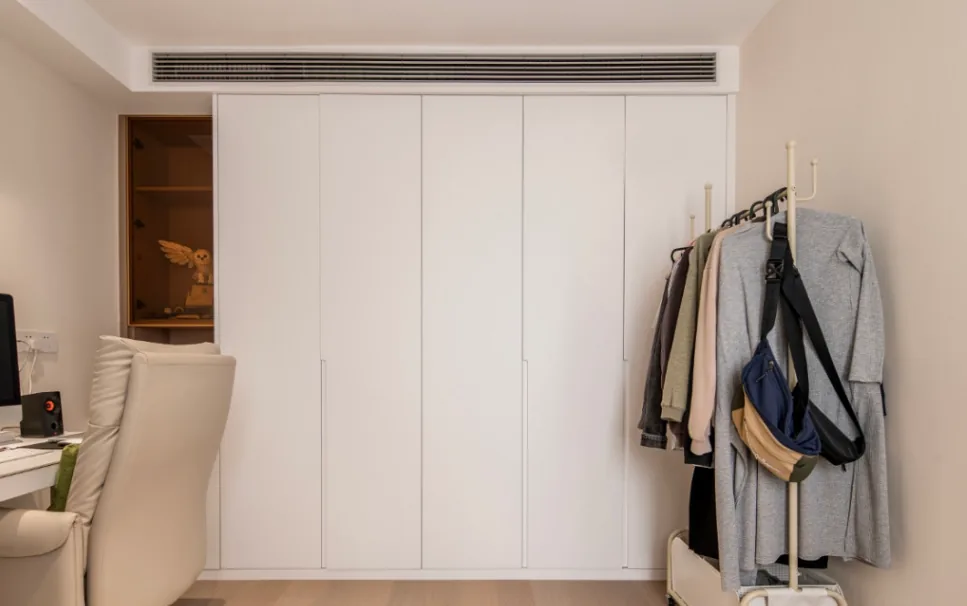
For the study, we installed hexagonal tiles that seamlessly connect with the living room flooring, achieving both practical functionality and a cohesive spatial flow.
That concludes our introduction to this minimalist, whole‑house design. If you enjoyed it, feel free to leave a comment and share your thoughts with BOSNIE’s editor!