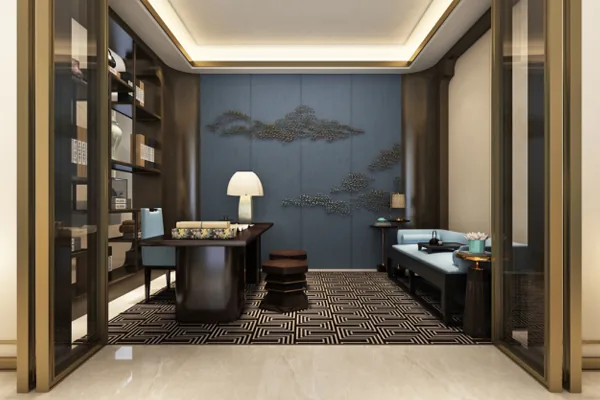
This case showcases a full‑house design in the New Chinese style. Let’s take a look together!
The New Chinese style draws on the essence of traditional Chinese aesthetics, infusing it with modern sensibilities and fresh ideas. It not only aligns more closely with contemporary tastes but also retains the distinctive charm of Chinese design.
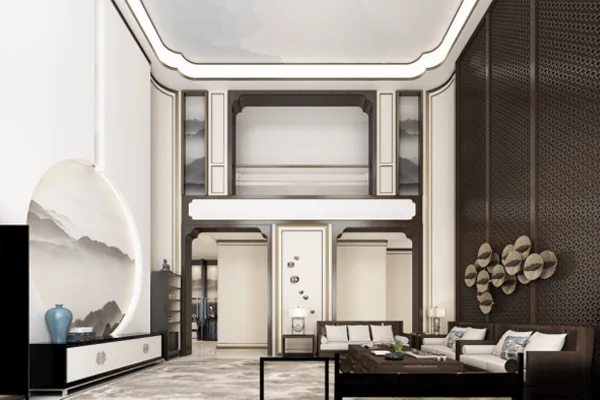
Far from being a mere accumulation of traditional elements, the New Chinese style emerges from a deep understanding of cultural heritage, seamlessly blending modern and classical motifs to create pieces that resonate with today’s aesthetic preferences while preserving timeless Chinese elegance.
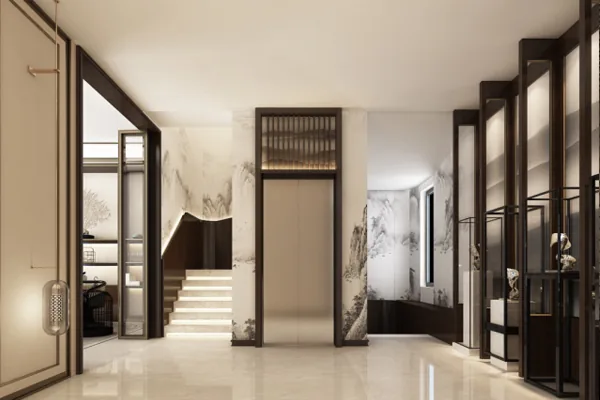
Another key concept in Chinese design is the interplay between emptiness and substance. In typical Chinese spaces, partitions are used not to divide the area completely, but rather as transitional elements—signaling, guiding, or subtly delineating different zones—often leaving spaces open and interconnected.
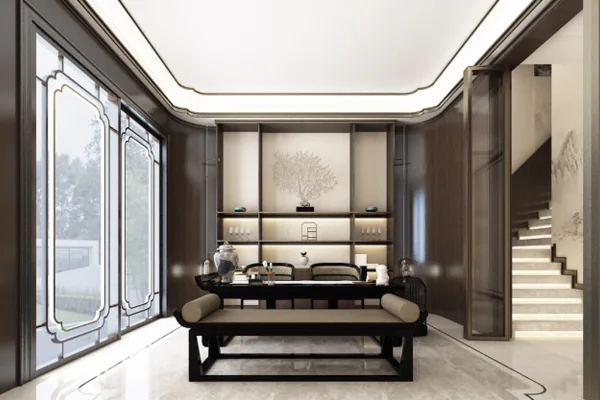
Screens, folding screens, antique shelves, and curtains serve not only to create subtle divisions without fully isolating spaces but also to enhance the decorative appeal of interiors. For instance, features like today’s popular accent walls or movable partitions were skillfully employed by the Chinese long ago.
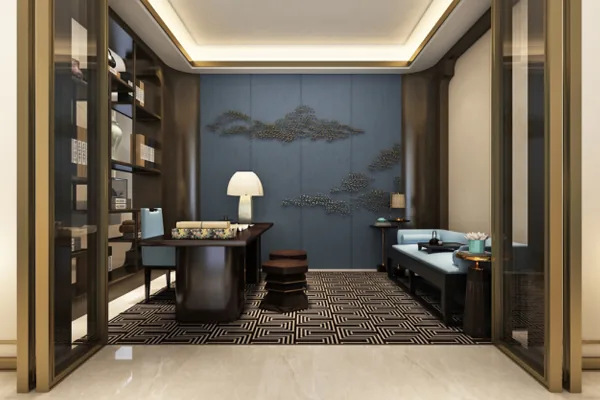
Similarly, techniques such as negative space on walls and furniture designs that balance solid forms with open, functional areas are all quintessential aspects of traditional Chinese interior design.
In the New Chinese style, “negative space” remains a central principle; for example, strategically incorporating blank areas in transitional or turning spaces can lend greater flexibility and fluidity to the overall layout.
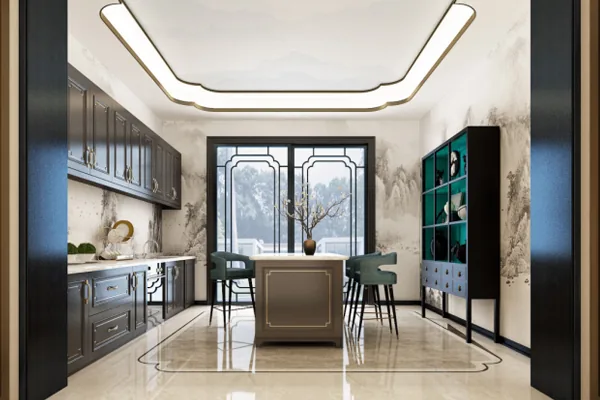
That concludes our overview of this full‑house design in the New Chinese style. If you enjoyed it, feel free to leave us a comment and join the conversation!