Whole-House Design Case | Crafting a Serene, Tranquil Lifestyle in the Heart of the City
Living Knowledge · 2023.05.03

Whole-House Design Case | Crafting a Serene, Tranquil Lifestyle in the Heart of the City

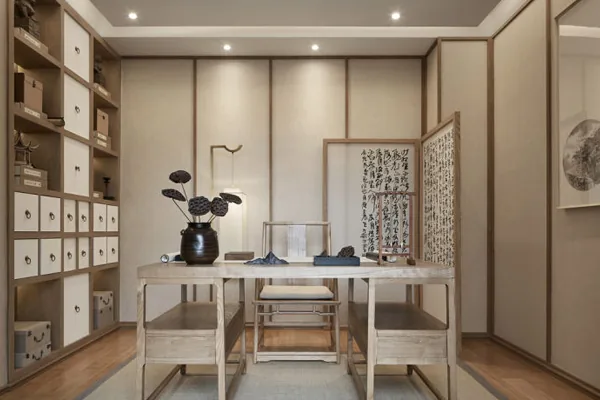
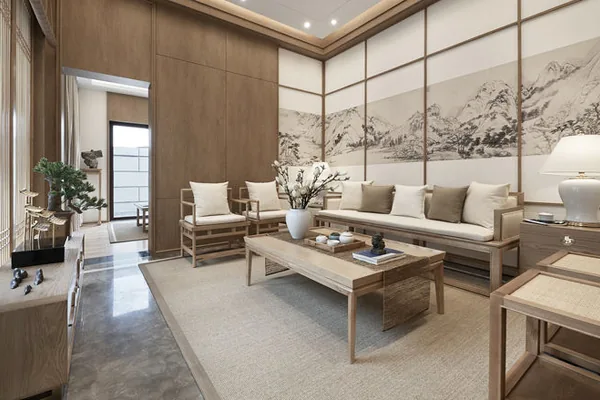
This project showcases a full‑house design in the New Chinese style. The designer has embraced an earthy, wood‑inspired aesthetic, creating a tranquil, poetic living space that feels both grounded and refined—right in the midst of the modern city. Let’s take a look at this inspiring case together! The living room features all‑wood furniture, with natural wood tones and textures that exude elegance and timelessness. The color palette is harmoniously unified, lending the space a soothing, peaceful ambiance. The overall tone is light and understated, while the ceramic table lamp adds a touch of artistic flair. The tea room and dining area are seamlessly integrated, enhancing practicality; the design maintains a simple, refined aesthetic, with natural wood hues and textures...

This project showcases a full‑house design in the New Chinese style. The designer has embraced a predominantly natural wood aesthetic, crafting a serene, poetic lifestyle that feels both timeless and deeply rooted in modern urban living. Let’s take a closer look at this inspiring case together!

The living room features all‑natural wood furniture, with earthy tones and elegant grain patterns that exude understated sophistication. The color palette is seamlessly integrated, creating a sense of comfort and tranquility.

The space is kept in light, refined hues, while the ceramic table lamp adds an artistic touch to the decor.
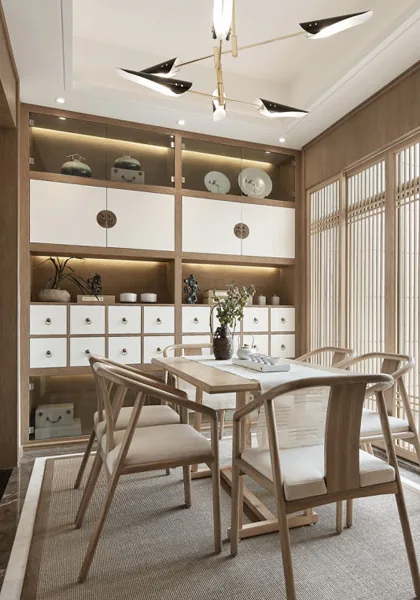
The tea room and dining area are combined for enhanced functionality, with a design ethos of simplicity and elegance. Natural wood tones and textures, handcrafted tie‑dye fabrics, and antique tea sets—all thoughtfully arranged—create an atmosphere suffused with the subtle fragrance of blossoms, gently narrating the story of the East.
The study employs a ceiling‑mounted lighting scheme without a central fixture, perfectly aligning with the overall decorative style. A combination of a flush‑mount ceiling light and a floor‑standing pendant lamp ensures ample illumination for writing and reading.
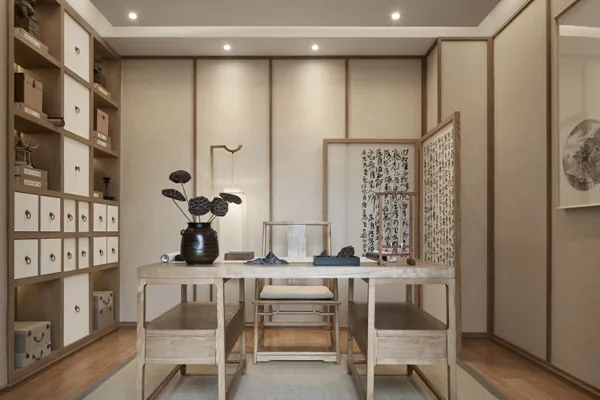
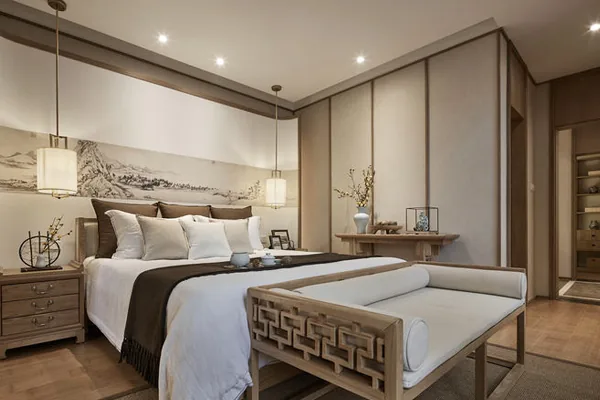
The master bedroom also adopts a minimalist, fixture‑free lighting approach, offering clean, unadorned lines that quietly evoke the refined charm of Chinese design. Wooden furnishings, paired with tasteful floral arrangements and landscape paintings, infuse the space with poetic allure, radiating a simple yet graceful beauty.
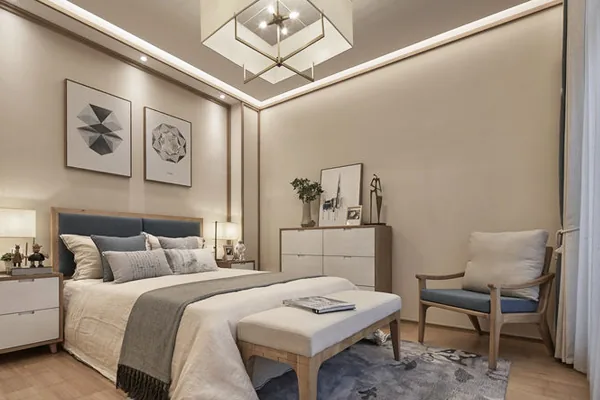
The two secondary bedrooms blend contemporary elements into the New Chinese aesthetic, achieving a stylish, sophisticated look without sacrificing elegance.
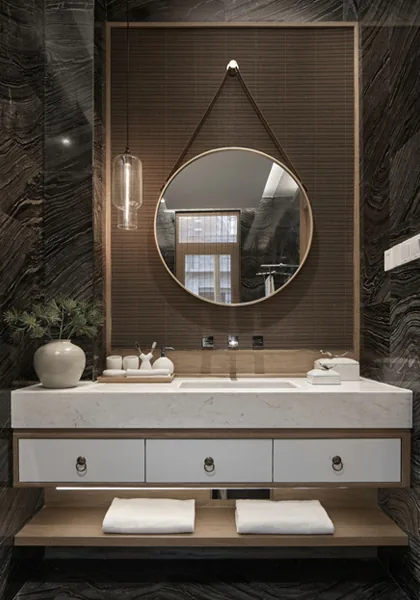
In the bathroom, traditional, rigid notions of “beauty” have been set aside. Instead, Eastern aesthetics are reinterpreted through a modern, minimalist lens, where classic elegance meets cutting‑edge trends—resulting in spaces that are not only beautiful but also highly functional.
That concludes our overview of this full‑house design in the New Chinese style. If you enjoyed it, feel free to leave us a comment and join the conversation!
More Articles

More Posts
How should the internal structure of a custom wardrobe be designed to maximize usability? The zoning logic determines storage efficiency.
Living Knowledge · 2026.10.29

How should the internal structure of a custom wardrobe be designed to maximize usability? The zoning logic determines storage efficiency.

How should you design the internal structure of a custom wardrobe to make it truly functional? The zoning logic determines storage efficiency. The effectiveness of a custom wardrobe depends on whether its internal layout aligns with your household’s actual clothing inventory and your habits for putting things in and taking them out. The correct design sequence is: first, take stock of your clothes; second, determine the zones; and only then consider the overall style. This article provides a set of zoning principles and dimension guidelines that you can apply directly. 1. Inventory First, Design Later: A wardrobe is a reflection of your clothing collection...

How to coordinate color schemes for whole-house customization? The 60-30-10 rule and four space-specific strategies.
Living Knowledge · 2026.10.29

How to coordinate color schemes for whole-house customization? The 60-30-10 rule and four space-specific strategies.

How do you coordinate colors for whole‑house customization? The 60–30–10 rule and four space‑specific strategies. The most common reason why color schemes in whole‑house customization fall flat isn’t that the colors themselves are unattractive, but rather that there are too many colors, the proportions are out of balance, or the materials and colors aren’t well integrated. Master one fundamental principle—the 60–30–10 ratio—and then choose a strategy based on the specific spatial conditions, and you’ll be able to make color choices you won’t regret. I. The 60–30–10 Rule: Let each color...

A Guide to Avoiding Pitfalls in Whole-House Customization: 6 Things You Must Confirm Before Signing the Contract
Living Knowledge · 2026.10.29

A Guide to Avoiding Pitfalls in Whole-House Customization: 6 Things You Must Confirm Before Signing the Contract

1. Board Material Environmental Safety: Rely on Test Reports, Not Verbal Promises It’s common for sellers to tout “environmentally friendly boards” without providing any official test reports. The formaldehyde emission limit for E1‑grade boards is ≤0.124 mg/m³; some retailers use this as a claim of eco‑friendliness, but it falls short for households with elderly residents or young children. A more reliable choice would be ENF‑grade (≤0.025 mg/m³) or E0‑grade (≤0.05 mg/m³), ...

BOOK A CONSULTATION

Want to Apply These Ideas to Your Own Home?

It can explain the apartment area, decoration stage and preferred style. The BOSNIE team will combine the home encyclopedia, real cases and product systems to provide one-to-one custom suggestions for the entire home.