This case presents a cream-style, full‑house design. Let’s take a look at it together with BOSNIE’s editor!
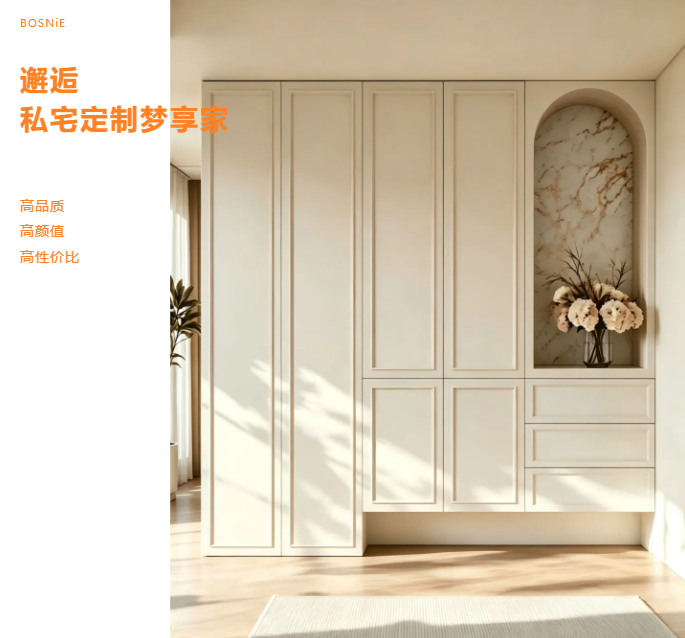
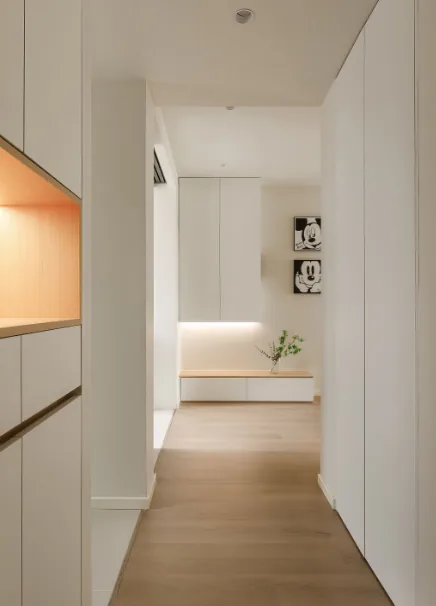
The apartment features a separate foyer buffer zone that prevents the entryway from being fully visible at a glance. On the left, this space serves as a shoe cabinet, while the right side is designed as a coat and hat area with ample practicality for storing bags.
The living room is anchored by a milky white palette, with walls and ceiling unified in the same hue to soften boundaries and create a relaxed, cozy atmosphere. The original high ceiling is preserved, and exposed spotlights are installed to keep the space clean and visually open. Linear lighting behind the sofa acts as ambient lighting, running throughout both the living and dining areas to enrich the layering of light.
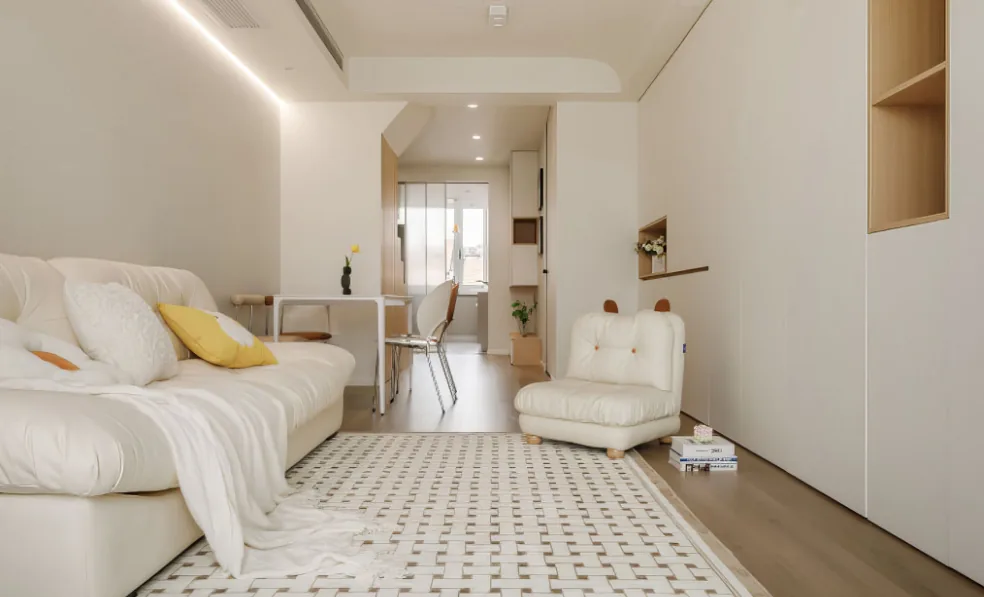
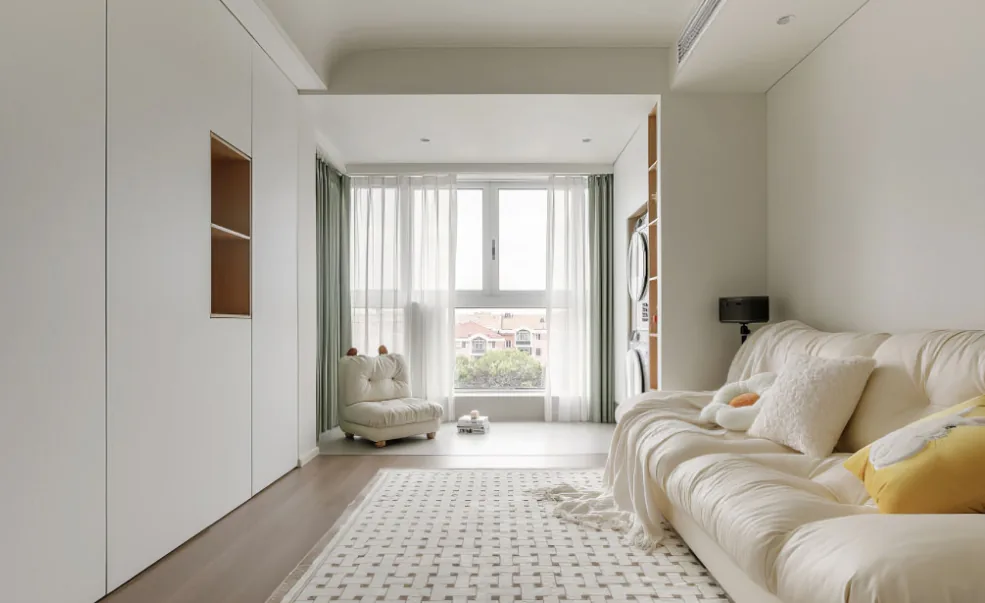
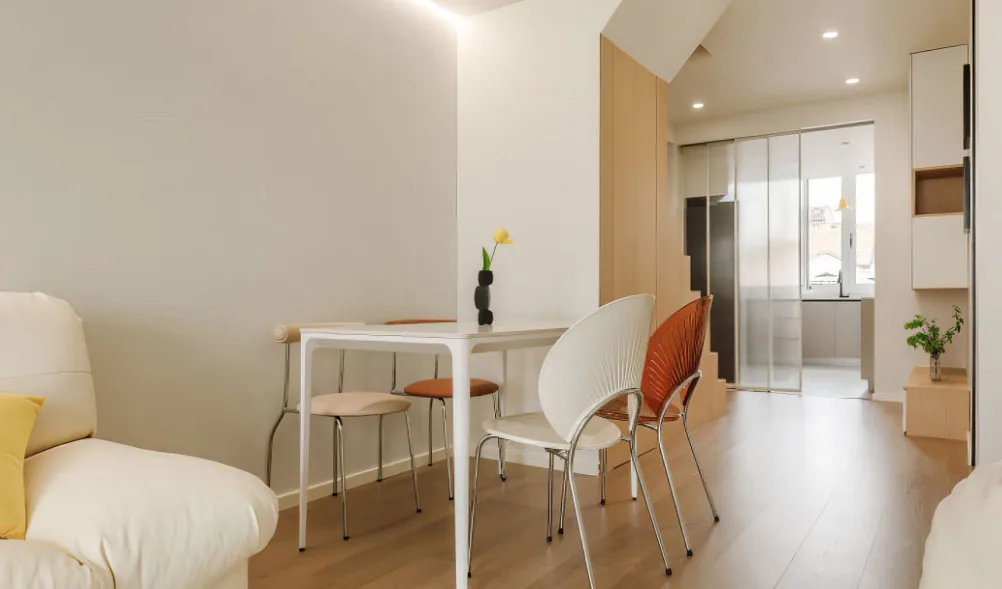
The living and dining areas are integrated, offering greater openness and expanding the field of vision while fostering better interaction with family. This seamless design avoids partition walls, instead using furniture—such as the sofa and dining table—to delineate spaces, ensuring flexibility and adaptability.
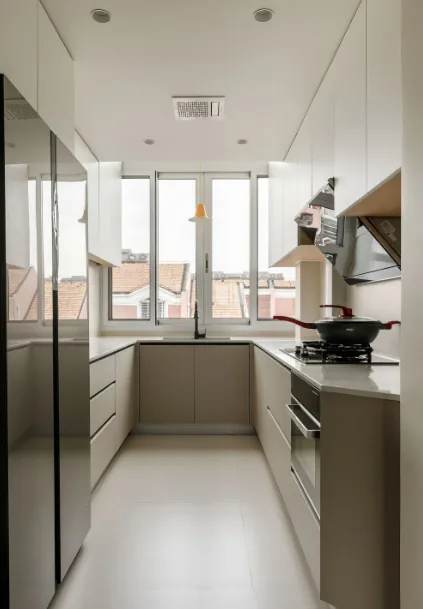
The kitchen adopts an efficient circular workflow organized around the sequence: retrieve, place, wash, chop, and cook. The original triangular window is retained to maximize natural light. A yellow pendant lamp provides focused illumination over the sink while adding a touch of color to the gray‑toned space.
A sliding barn door separates the kitchen from the public area, effectively containing cooking fumes; when open, it aligns flush with the refrigerator, allowing unobstructed access.
In the bedroom, a balance of solidity and emptiness, with just the right amount of negative space, reflects my approach to creating a sanctuary that meets modern needs—providing a sense of gentle relaxation amidst the pressures of daily life.
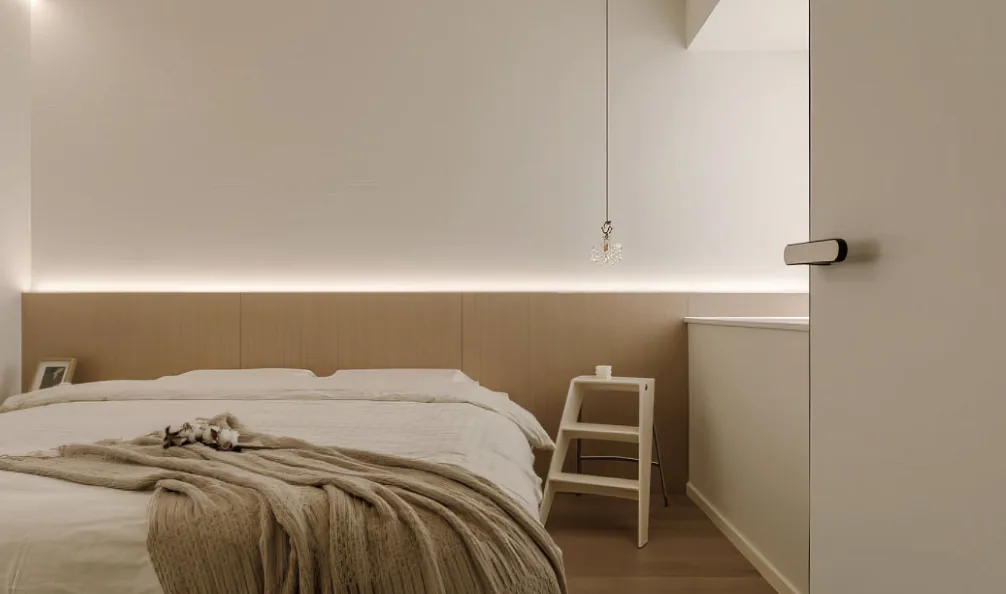
The bedroom features a backless floating bed, with a wood‑paneled headboard paired with concealed lighting to enhance the spatial ambiance. A small pendant lamp above the bed prevents the large expanse of blank wall from feeling monotonous.
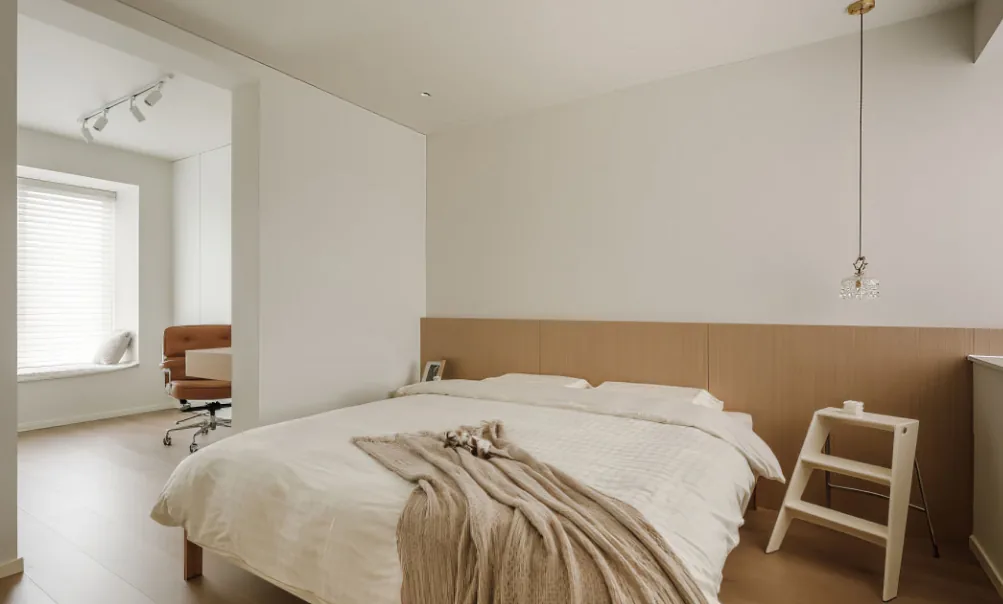
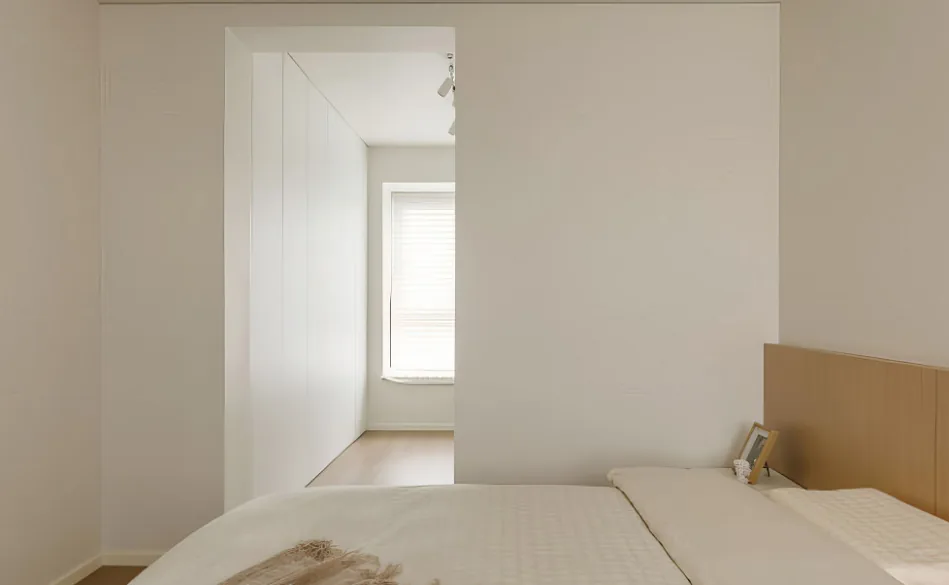
The walk‑in closet is incorporated into the master bedroom, redefining the spatial layout by keeping storage and rest areas distinct yet interconnected, extending the sense of space while enabling smooth transitions between different living scenarios.
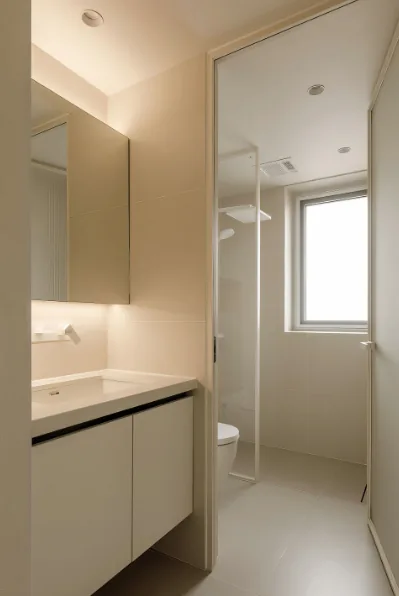
The bathroom continues the creamy color scheme, with a glass partition separating the toilet and shower areas to maintain brightness and transparency within the compact space. Opposite the shower, a double‑tiered niche is designed to hold bath products.
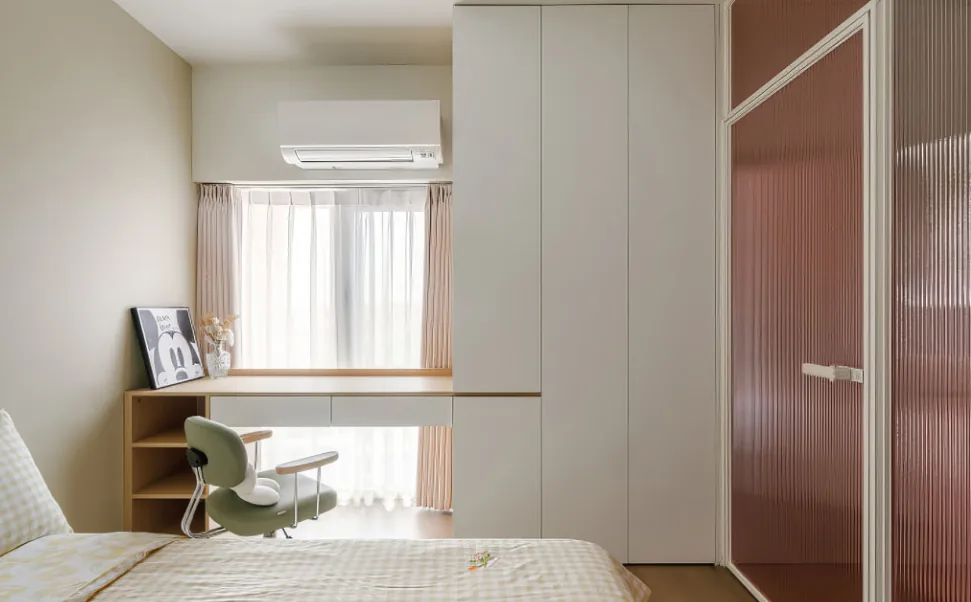
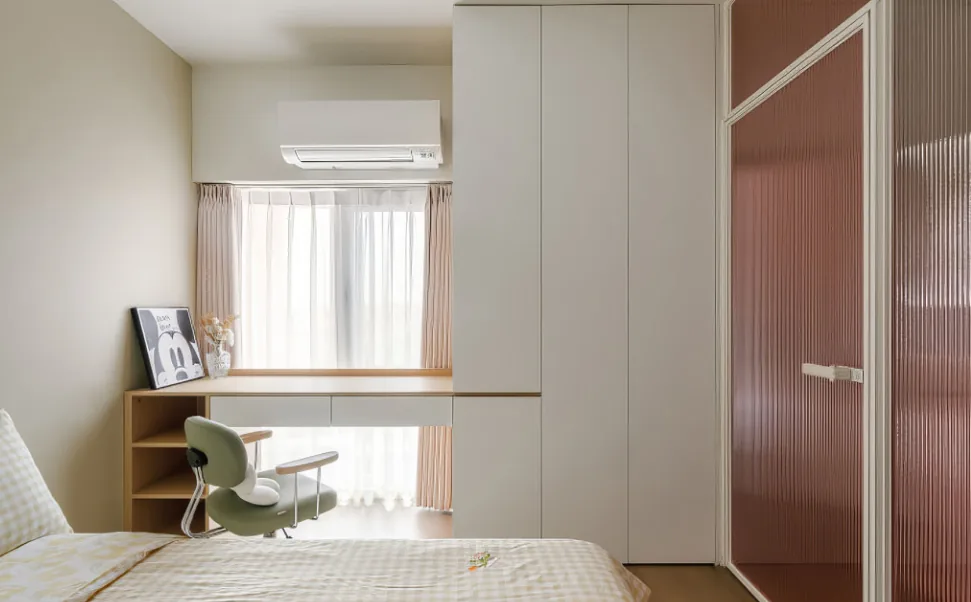
In the daughter’s room, a long, gradient‑tinted iridescent glass partition divides the sleeping area, with the pink glass complementing the overall girly aesthetic. The advantage of this glass partition is that it allows natural light to flow freely into the adjacent space.
The bedroom embraces warm tones, with minimal ornamentation to reduce visual clutter. The feature wall is differentiated in color, harmonizing with the soft furnishings and bedding, while the inviting palette ensures that even prolonged stays won’t feel visually tiresome.
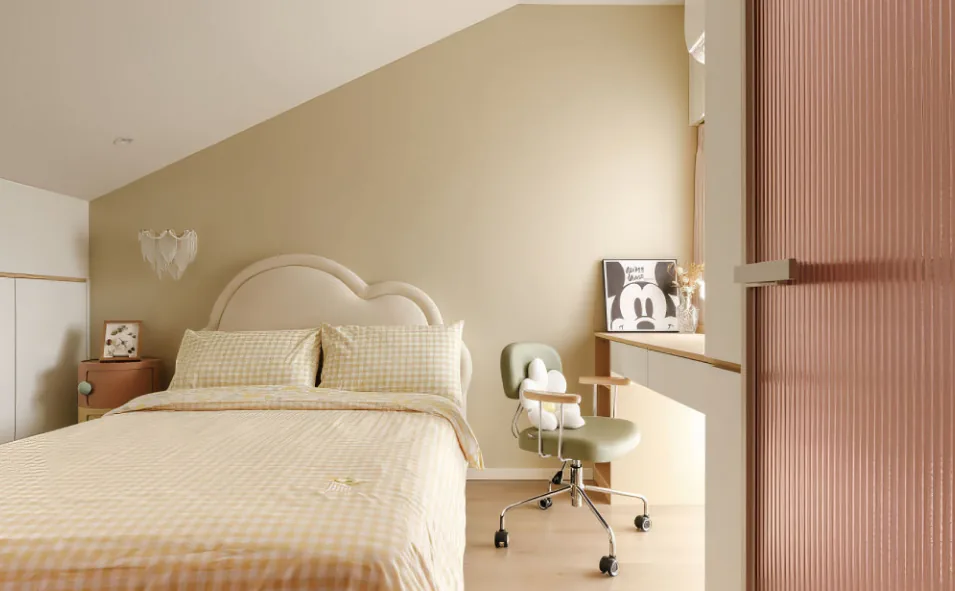
Along the window side of the bedroom, a multi‑functional zone combines storage and study space. The south‑facing floor‑to‑ceiling window provides bright, natural light for reading, while the upper and lower cabinets on the right serve as bookshelves, and the tall two‑door cabinet doubles as a hanging area for the little girl’s clothes.
The girl’s room is brimming with girly charm in its soft furnishings: a colorful bedside table and a green chair bring the entire space to life.
That concludes our introduction to this cream‑style, full‑house design. If you’re interested, feel free to leave a comment and interact with BOSNIE’s editor!