Whole-House Design Case | Wood as Essence, Minimalist Serenity!
Living Knowledge · 2024.07.02

Whole-House Design Case | Wood as Essence, Minimalist Serenity!

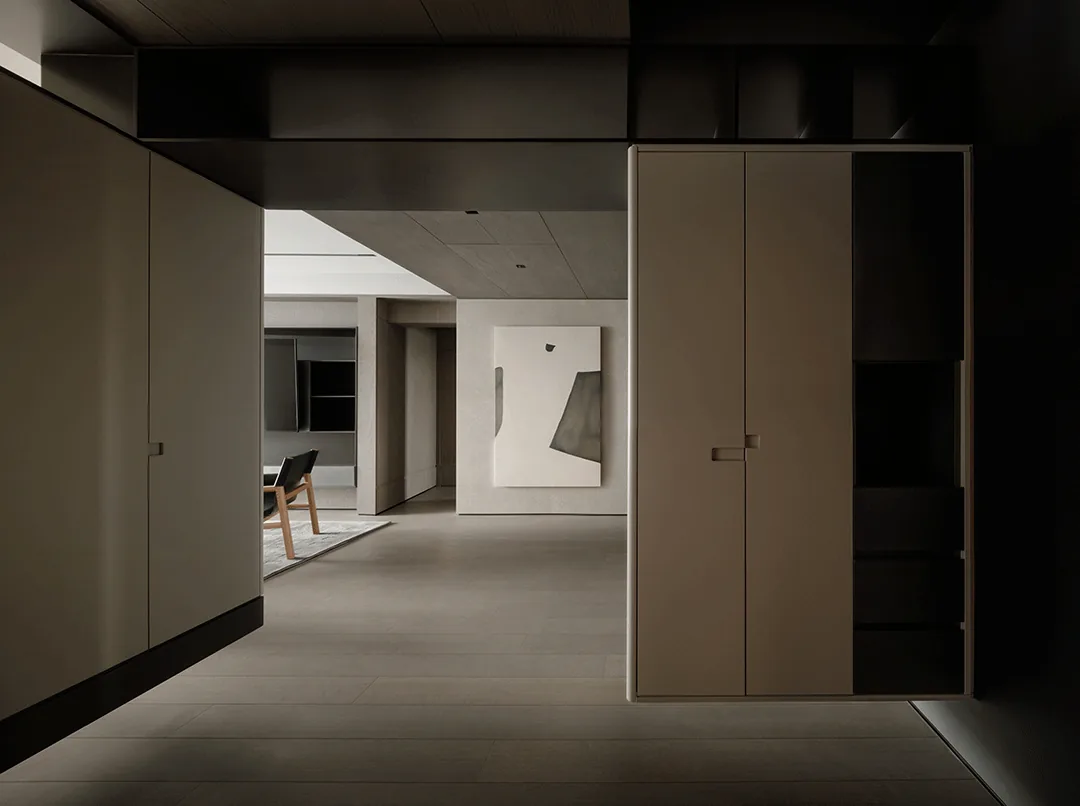
For this project, the designer prioritized practical living needs while also elevating everyday quality of life. The core design concept addressed spatial imbalance—delivering comprehensive functionality without compromising refined aesthetics. From south to north, spaces unfold in a layered progression, alleviating the unease caused by the original narrow, elongated layout and enabling seamless interplay between circulation paths and sightlines. The flow between public and private zones mirrors the central courtyard of traditional architecture, naturally guiding movement and separating functions. This layered progression and functional zoning transform an originally irregular space into one of harmonious order. Integrating practical entryway requirements, the designer thoughtfully incorporated a full-length mirror, shoe-changing bench, coat hooks, and more.

In this project, the designer prioritized practical living needs while also elevating everyday quality of life. The core design concept centers on resolving spatial imbalance—delivering comprehensive functionality without compromising refined aesthetics.
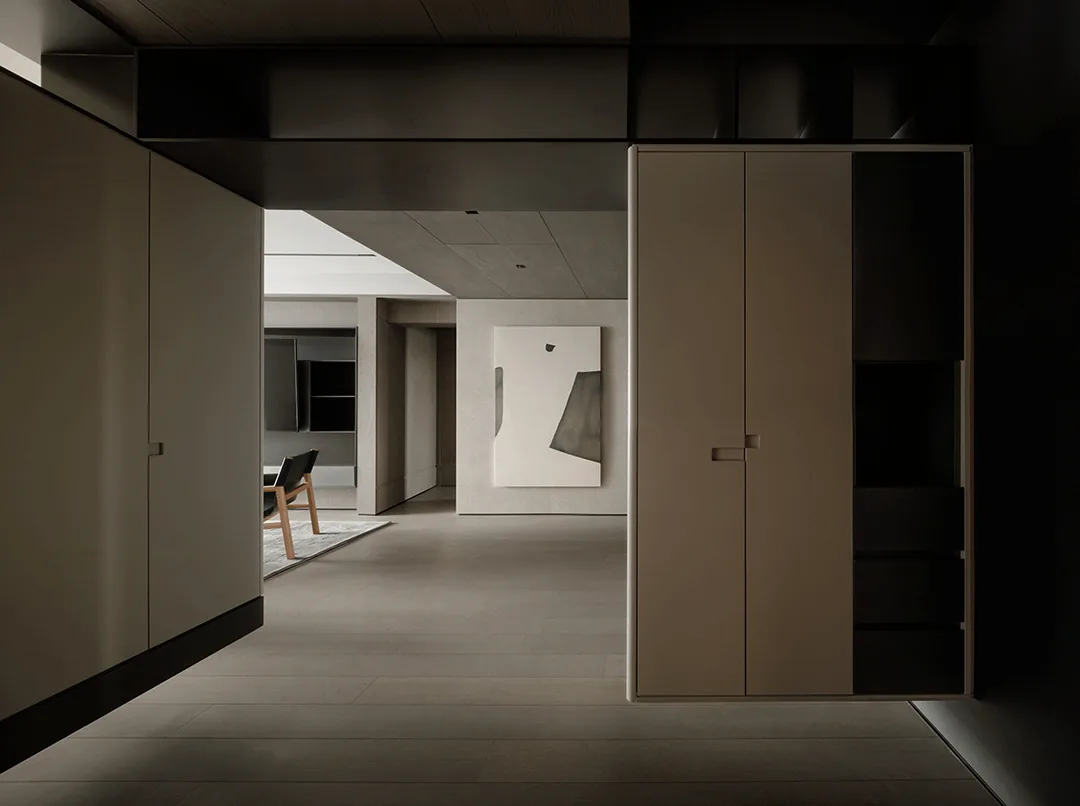
The space unfolds progressively from south to north, alleviating the unease caused by the original narrow, elongated layout and enabling seamless overlap and visual penetration between circulation paths and sightlines. The circulation route between public and private zones functions like a traditional courtyard’s central atrium, naturally separating flows. This layered progression and functional separation transforms an originally irregular space into one of harmonious order.
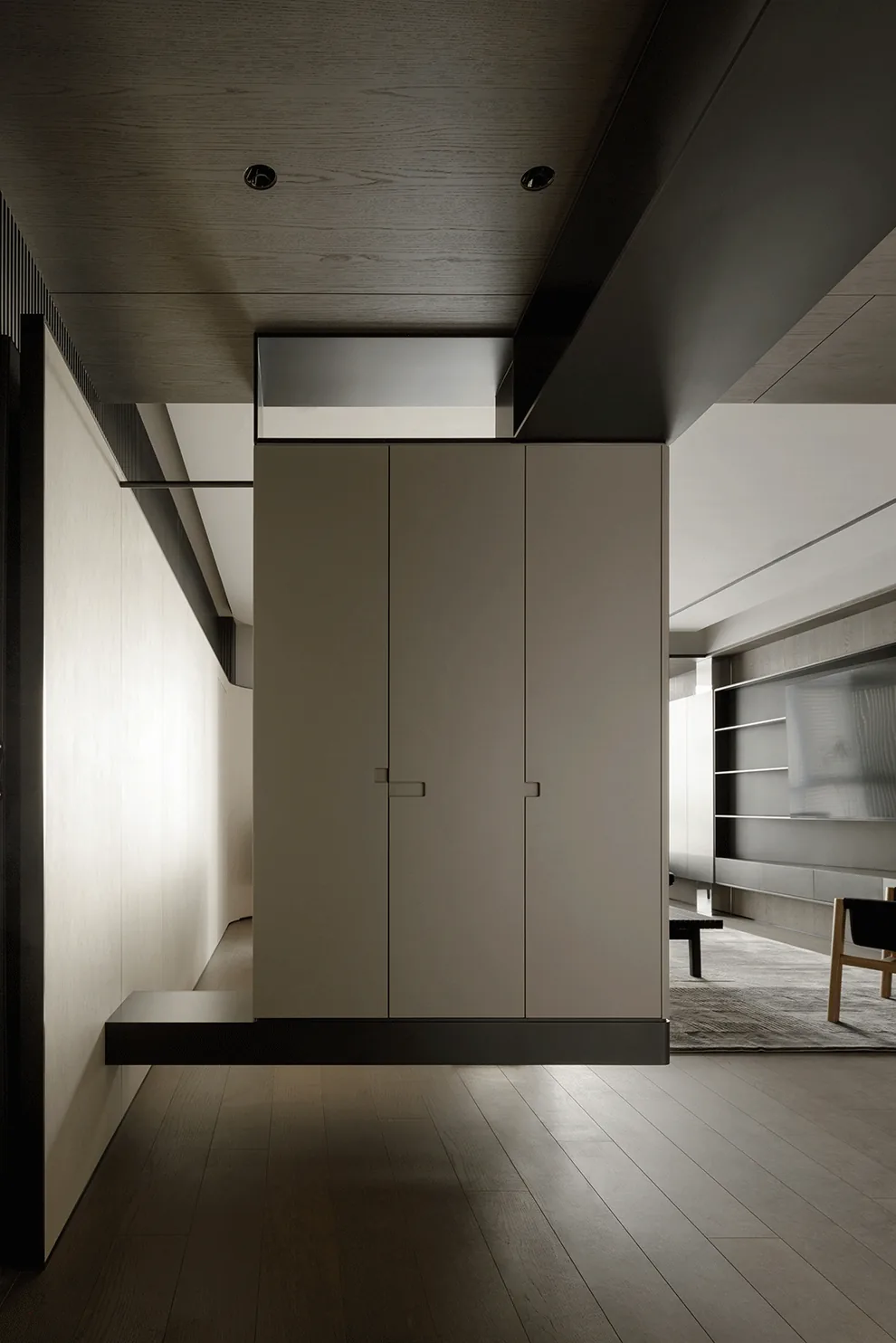
Integrating practical entryway requirements, the designer thoughtfully incorporated a full-length mirror, shoe-changing bench, coat hooks, and storage cabinets—all designed with floating upper and lower elements to enhance ventilation and natural light. Function and style are thus seamlessly unified.
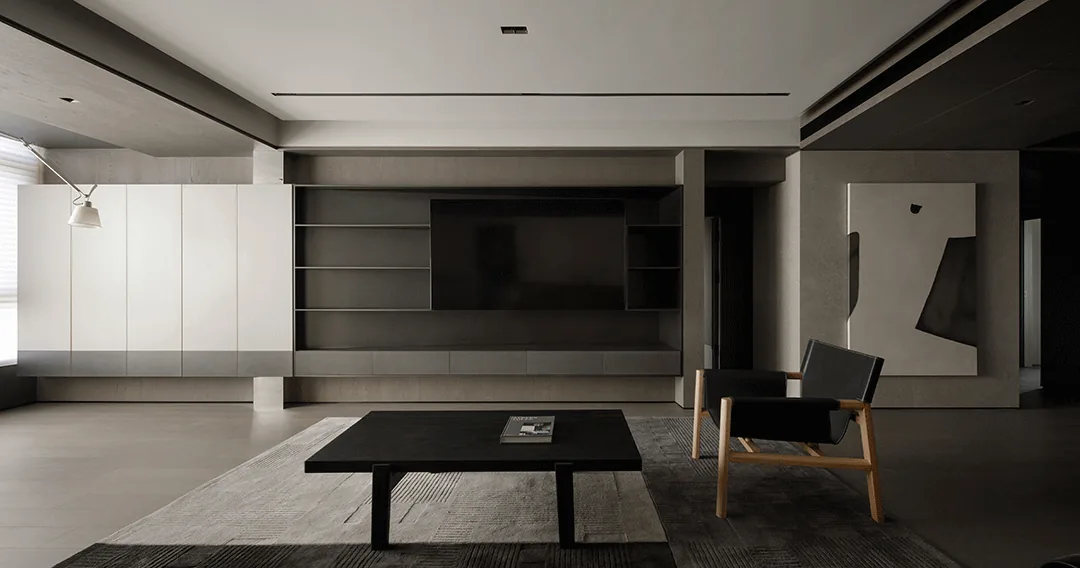
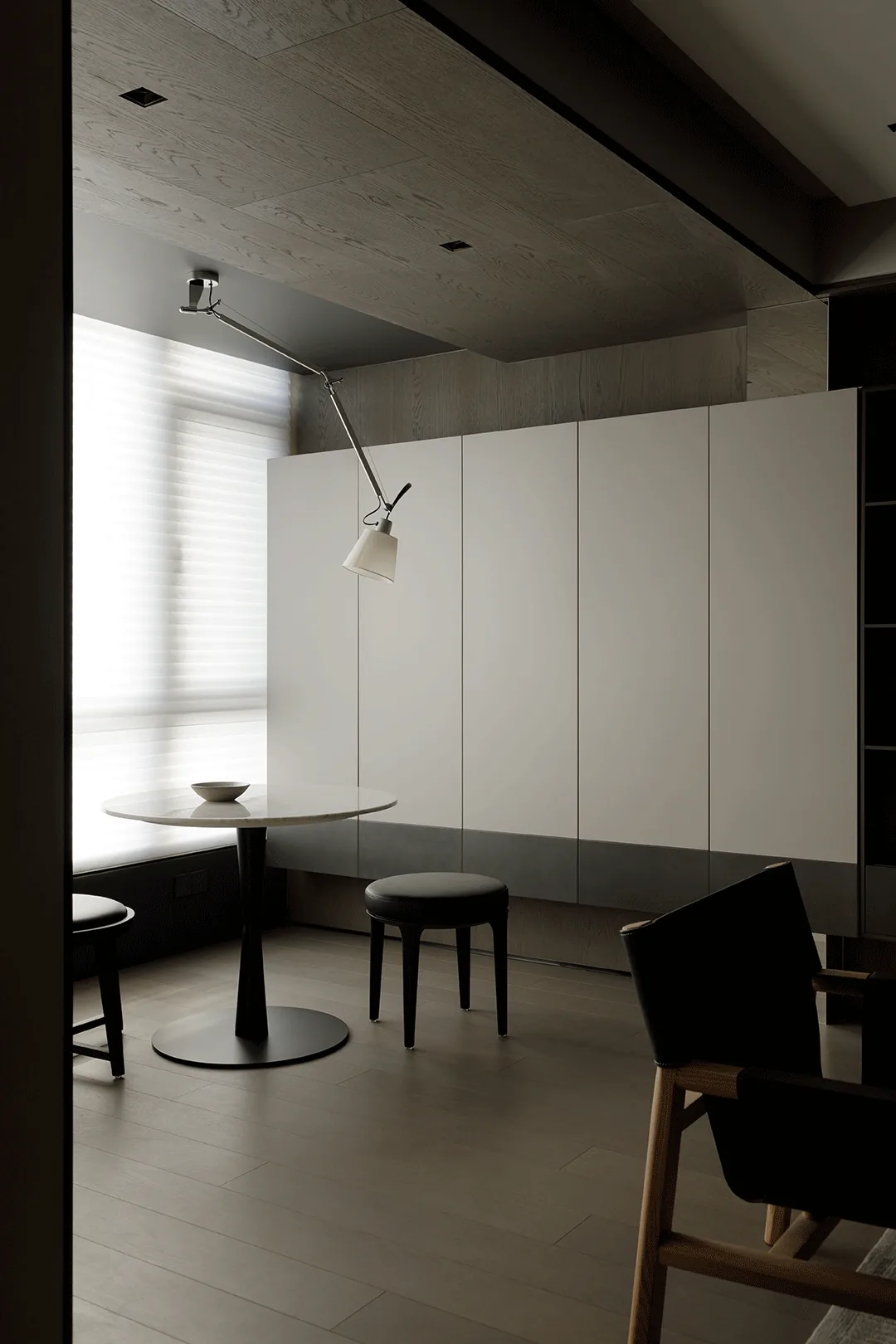
The living room TV cabinet follows the angled wall, aligning its edges precisely. The balcony has been opened up to strengthen spatial continuity, allowing flexible soft furnishings to adapt effortlessly to diverse scenarios. A leather-clad accent wall extends from the entryway through to the balcony, enhancing spatial interaction.
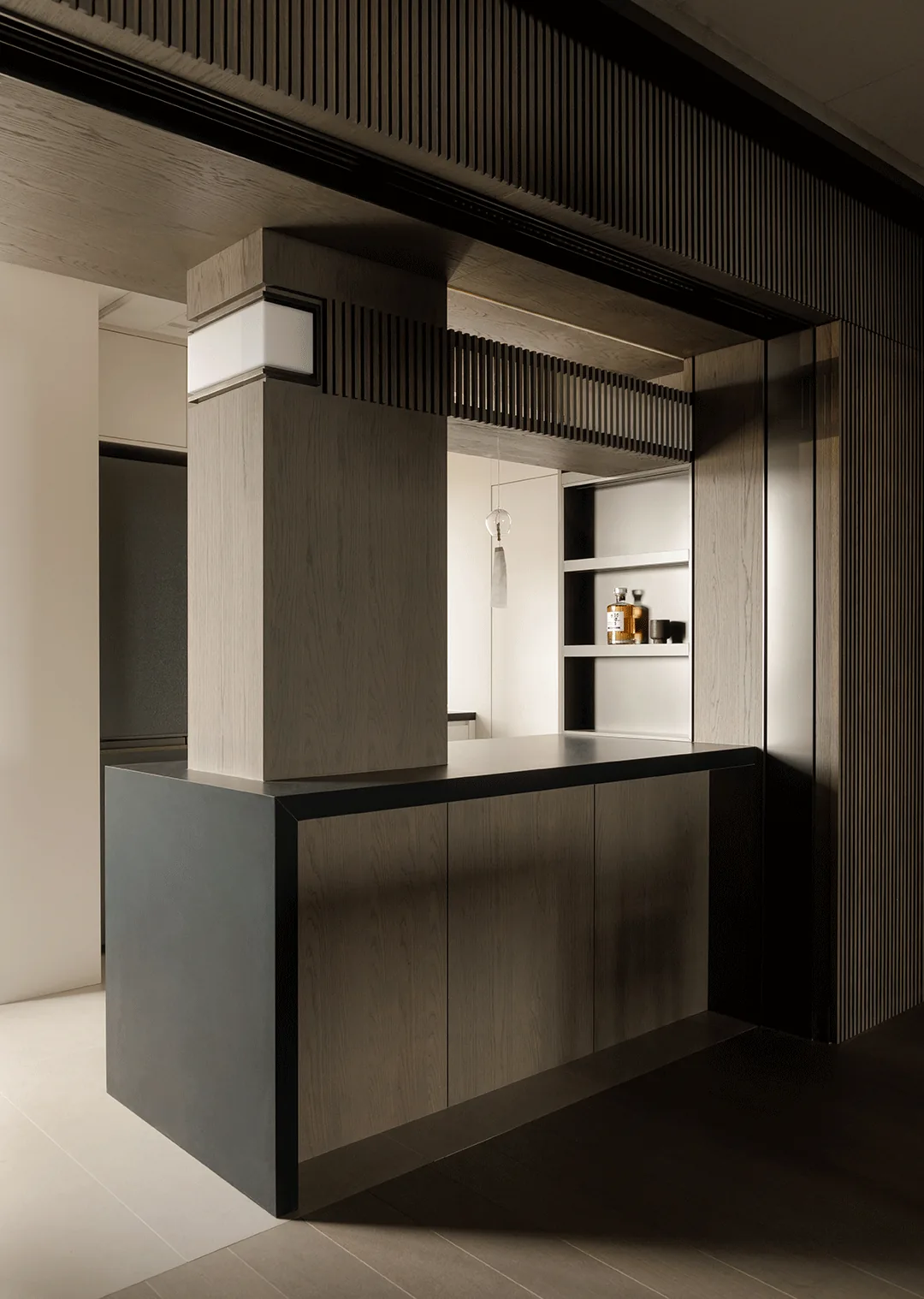
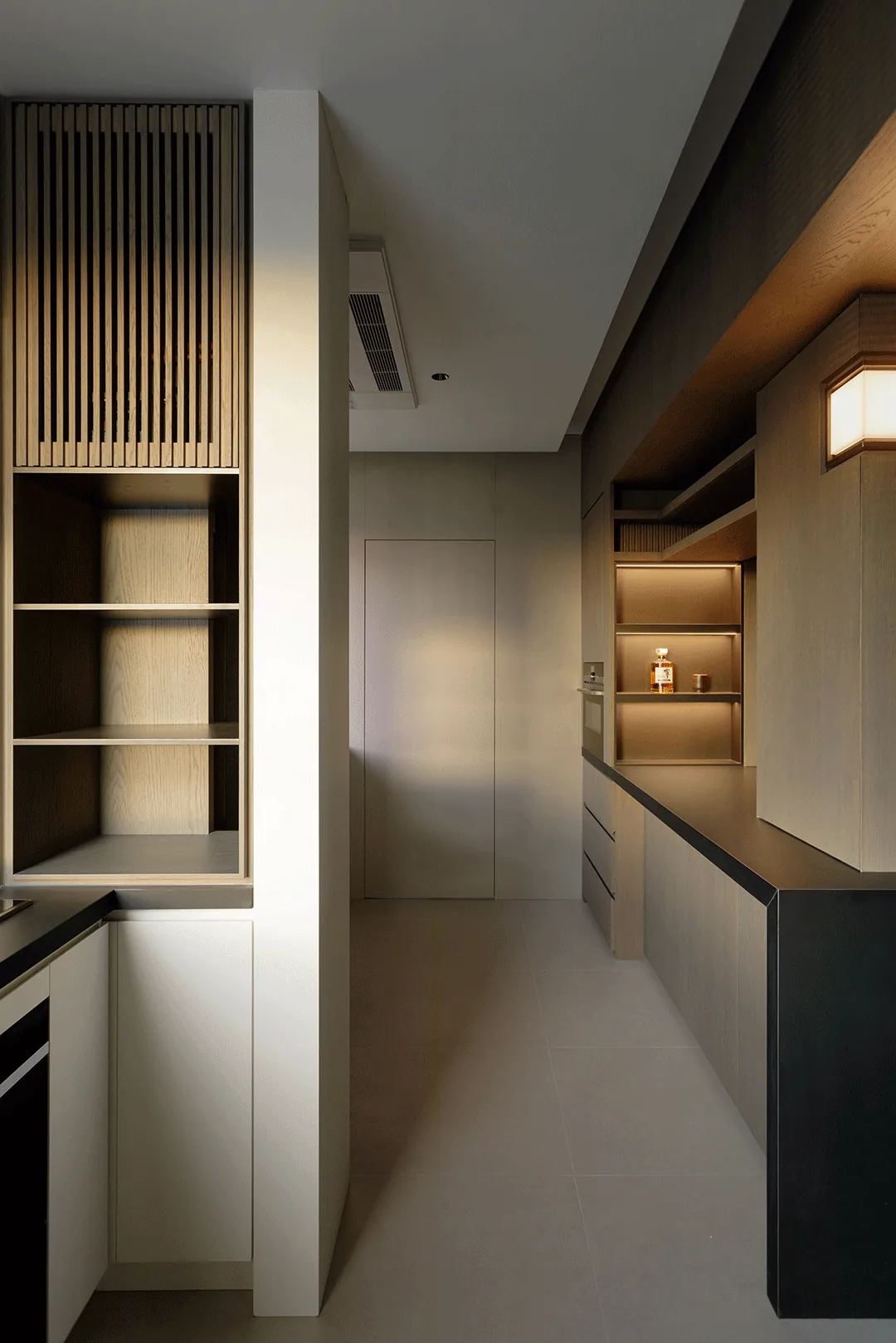
The dining and living areas enjoy fluid connectivity via a square-patterned pivot door. The island, sideboard, wine cabinet, and wet bar collectively deliver comprehensive functionality. Under natural light, a thoughtful mix of materials creates an elegant, refined atmosphere.
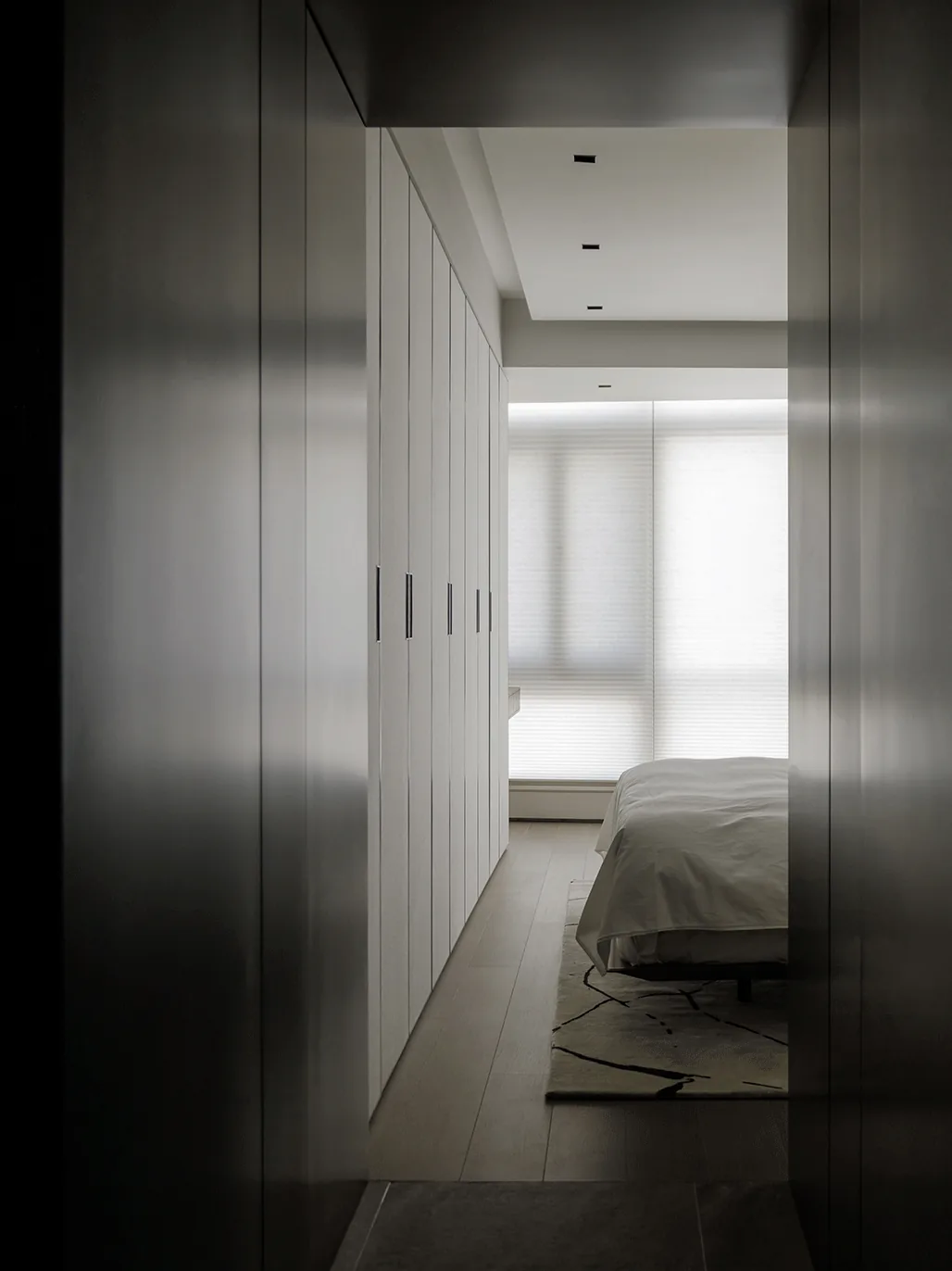
The master bedroom exudes understated serenity, cultivating a tranquil environment conducive to restful sleep.
The tatami platform, desk, and cabinetry form a cohesive unit—serving multiple purposes including relaxation, writing, storage, display, and integrated lighting. A playful feature wall offers creative potential for future young residents.
More Articles

More Posts
How should the internal structure of a custom wardrobe be designed to maximize usability? The zoning logic determines storage efficiency.
Living Knowledge · 2026.10.29

How should the internal structure of a custom wardrobe be designed to maximize usability? The zoning logic determines storage efficiency.

How should you design the internal structure of a custom wardrobe to make it truly functional? The zoning logic determines storage efficiency. The effectiveness of a custom wardrobe depends on whether its internal layout aligns with your household’s actual clothing inventory and your habits for putting things in and taking them out. The correct design sequence is: first, take stock of your clothes; second, determine the zones; and only then consider the overall style. This article provides a set of zoning principles and dimension guidelines that you can apply directly. 1. Inventory First, Design Later: A wardrobe is a reflection of your clothing collection...

How to coordinate color schemes for whole-house customization? The 60-30-10 rule and four space-specific strategies.
Living Knowledge · 2026.10.29

How to coordinate color schemes for whole-house customization? The 60-30-10 rule and four space-specific strategies.

How do you coordinate colors for whole‑house customization? The 60–30–10 rule and four space‑specific strategies. The most common reason why color schemes in whole‑house customization fall flat isn’t that the colors themselves are unattractive, but rather that there are too many colors, the proportions are out of balance, or the materials and colors aren’t well integrated. Master one fundamental principle—the 60–30–10 ratio—and then choose a strategy based on the specific spatial conditions, and you’ll be able to make color choices you won’t regret. I. The 60–30–10 Rule: Let each color...

A Guide to Avoiding Pitfalls in Whole-House Customization: 6 Things You Must Confirm Before Signing the Contract
Living Knowledge · 2026.10.29

A Guide to Avoiding Pitfalls in Whole-House Customization: 6 Things You Must Confirm Before Signing the Contract

1. Board Material Environmental Safety: Rely on Test Reports, Not Verbal Promises It’s common for sellers to tout “environmentally friendly boards” without providing any official test reports. The formaldehyde emission limit for E1‑grade boards is ≤0.124 mg/m³; some retailers use this as a claim of eco‑friendliness, but it falls short for households with elderly residents or young children. A more reliable choice would be ENF‑grade (≤0.025 mg/m³) or E0‑grade (≤0.05 mg/m³), ...

BOOK A CONSULTATION

Want to Apply These Ideas to Your Own Home?

It can explain the apartment area, decoration stage and preferred style. The BOSNIE team will combine the home encyclopedia, real cases and product systems to provide one-to-one custom suggestions for the entire home.

Whole-House Design Case | Wood as Essence, Minimalist Serenity! | BOSNIE Official Website