This case showcases a whole-house design in a natural wood style. Let’s take a look at this project together!
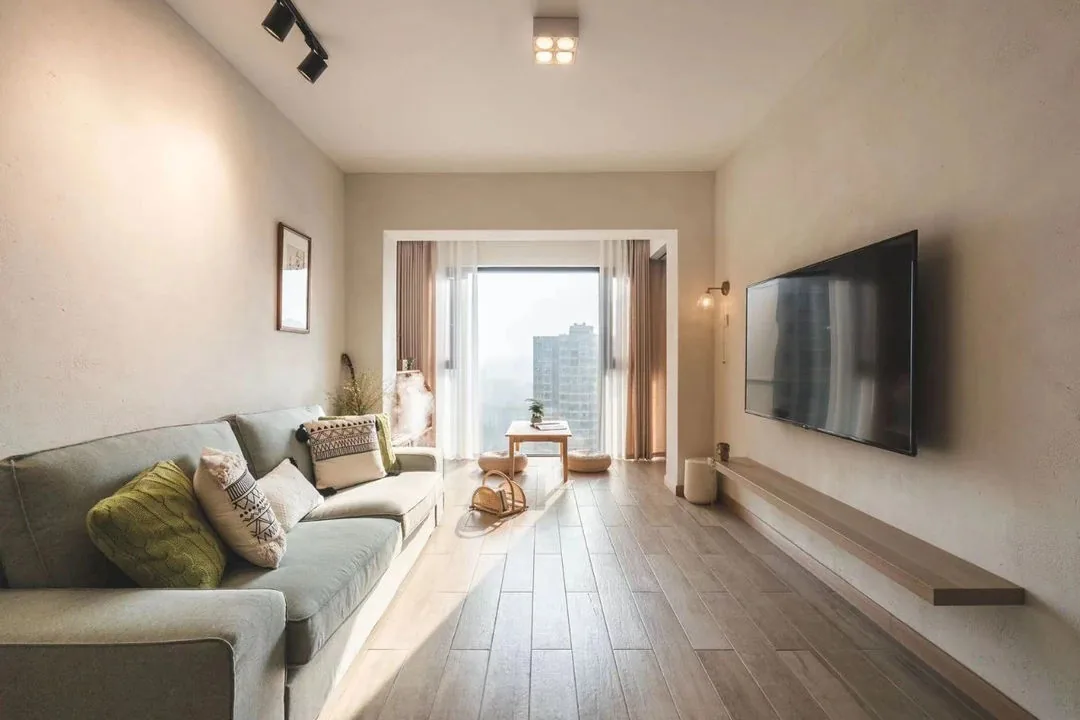
The living room and dining area are delineated by a raised platform, defining distinct functional zones. The living room forgoes the coffee table to create a more spacious feel; when there are many guests, people can sit directly on the floor, making it perfect for chatting or playing games. A minimalist design paired with soothing color schemes makes this small apartment feel warm and inviting.
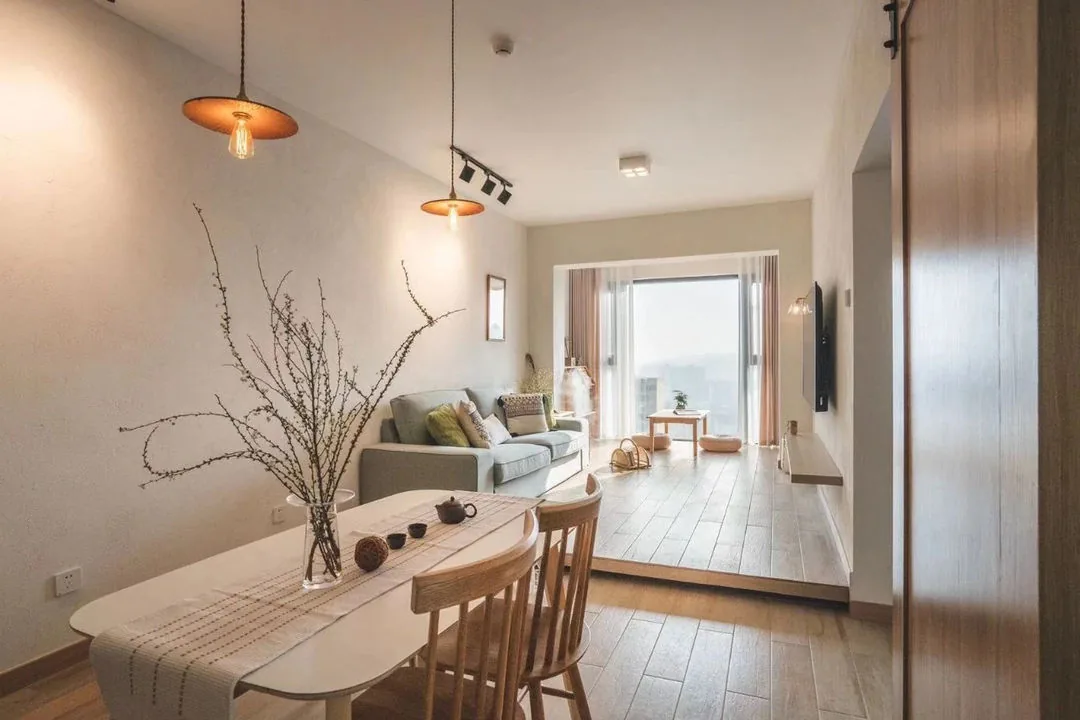
Instead of latex paint, the living room walls feature straw‑clay plaster, lending the space a rustic charm. A mint‑green sofa adds a refreshing touch. LED strip lighting along the edges of the platform casts a warm glow, enhancing the cozy atmosphere.
The entryway is simple yet practical, with an open and bright feel. As the homeowner keeps pets, the entire space is finished with ceramic tiles. A patterned tile border defines the entry area while the colorful mosaic helps counteract the monotony of the large white surfaces.
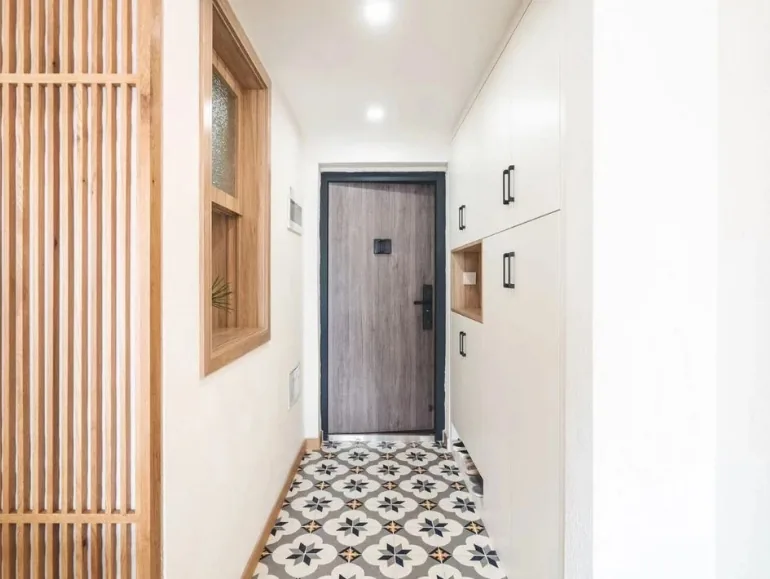
Passing through the entryway into the dining area, the flooring transitions smoothly from decorative tiles to wood‑tone floor tiles, clearly defining functional zones and creating a more layered, visually appealing layout. After the renovation, the dining room serves as the central hub of the home’s circulation, with a meandering flow that makes the space feel more flexible. There’s no excessive ornamentation or elaborate styling—just clean lines, comfort, and timeless appeal.
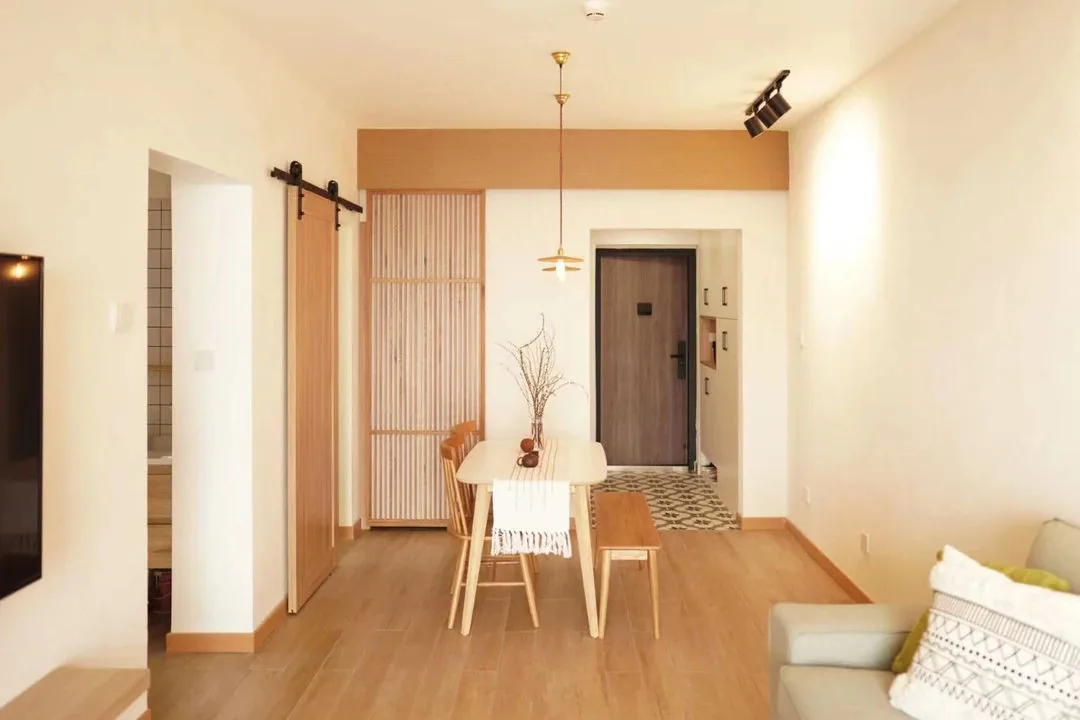
The louvered door is a standout design element, subtly concealing both the kitchen doorway and the entryway door. Between the louvers lies shoji paper, lending a hint of Japanese elegance. The door features a sliding‑track system, with a wooden panel covering the track above, ensuring a sleek, tidy appearance and maintaining a unified style.
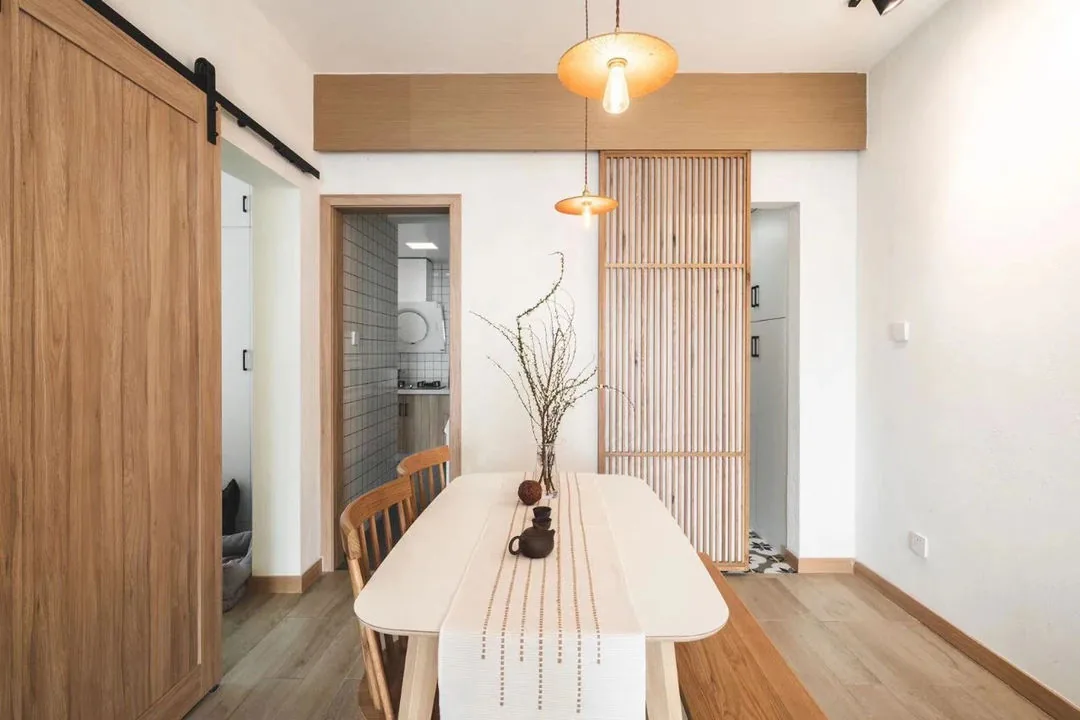
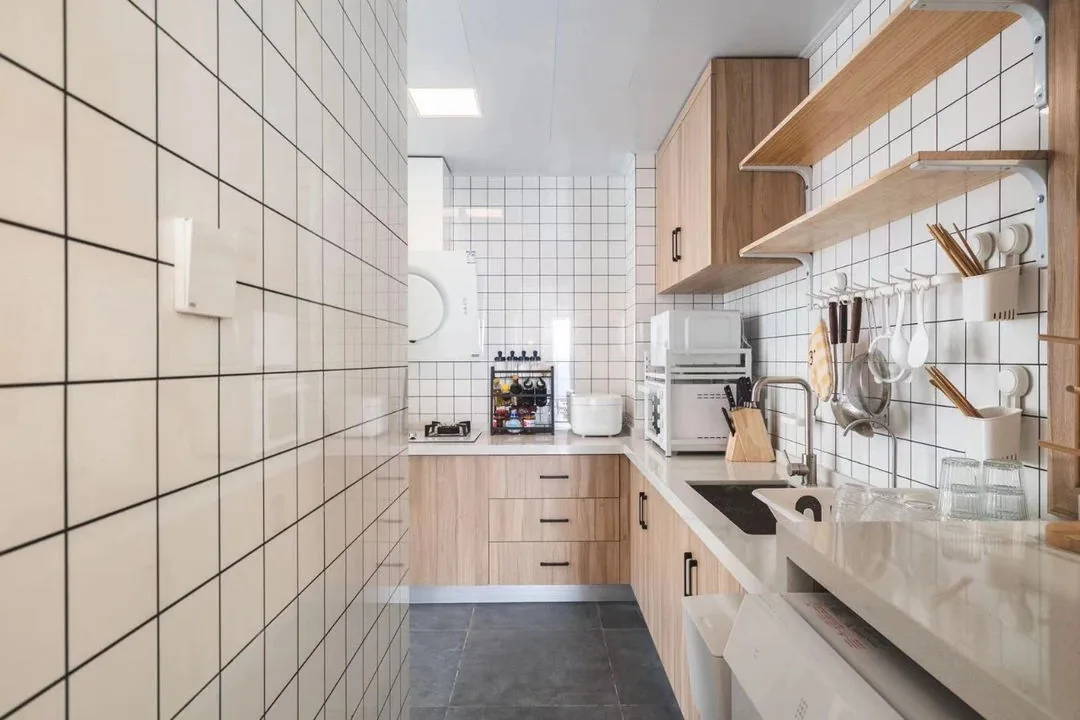
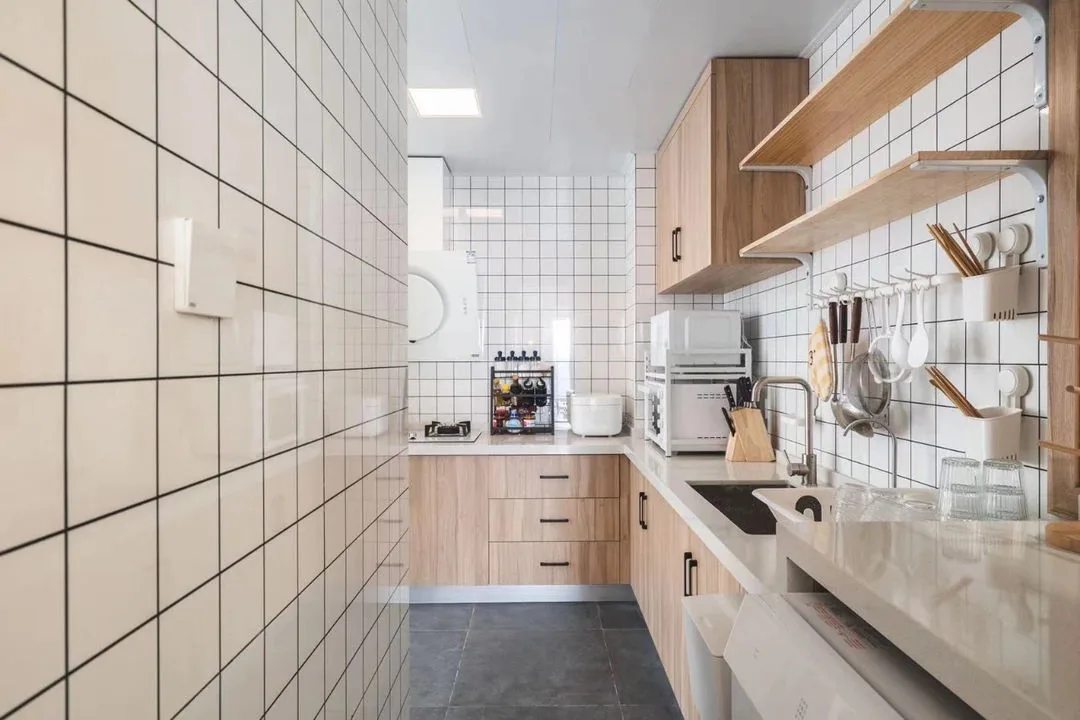
The kitchen continues the original natural‑wood aesthetic—clean, simple, and bright. To stay within budget and avoid a cramped feel, the design omits excessive upper cabinets, opting instead for a few shelves, which are both practical and cost‑effective.
That wraps up our introduction to this whole‑house design in a natural wood style. If you like it, feel free to leave us a comment below!