Whole-House Design Case | Natural Textures Bring a Bright, Clean Look to Your Home
Living Knowledge · 2023.06.16

Whole-House Design Case | Natural Textures Bring a Bright, Clean Look to Your Home

This project showcases a minimalist whole-house design, featuring light color tones and a clean, uncluttered aesthetic. With no superfluous decorative elements, the space feels simple yet comfortable. Far from appearing cheap upon completion, the result exudes sophistication and timeless appeal. Let’s take a look at this inspiring case together! The entryway is sleek and airy, with polished quartz tiles defining the dirt-trapping zone while maintaining a subtle height difference from the living room for easy daily cleaning. The living room is both simple and refreshing, offering a sense of comfort and grandeur. A semi‑partition wall creates an open, expansive view, while stylish blinds replace traditional fabric curtains, providing flexible control over light and shadow and adding dynamic visual interest to the space...

This project showcases a minimalist, whole‑home design. The entire space features light tones and a clean, uncluttered aesthetic—no superfluous ornamentation, just simple, comfortable elegance. Far from feeling cheap upon completion, the result feels refined and timeless. Let’s take a look at this inspiring case together!

The entryway is sleek and airy, with polished quartz tiles defining a dust‑catching zone while maintaining a subtle height difference from the living room for easy daily cleaning.
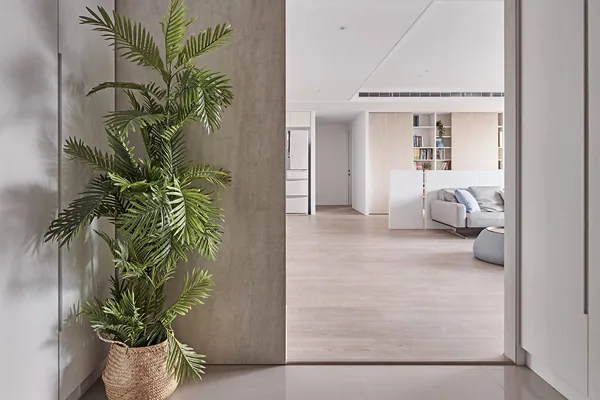
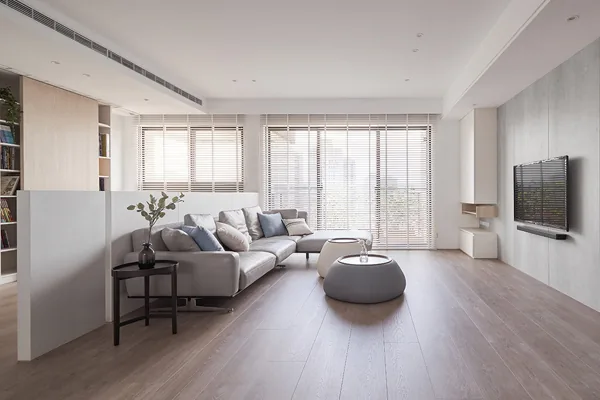
The living room exudes simplicity, freshness, and spacious sophistication. A half‑height partition creates an open, expansive feel. Stylish blinds replace traditional fabric curtains, offering flexible control and enhancing the interplay of light and shadow throughout the space. Natural, warm wood flooring grounds the communal area, its organic texture lending a bright, inviting character—paired with minimalist, modern furnishings that instantly captivate.
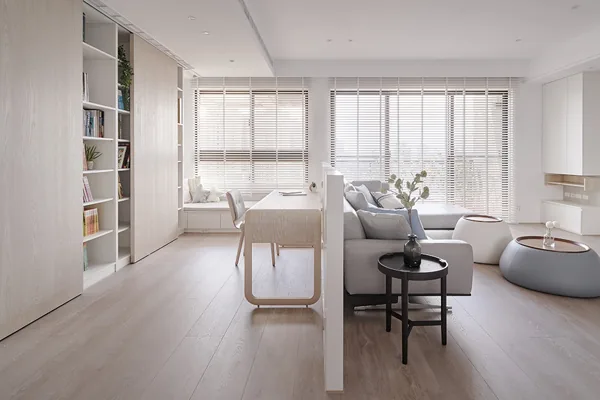
The living room and study are separated by a half‑wall partition, its soft white accent wall gently delineating the spaces while preserving an open, airy flow. Moving away from conventional bookshelves, a floor‑to‑ceiling cabinet combines solid and void elements, visually dissolving any sense of visual barrier.
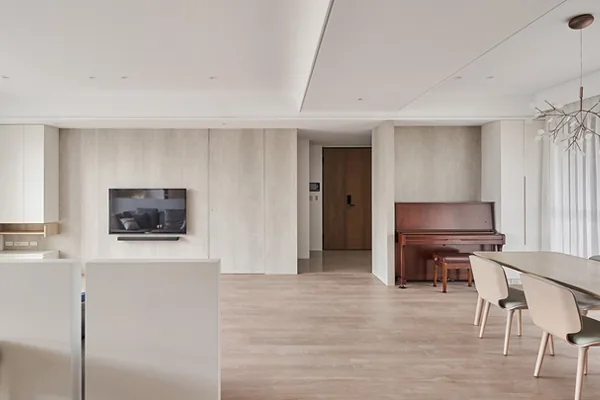
A soft gray panel forms the TV backdrop, extending seamlessly into the piano area to maintain visual cohesion. With no additional decoration, subtle cable channels add depth without overwhelming the space. Backed by the bedroom, the TV wall incorporates a hidden door, further unifying the overall aesthetic.
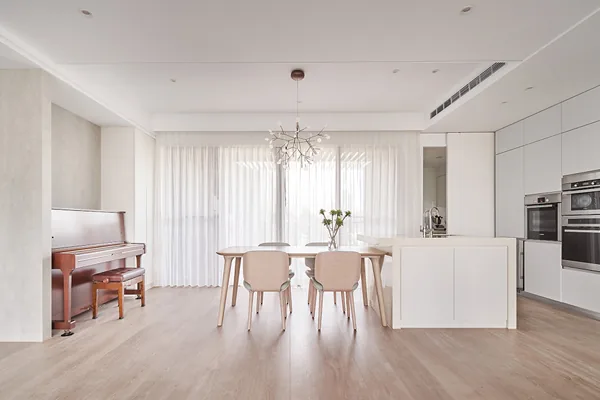
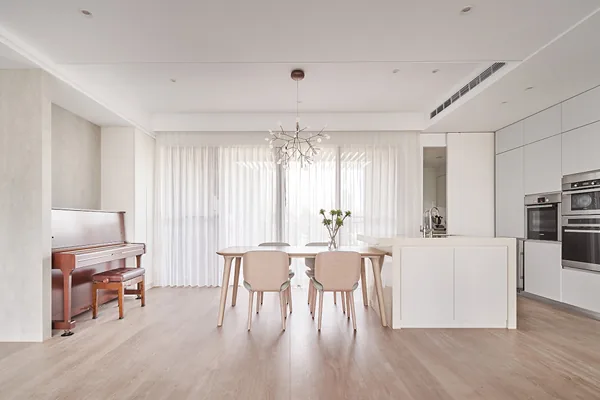
The dining area boasts an open layout, creating a more spacious and inviting atmosphere. Soft, tactile materials help cultivate a relaxed, soothing dining experience. A central island serves dual purposes, functioning as both a kitchen counter and a casual eating space. Connected to the dining table, it enhances the sense of unity and contemporary style. On one side, storage cabinets and appliance units are integrated, providing seamless, concealed storage to keep the space tidy.
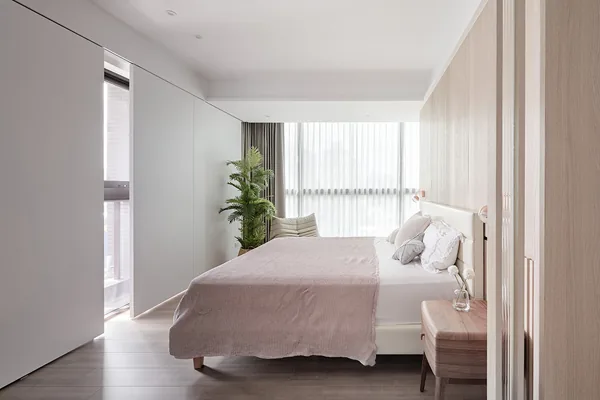
The master bedroom continues the minimalist theme, blending cozy, muted colors with natural materials to create a restful sleep environment. To the right of the bed, slender wooden lattice partitions introduce dynamic shifts in light and shadow, while also enhancing privacy and a sense of security.
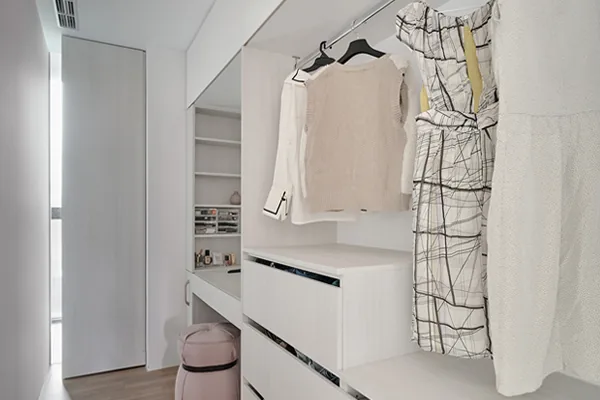
The master bedroom includes a walk-in closet, where system panels extend hanging racks and incorporate drawer‑type storage units, ensuring organized garment storage. At the end of the hanging rack, a built‑in vanity is cleverly integrated, keeping the space neat and circulation smooth. A hidden sliding door further enhances flexibility and maximizes natural light.
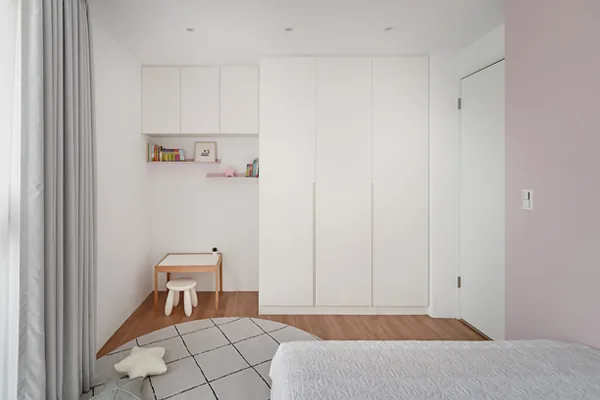
For the children’s rooms, considering the young age of the homeowners’ kids, both spaces embrace simplicity, focusing only on essential functions and sleep needs. This minimalist approach leaves plenty of room for future adaptations, accommodating the evolving needs of growing children.
That wraps up our showcase of this minimalist, whole‑home design. If you enjoyed it, drop us a comment below—we’d love to hear your thoughts!
More Articles

More Posts
How should the internal structure of a custom wardrobe be designed to maximize usability? The zoning logic determines storage efficiency.
Living Knowledge · 2026.10.29

How should the internal structure of a custom wardrobe be designed to maximize usability? The zoning logic determines storage efficiency.

How should you design the internal structure of a custom wardrobe to make it truly functional? The zoning logic determines storage efficiency. The effectiveness of a custom wardrobe depends on whether its internal layout aligns with your household’s actual clothing inventory and your habits for putting things in and taking them out. The correct design sequence is: first, take stock of your clothes; second, determine the zones; and only then consider the overall style. This article provides a set of zoning principles and dimension guidelines that you can apply directly. 1. Inventory First, Design Later: A wardrobe is a reflection of your clothing collection...

How to coordinate color schemes for whole-house customization? The 60-30-10 rule and four space-specific strategies.
Living Knowledge · 2026.10.29

How to coordinate color schemes for whole-house customization? The 60-30-10 rule and four space-specific strategies.

How do you coordinate colors for whole‑house customization? The 60–30–10 rule and four space‑specific strategies. The most common reason why color schemes in whole‑house customization fall flat isn’t that the colors themselves are unattractive, but rather that there are too many colors, the proportions are out of balance, or the materials and colors aren’t well integrated. Master one fundamental principle—the 60–30–10 ratio—and then choose a strategy based on the specific spatial conditions, and you’ll be able to make color choices you won’t regret. I. The 60–30–10 Rule: Let each color...

A Guide to Avoiding Pitfalls in Whole-House Customization: 6 Things You Must Confirm Before Signing the Contract
Living Knowledge · 2026.10.29

A Guide to Avoiding Pitfalls in Whole-House Customization: 6 Things You Must Confirm Before Signing the Contract

1. Board Material Environmental Safety: Rely on Test Reports, Not Verbal Promises It’s common for sellers to tout “environmentally friendly boards” without providing any official test reports. The formaldehyde emission limit for E1‑grade boards is ≤0.124 mg/m³; some retailers use this as a claim of eco‑friendliness, but it falls short for households with elderly residents or young children. A more reliable choice would be ENF‑grade (≤0.025 mg/m³) or E0‑grade (≤0.05 mg/m³), ...

BOOK A CONSULTATION

Want to Apply These Ideas to Your Own Home?

It can explain the apartment area, decoration stage and preferred style. The BOSNIE team will combine the home encyclopedia, real cases and product systems to provide one-to-one custom suggestions for the entire home.

Whole-House Design Case | Natural Textures Bring a Bright, Clean Look to Your Home | BOSNIE Official Website