Whole-House Design Case | Log‑Style: Embracing the Soft Comfort of Natural Materials
Living Knowledge · 2023.06.20

Whole-House Design Case | Log‑Style: Embracing the Soft Comfort of Natural Materials

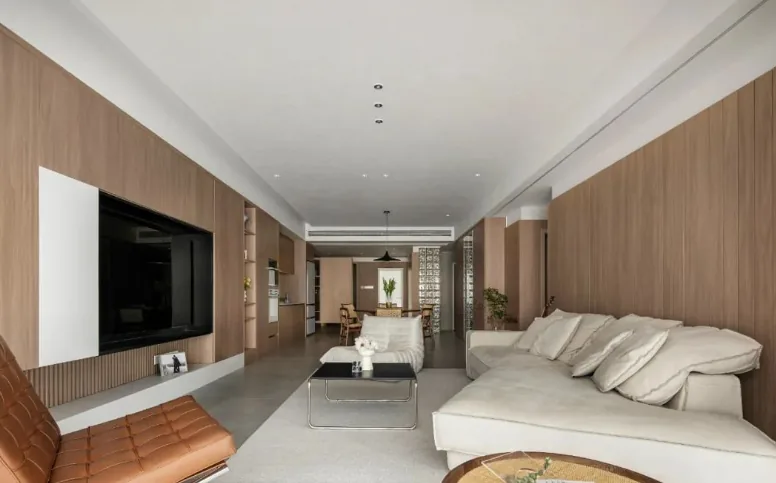
This project showcases a full‑house design in a log‑style aesthetic. Let’s take a look together! The entryway cabinet, shoe cabinet, and kitchen island are seamlessly integrated, with an open‑work upper–lower design that sets it apart from other functional spaces while preventing the entry area from feeling dull or rigid. Inside, it offers versatile storage, display, and hanging options—truly all‑in‑one. In the living room, a wall‑to‑wall storage unit houses a built‑in viewing screen, packing impressive storage capacity and meticulous attention to detail. The TV cabinet is joined to the high cabinets of the western kitchen, forming a unified structure without breaking up the flow, yet still thoughtfully organized into distinct storage zones. Moving further into the home from the entryway, you’ll find the dining area, centered around a table sourced from another region, featuring…

This case showcases a whole-house design in a natural wood style. Let’s take a look at this project together!

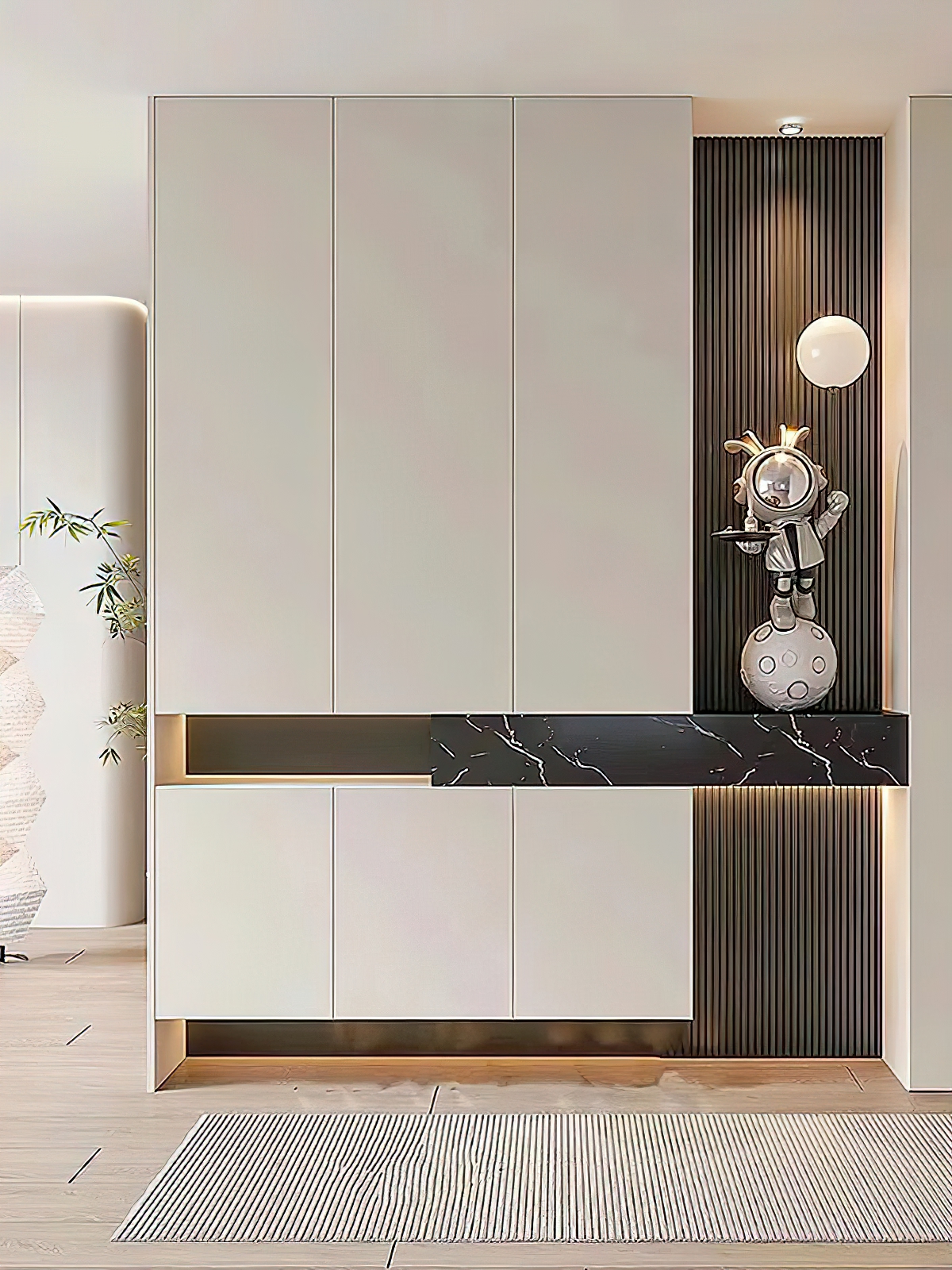
The entryway cabinet is seamlessly integrated with the shoe cabinet and the Western-style kitchen cabinet. Its open‑work design, alternating between solid and void, sets it apart from other functional spaces while preventing the entry area from feeling dull or rigid. Inside, it offers versatile storage, display, and hanging options for coats and accessories.
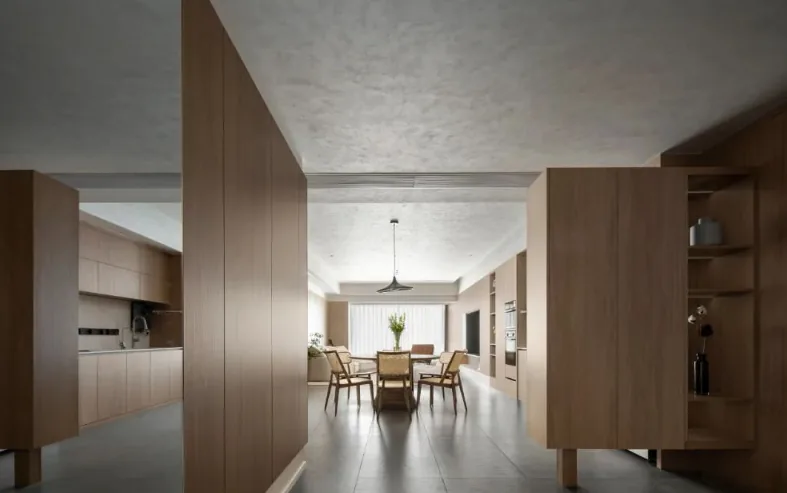
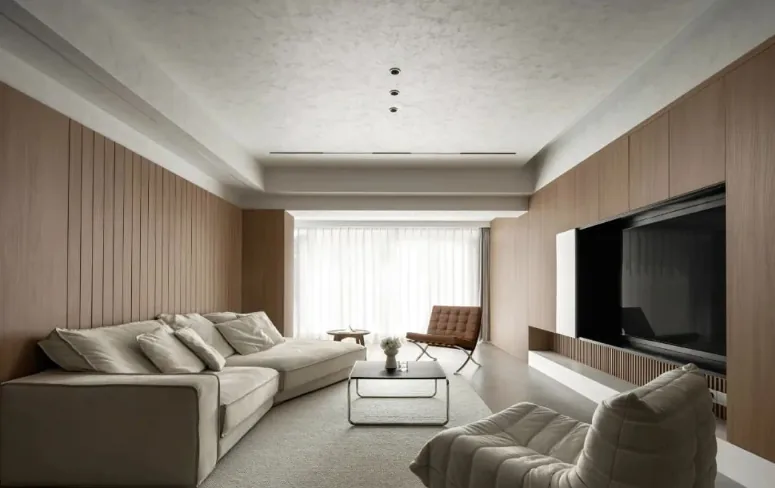
In the living room, a floor-to-ceiling storage cabinet serves as an all‑encompassing solution, combining robust storage capacity with meticulous attention to detail.
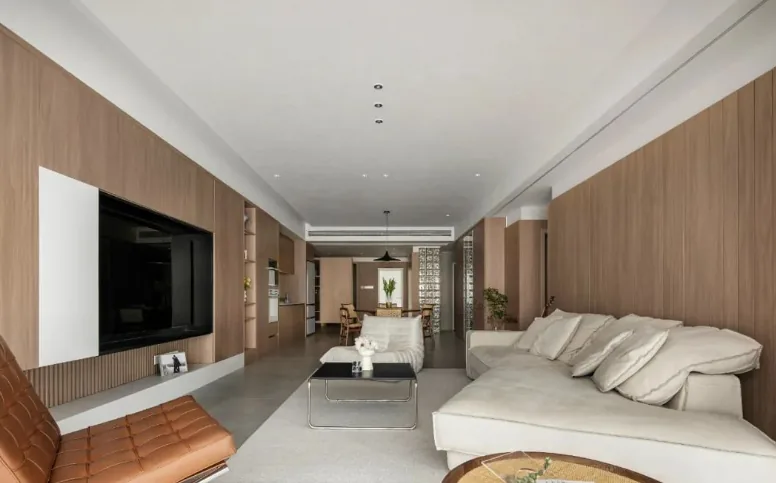
The TV cabinet is connected to the tall cabinets of the Western kitchen, forming a unified structure without being separated, yet still thoughtfully organized into distinct storage zones.
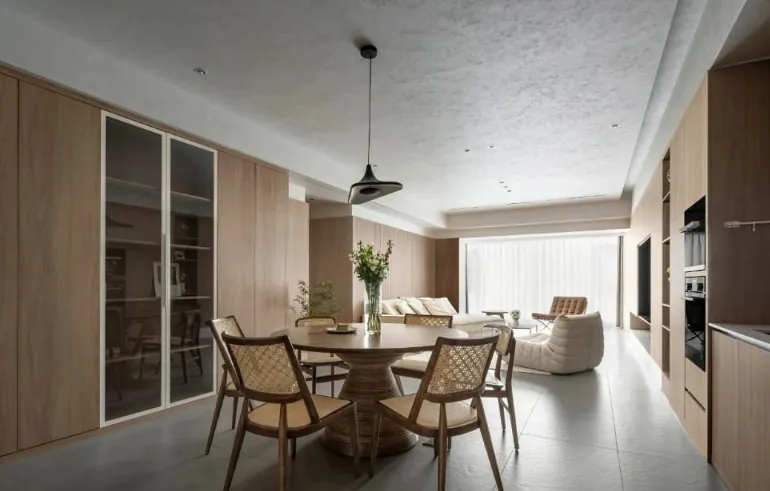
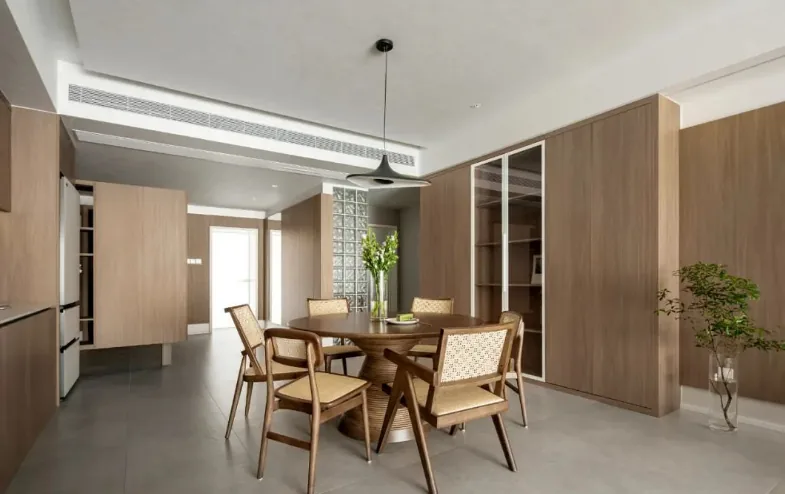
Beyond the foyer lies the dining area, where a vintage walnut round table—sourced from another region—takes center stage as the main dining table. Complementing it are several chairs of varying styles, chosen not for deliberate coordination but simply because they resonate with personal taste and a love for life.
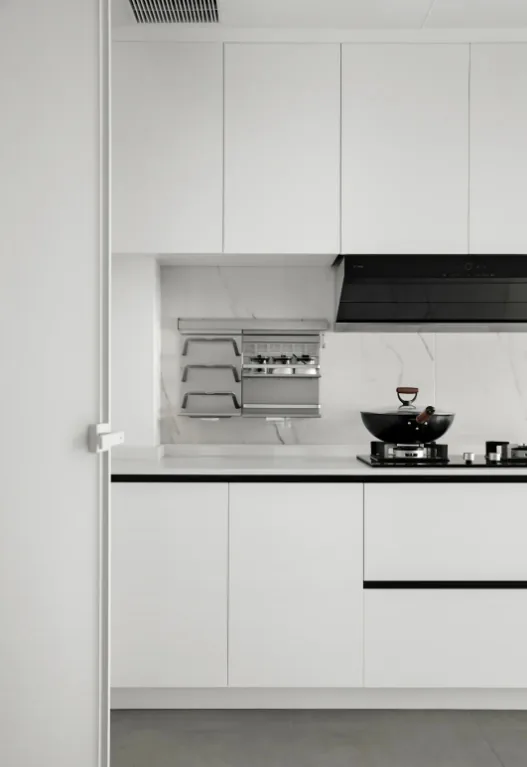
In the kitchen, while preserving ample space for utility areas, the overall layout has been expanded: the countertop has been extended toward the window, maximizing natural light and creating a more spacious working surface.
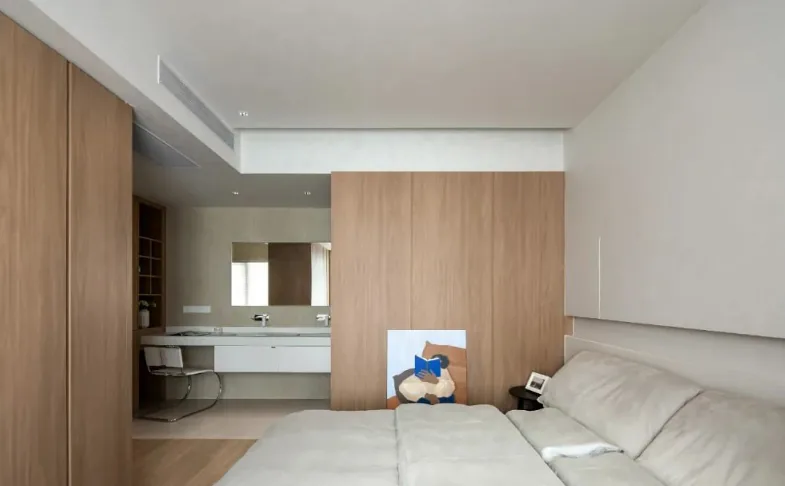
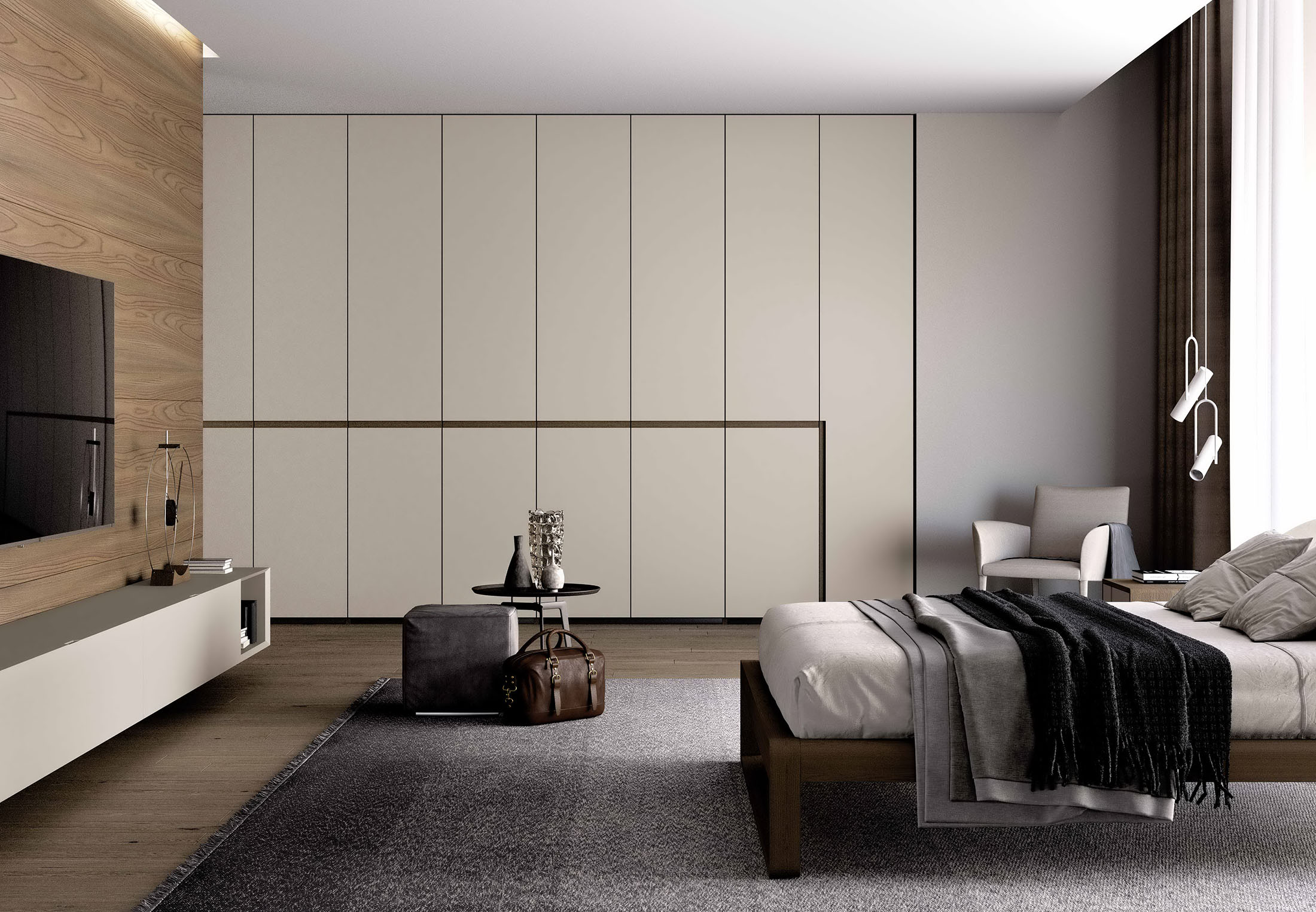
The master bedroom continues the cohesive color scheme of the entire space. By removing certain hallway sections and demolishing the non-load-bearing wall adjacent to the master suite, the two areas have been merged into one fluid, interconnected space.
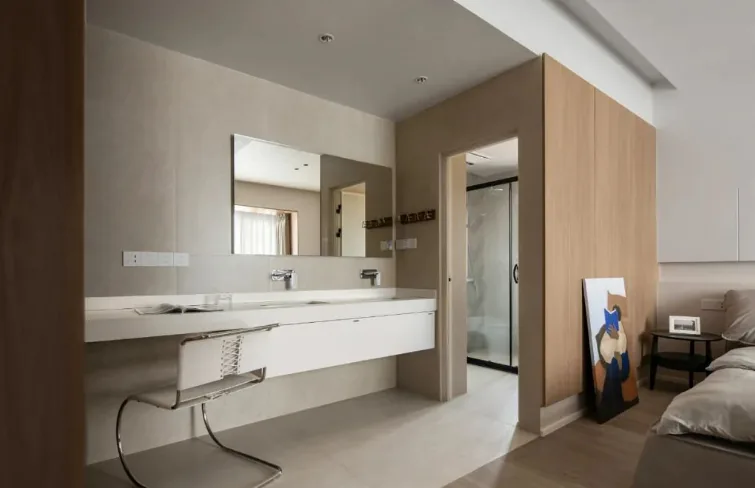
The bathroom features an extra‑long vanity unit with double sinks.
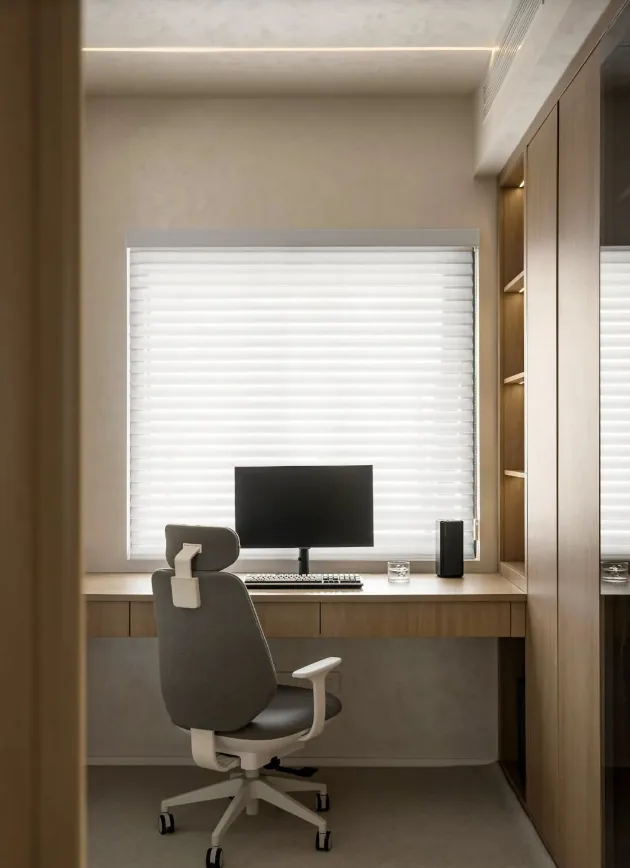
The walk-in closet and the multifunctional study area provide a comfortable setting for spending an entire day at home.
That wraps up our introduction to this whole‑house design in a natural wood style. If you like it, feel free to leave us a comment below!
More Articles

More Posts
How should the internal structure of a custom wardrobe be designed to maximize usability? The zoning logic determines storage efficiency.
Living Knowledge · 2026.10.29

How should the internal structure of a custom wardrobe be designed to maximize usability? The zoning logic determines storage efficiency.

How should you design the internal structure of a custom wardrobe to make it truly functional? The zoning logic determines storage efficiency. The effectiveness of a custom wardrobe depends on whether its internal layout aligns with your household’s actual clothing inventory and your habits for putting things in and taking them out. The correct design sequence is: first, take stock of your clothes; second, determine the zones; and only then consider the overall style. This article provides a set of zoning principles and dimension guidelines that you can apply directly. 1. Inventory First, Design Later: A wardrobe is a reflection of your clothing collection...

How to coordinate color schemes for whole-house customization? The 60-30-10 rule and four space-specific strategies.
Living Knowledge · 2026.10.29

How to coordinate color schemes for whole-house customization? The 60-30-10 rule and four space-specific strategies.

How do you coordinate colors for whole‑house customization? The 60–30–10 rule and four space‑specific strategies. The most common reason why color schemes in whole‑house customization fall flat isn’t that the colors themselves are unattractive, but rather that there are too many colors, the proportions are out of balance, or the materials and colors aren’t well integrated. Master one fundamental principle—the 60–30–10 ratio—and then choose a strategy based on the specific spatial conditions, and you’ll be able to make color choices you won’t regret. I. The 60–30–10 Rule: Let each color...

A Guide to Avoiding Pitfalls in Whole-House Customization: 6 Things You Must Confirm Before Signing the Contract
Living Knowledge · 2026.10.29

A Guide to Avoiding Pitfalls in Whole-House Customization: 6 Things You Must Confirm Before Signing the Contract

1. Board Material Environmental Safety: Rely on Test Reports, Not Verbal Promises It’s common for sellers to tout “environmentally friendly boards” without providing any official test reports. The formaldehyde emission limit for E1‑grade boards is ≤0.124 mg/m³; some retailers use this as a claim of eco‑friendliness, but it falls short for households with elderly residents or young children. A more reliable choice would be ENF‑grade (≤0.025 mg/m³) or E0‑grade (≤0.05 mg/m³), ...

BOOK A CONSULTATION

Want to Apply These Ideas to Your Own Home?

It can explain the apartment area, decoration stage and preferred style. The BOSNIE team will combine the home encyclopedia, real cases and product systems to provide one-to-one custom suggestions for the entire home.

Whole-House Design Case | Log‑Style: Embracing the Soft Comfort of Natural Materials | BOSNIE Official Website