Whole-House Design Case: Creating a Distinctive New Chinese Style
Living Knowledge · 2023.05.24

Whole-House Design Case: Creating a Distinctive New Chinese Style

As society evolves, the New Chinese style in home decoration has gradually become a part of our daily lives and quickly emerged as one of today’s most popular design trends. However, some people prefer their new homes to feature a New Chinese aesthetic that sets them apart from the conventional styles commonly seen, highlighting the unique charm of this particular design approach. So, once you learn how to incorporate New Chinese elements, you can craft a distinctive New Chinese style that stands out from the rest! Today, BOSNIE’s editor will walk you through exactly how to apply these New Chinese design elements. 1. Layering Don’t keep it too simple...

With the development of society, the New Chinese style in home decoration has gradually become a part of our daily lives and quickly emerged as one of today’s most popular design trends. However, some people prefer to make their new homes stand out by incorporating a New Chinese aesthetic that differs from conventional styles, thereby highlighting the unique beauty of this contemporary approach. So, once you learn how to skillfully integrate New Chinese elements, you can create a distinctive look that sets your space apart from others. Today, BOSNIE’s editor will guide you through the key ways to apply these New Chinese design principles.

Layering

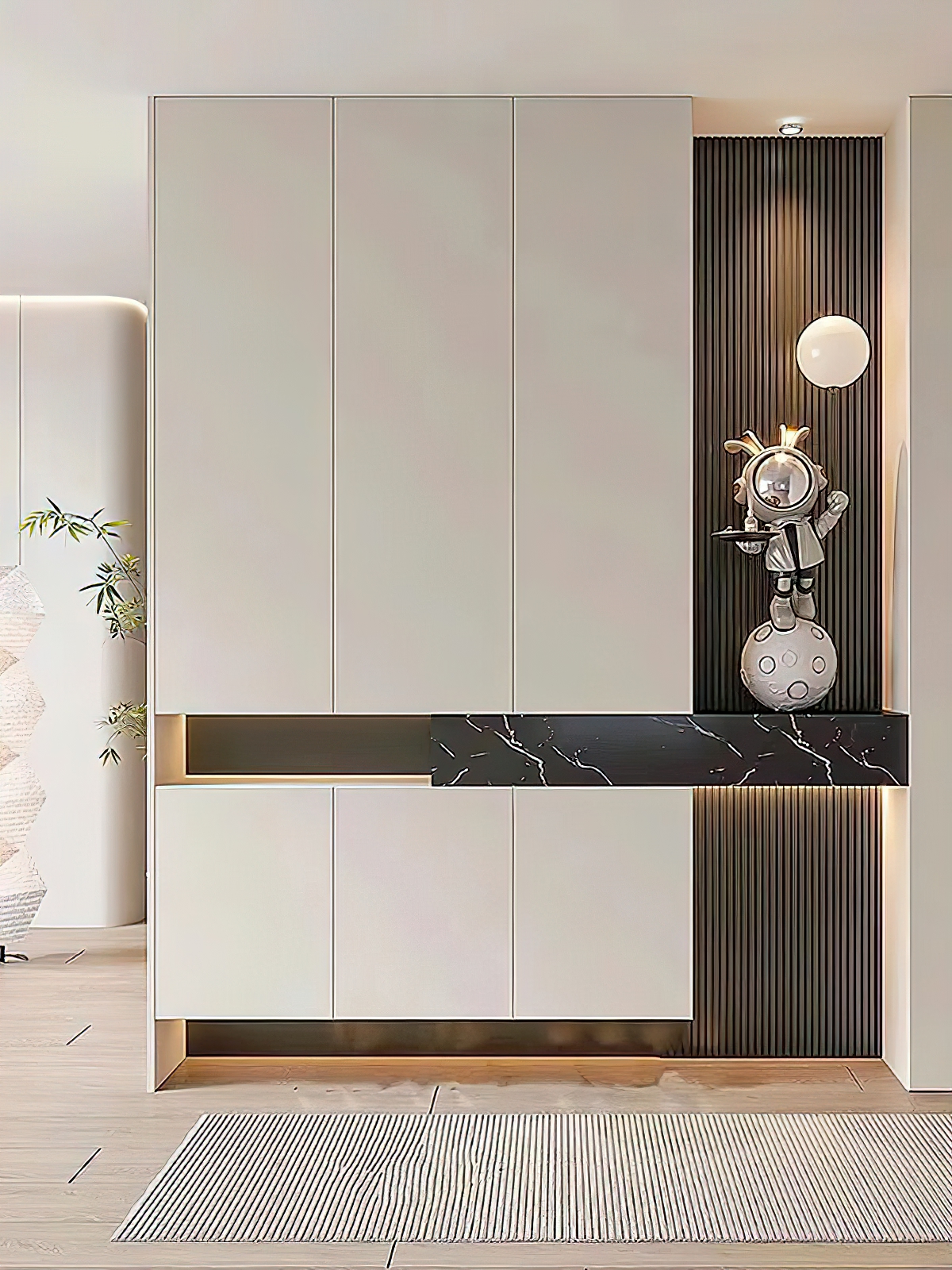
Don’t underestimate the importance of layering—New Chinese design places great emphasis on it. This is especially true when it comes to symmetrical lines. As New Chinese style builds upon traditional Chinese aesthetics while embracing modern touches, it still retains the hallmark of classical architecture: symmetry. Spaces designed with balanced, symmetrical lines feel more natural, comfortable, and warmly inviting. For example, consider ceiling designs or furniture arrangements. In smaller living spaces, you can use screens or lattice partitions to create an open, airy feel while subtly emphasizing different layers of visual interest.

Color

The color palette is another crucial component of the New Chinese style. Most often, designers focus on coordinating colors for furniture and wall finishes. Common combinations include black, white, gray, and natural wood tones; these four closely related hues can also serve as accent colors in specific areas. Such harmonious, similar-toned palettes avoid overwhelming the space and maintain a sense of balance and elegance.

Furniture

When selecting furniture materials, we also strive for authenticity. For instance, choosing pieces that highlight traditional Chinese motifs—such as white-wax wood furniture—can strike the perfect balance between classic charm and modern flair. By blending time-honored Chinese elements with contemporary design, you can prevent the living room from feeling overly old-fashioned. Consider how furnishings like sofas and pendant lights are arranged—they both play a vital role in enhancing the overall New Chinese ambiance of the space.

That concludes our introduction to this full‑home design in the New Chinese style. If you like it, feel free to leave us a comment!
More Articles

More Posts
How should the internal structure of a custom wardrobe be designed to maximize usability? The zoning logic determines storage efficiency.
Living Knowledge · 2026.10.29

How should the internal structure of a custom wardrobe be designed to maximize usability? The zoning logic determines storage efficiency.

How should you design the internal structure of a custom wardrobe to make it truly functional? The zoning logic determines storage efficiency. The effectiveness of a custom wardrobe depends on whether its internal layout aligns with your household’s actual clothing inventory and your habits for putting things in and taking them out. The correct design sequence is: first, take stock of your clothes; second, determine the zones; and only then consider the overall style. This article provides a set of zoning principles and dimension guidelines that you can apply directly. 1. Inventory First, Design Later: A wardrobe is a reflection of your clothing collection...

How to coordinate color schemes for whole-house customization? The 60-30-10 rule and four space-specific strategies.
Living Knowledge · 2026.10.29

How to coordinate color schemes for whole-house customization? The 60-30-10 rule and four space-specific strategies.

How do you coordinate colors for whole‑house customization? The 60–30–10 rule and four space‑specific strategies. The most common reason why color schemes in whole‑house customization fall flat isn’t that the colors themselves are unattractive, but rather that there are too many colors, the proportions are out of balance, or the materials and colors aren’t well integrated. Master one fundamental principle—the 60–30–10 ratio—and then choose a strategy based on the specific spatial conditions, and you’ll be able to make color choices you won’t regret. I. The 60–30–10 Rule: Let each color...

A Guide to Avoiding Pitfalls in Whole-House Customization: 6 Things You Must Confirm Before Signing the Contract
Living Knowledge · 2026.10.29

A Guide to Avoiding Pitfalls in Whole-House Customization: 6 Things You Must Confirm Before Signing the Contract

1. Board Material Environmental Safety: Rely on Test Reports, Not Verbal Promises It’s common for sellers to tout “environmentally friendly boards” without providing any official test reports. The formaldehyde emission limit for E1‑grade boards is ≤0.124 mg/m³; some retailers use this as a claim of eco‑friendliness, but it falls short for households with elderly residents or young children. A more reliable choice would be ENF‑grade (≤0.025 mg/m³) or E0‑grade (≤0.05 mg/m³), ...

BOOK A CONSULTATION

Want to Apply These Ideas to Your Own Home?

It can explain the apartment area, decoration stage and preferred style. The BOSNIE team will combine the home encyclopedia, real cases and product systems to provide one-to-one custom suggestions for the entire home.

Whole-House Design Case: Creating a Distinctive New Chinese Style | BOSNIE Official Website