Whole-House Design Case | A Pure and Warm-Hearted Home
Living Knowledge · 2023.05.20

Whole-House Design Case | A Pure and Warm-Hearted Home

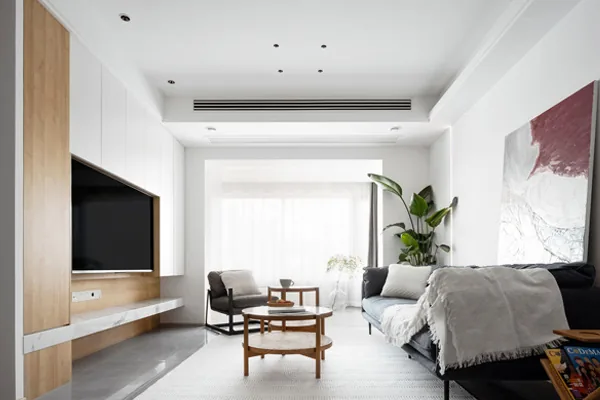
This case showcases a minimalist-style, full‑house design. Let’s take a look! In the living room, white is punctuated by wood tones, creating a clean, natural aesthetic and a bright, open space. The layout is open‑plan, seamlessly connecting the living, dining, and kitchen areas. The integrated ceiling design complements the open‑concept layout, enhancing the sense of airiness. For lighting, the living room features an elegant, fixture‑free design, while the dining area boasts a linear suspended ceiling, offering a streamlined visual appeal that blends effortlessly into the space. White wall cabinets are paired with wood‑toned base cabinets, and the dining area is furnished with a complete set of black tables and chairs, lending a touch of composure and grandeur. Adjacent to the balcony, glass…

This case presents a minimalist, whole‑house design. Let’s take a look at it together!

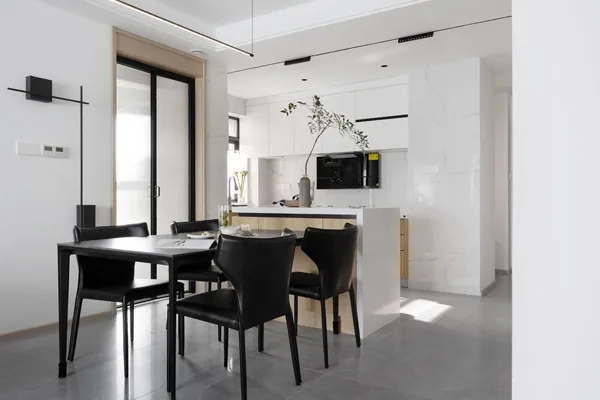
In the living room, white is punctuated by warm wood tones, creating a clean, natural aesthetic and a bright, open space. The open‑plan layout seamlessly integrates the living, dining, and kitchen areas, while the unified ceiling design echoes the fluidity of the open space, enhancing its sense of airiness. For lighting, a visually appealing no‑main‑light scheme was chosen for the living room, while the dining area features a linear suspended ceiling, offering a streamlined, unobtrusive beauty.
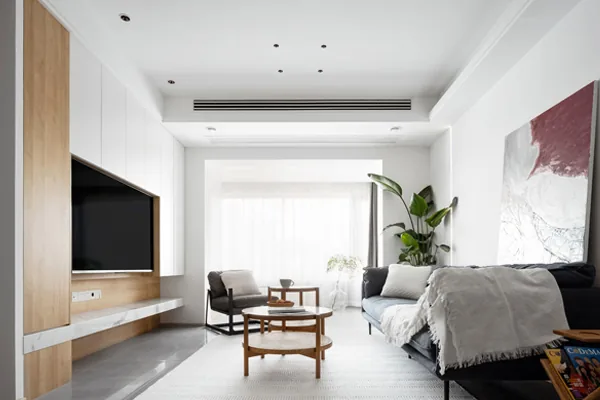
White wall cabinets are paired with wood‑toned base cabinets, and a complete set of black dining furniture lends the space a sense of composure and grandeur. Adjacent to the utility balcony, glass doors provide a transparent yet private partition, ensuring ample natural light in the dining area.
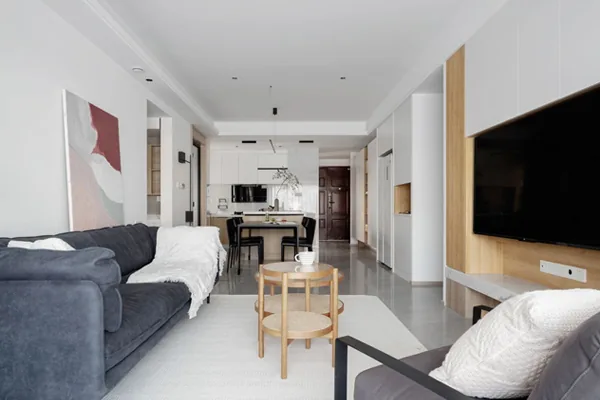
Along one side of the dining area, a large storage cabinet has been designed, with an open‑style display shelf integrated into the middle. This balanced mix of closed and open elements, combined with the interplay of white and wood tones, delivers a visually engaging and lively look. Enhanced by natural daylight, the space feels warm and inviting.
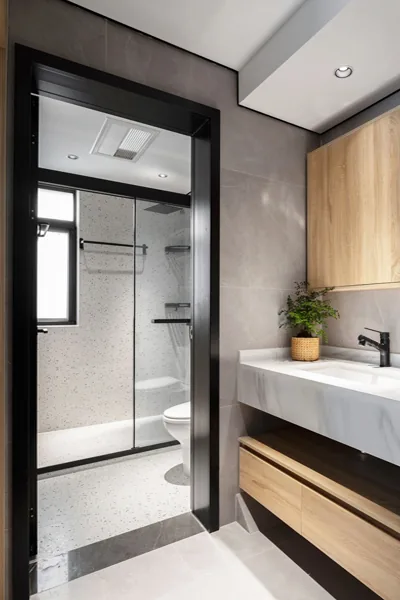
The bathroom adopts a split‑level design, making daily life more comfortable and convenient. In the dry zone, gray wall tiles are complemented by a marble‑textured vanity, wooden wall cabinets, and a black faucet—creating a serene yet tactile atmosphere.
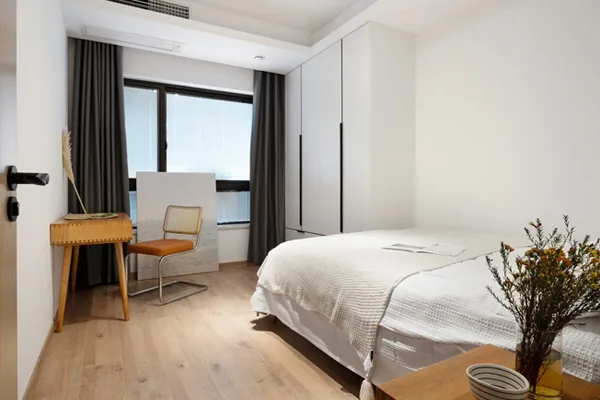
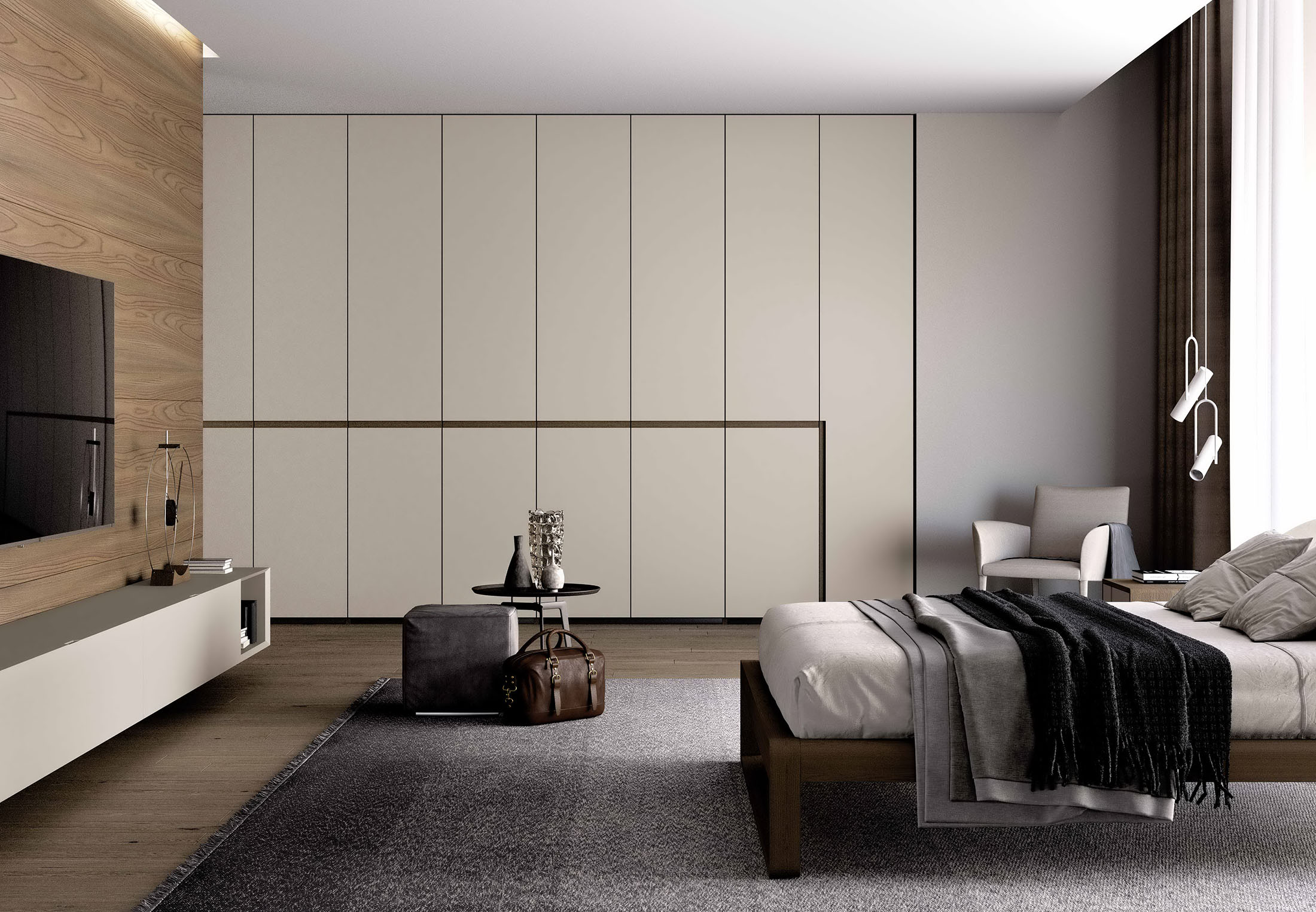
The bedroom is predominantly white, accented by wood‑colored furniture and flooring, exuding a natural, soft warmth that is both soothing and cozy.
That concludes our introduction to this minimalist-style home design case. If you enjoyed it, feel free to leave us a comment and join the conversation!
More Articles

More Posts
How should the internal structure of a custom wardrobe be designed to maximize usability? The zoning logic determines storage efficiency.
Living Knowledge · 2026.10.29

How should the internal structure of a custom wardrobe be designed to maximize usability? The zoning logic determines storage efficiency.

How should you design the internal structure of a custom wardrobe to make it truly functional? The zoning logic determines storage efficiency. The effectiveness of a custom wardrobe depends on whether its internal layout aligns with your household’s actual clothing inventory and your habits for putting things in and taking them out. The correct design sequence is: first, take stock of your clothes; second, determine the zones; and only then consider the overall style. This article provides a set of zoning principles and dimension guidelines that you can apply directly. 1. Inventory First, Design Later: A wardrobe is a reflection of your clothing collection...

How to coordinate color schemes for whole-house customization? The 60-30-10 rule and four space-specific strategies.
Living Knowledge · 2026.10.29

How to coordinate color schemes for whole-house customization? The 60-30-10 rule and four space-specific strategies.

How do you coordinate colors for whole‑house customization? The 60–30–10 rule and four space‑specific strategies. The most common reason why color schemes in whole‑house customization fall flat isn’t that the colors themselves are unattractive, but rather that there are too many colors, the proportions are out of balance, or the materials and colors aren’t well integrated. Master one fundamental principle—the 60–30–10 ratio—and then choose a strategy based on the specific spatial conditions, and you’ll be able to make color choices you won’t regret. I. The 60–30–10 Rule: Let each color...

A Guide to Avoiding Pitfalls in Whole-House Customization: 6 Things You Must Confirm Before Signing the Contract
Living Knowledge · 2026.10.29

A Guide to Avoiding Pitfalls in Whole-House Customization: 6 Things You Must Confirm Before Signing the Contract

1. Board Material Environmental Safety: Rely on Test Reports, Not Verbal Promises It’s common for sellers to tout “environmentally friendly boards” without providing any official test reports. The formaldehyde emission limit for E1‑grade boards is ≤0.124 mg/m³; some retailers use this as a claim of eco‑friendliness, but it falls short for households with elderly residents or young children. A more reliable choice would be ENF‑grade (≤0.025 mg/m³) or E0‑grade (≤0.05 mg/m³), ...

BOOK A CONSULTATION

Want to Apply These Ideas to Your Own Home?

It can explain the apartment area, decoration stage and preferred style. The BOSNIE team will combine the home encyclopedia, real cases and product systems to provide one-to-one custom suggestions for the entire home.

Whole-House Design Case | A Pure and Warm-Hearted Home | BOSNIE Official Website