Whole-House Design Case | A Minimalist Home in White Tones
Living Knowledge · 2023.05.06

Whole-House Design Case | A Minimalist Home in White Tones

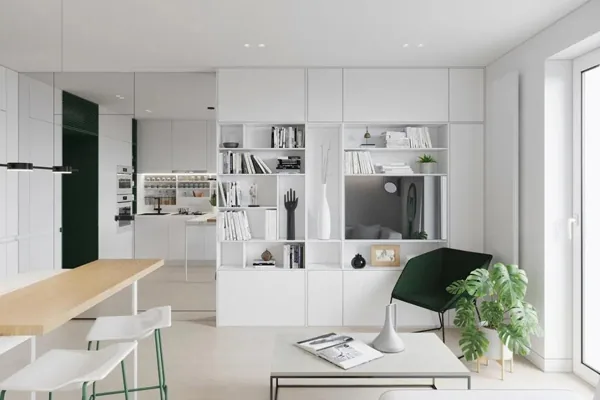
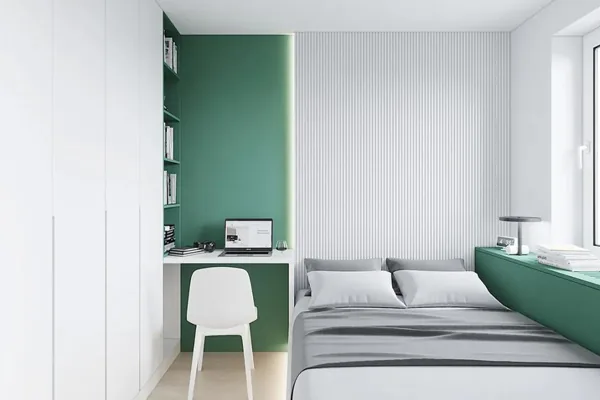
This case showcases a minimalist, full‑house design where the entire space is dominated by expansive white tones, accented with a chic, lively mint green that lends an artistic flair. The room’s white storage elements seamlessly connect and transition with the mint‑green accents, making the space feel both spacious and bright. Let’s take a closer look at this design together! Above the sofa, a wall cabinet forms a unifying element with the adjacent kitchen, creating a harmonious link that provides ample storage for both areas. Vertical textural lines run throughout the home, infusing every corner with character; in the kitchen, a linear pendant light visually elevates the height and…

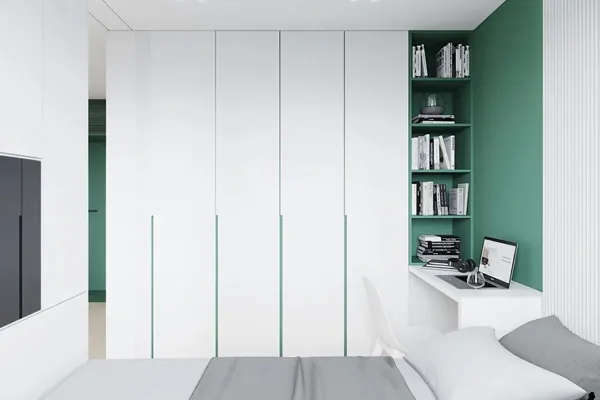
This case presents a minimalist, whole‑house design. The entire space is dominated by large swaths of white, accented with a fresh, lively mint green that lends an artistic touch. The room’s white storage units seamlessly connect and transition with the mint‑green elements, making the space feel both spacious and bright. Let’s take a closer look at this project!

The wall cabinets above the sofa form a unifying element with the adjacent kitchen, creating a harmonious link that provides ample storage for both areas.
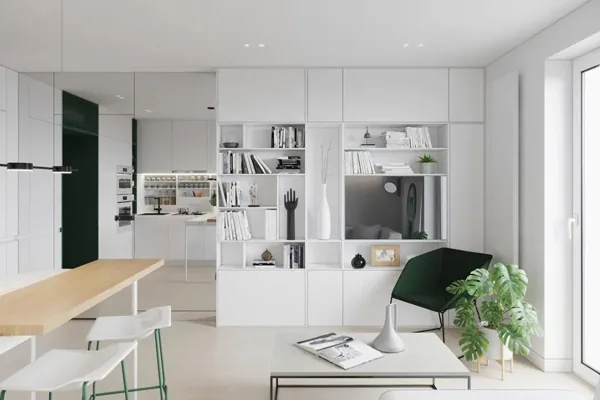
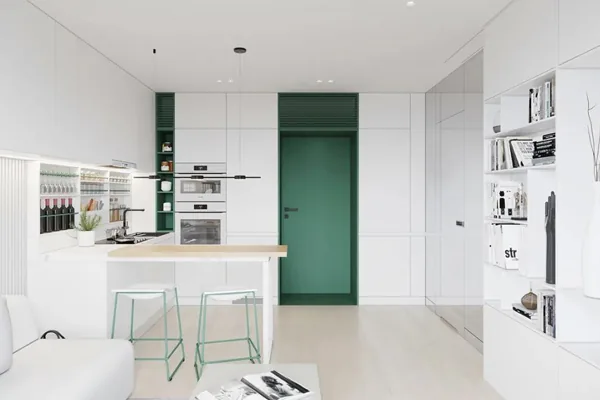
Vertical textural lines run throughout every corner of the home. In the kitchen, the linear pendant lights visually heighten the space and enhance the aesthetic appeal of the kitchen‑dining peninsula. The wooden countertops give the dining area a distinctive character that sets it apart from the other all‑white fixtures, introducing a warm, inviting note within the predominantly monochromatic palette.
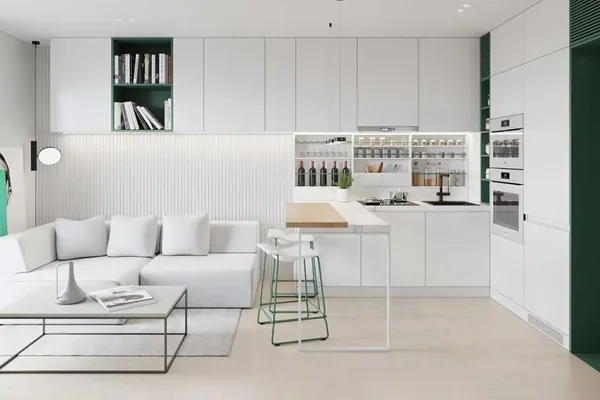
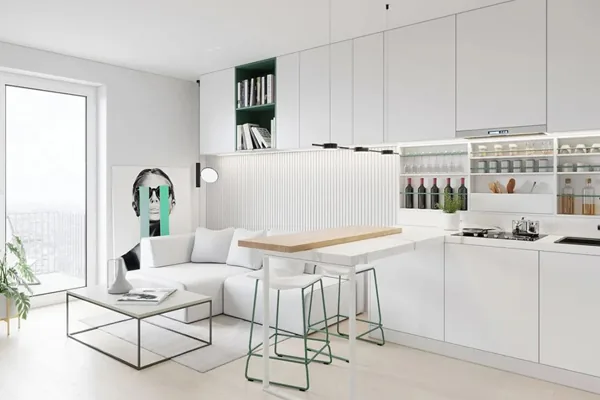
The open‑plan kitchen’s shelving and exposed cabinets feature saturated green accents that complement the color scheme of the rest of the home, visually expanding the compact space and lending the overall layout a sense of fluidity and continuity.
That’s all for this minimalist, whole-home design case. If you like it, feel free to leave us a comment and join the giveaway!
More Articles

More Posts
How should the internal structure of a custom wardrobe be designed to maximize usability? The zoning logic determines storage efficiency.
Living Knowledge · 2026.10.29

How should the internal structure of a custom wardrobe be designed to maximize usability? The zoning logic determines storage efficiency.

How should you design the internal structure of a custom wardrobe to make it truly functional? The zoning logic determines storage efficiency. The effectiveness of a custom wardrobe depends on whether its internal layout aligns with your household’s actual clothing inventory and your habits for putting things in and taking them out. The correct design sequence is: first, take stock of your clothes; second, determine the zones; and only then consider the overall style. This article provides a set of zoning principles and dimension guidelines that you can apply directly. 1. Inventory First, Design Later: A wardrobe is a reflection of your clothing collection...

How to coordinate color schemes for whole-house customization? The 60-30-10 rule and four space-specific strategies.
Living Knowledge · 2026.10.29

How to coordinate color schemes for whole-house customization? The 60-30-10 rule and four space-specific strategies.

How do you coordinate colors for whole‑house customization? The 60–30–10 rule and four space‑specific strategies. The most common reason why color schemes in whole‑house customization fall flat isn’t that the colors themselves are unattractive, but rather that there are too many colors, the proportions are out of balance, or the materials and colors aren’t well integrated. Master one fundamental principle—the 60–30–10 ratio—and then choose a strategy based on the specific spatial conditions, and you’ll be able to make color choices you won’t regret. I. The 60–30–10 Rule: Let each color...

A Guide to Avoiding Pitfalls in Whole-House Customization: 6 Things You Must Confirm Before Signing the Contract
Living Knowledge · 2026.10.29

A Guide to Avoiding Pitfalls in Whole-House Customization: 6 Things You Must Confirm Before Signing the Contract

1. Board Material Environmental Safety: Rely on Test Reports, Not Verbal Promises It’s common for sellers to tout “environmentally friendly boards” without providing any official test reports. The formaldehyde emission limit for E1‑grade boards is ≤0.124 mg/m³; some retailers use this as a claim of eco‑friendliness, but it falls short for households with elderly residents or young children. A more reliable choice would be ENF‑grade (≤0.025 mg/m³) or E0‑grade (≤0.05 mg/m³), ...

BOOK A CONSULTATION

Want to Apply These Ideas to Your Own Home?

It can explain the apartment area, decoration stage and preferred style. The BOSNIE team will combine the home encyclopedia, real cases and product systems to provide one-to-one custom suggestions for the entire home.