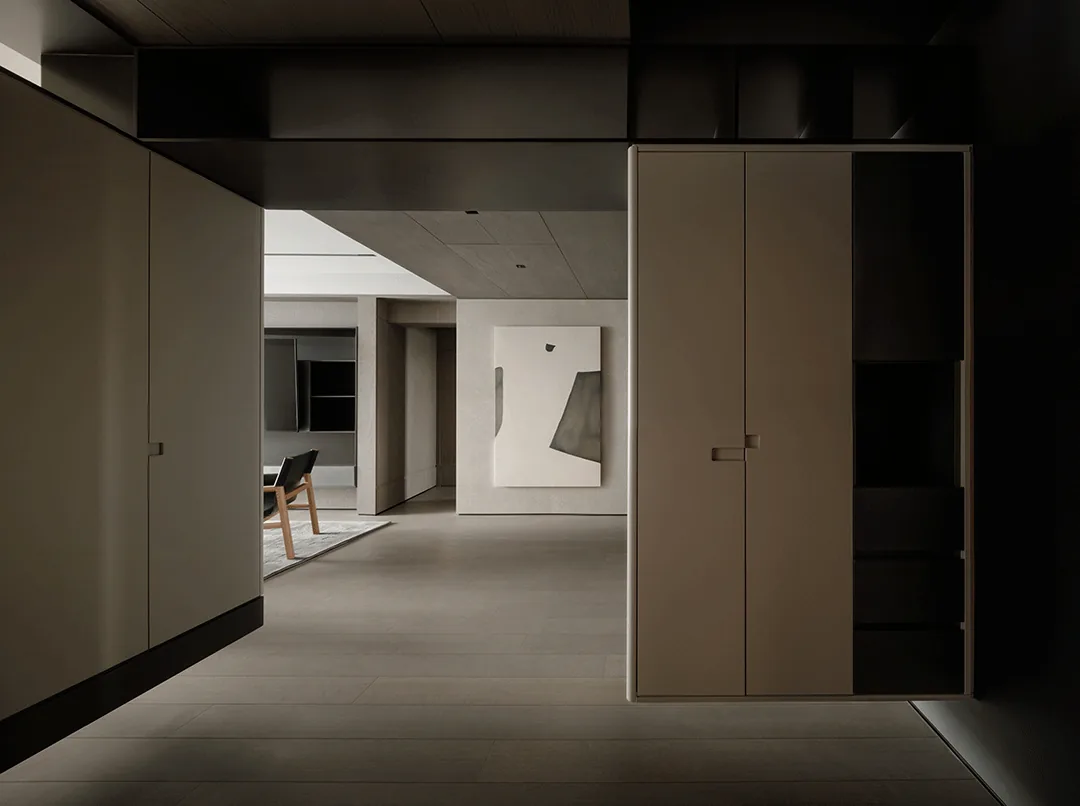
In this project, the designer prioritized practical living needs while also elevating everyday quality of life. The core design concept centers on resolving spatial imbalance—delivering comprehensive functionality without compromising refined aesthetics.
The space unfolds progressively from south to north, alleviating the unease caused by the original narrow, elongated layout and enabling seamless overlap and visual penetration between circulation paths and sightlines. The circulation route between public and private zones functions like a traditional courtyard’s central atrium, naturally separating flows. This layered progression and functional separation transforms an originally irregular space into one of harmonious order.
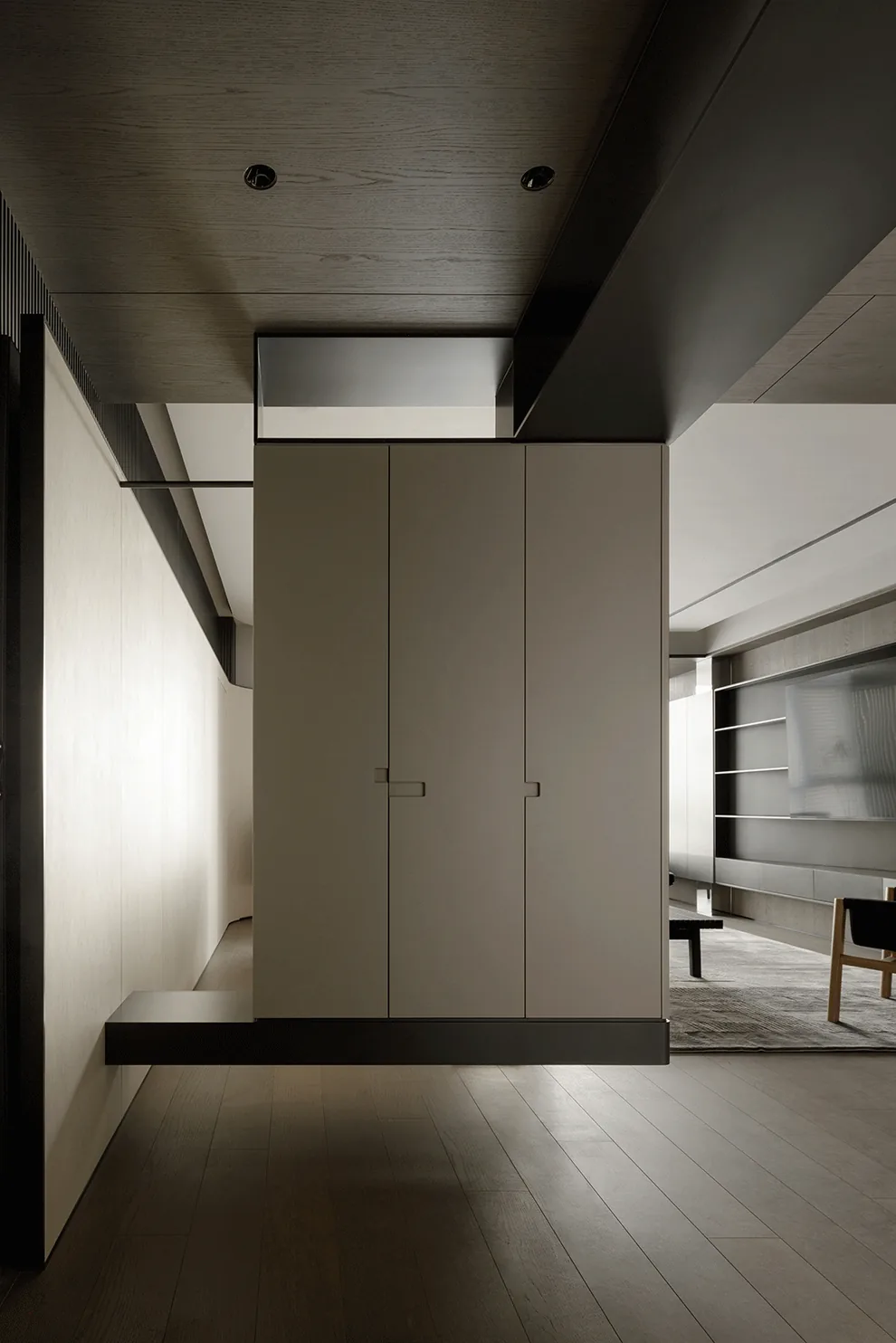
Integrating practical entryway requirements, the designer thoughtfully incorporated a full-length mirror, shoe-changing bench, coat hooks, and storage cabinets—all designed with floating upper and lower elements to enhance ventilation and natural light. Function and style are thus seamlessly unified.
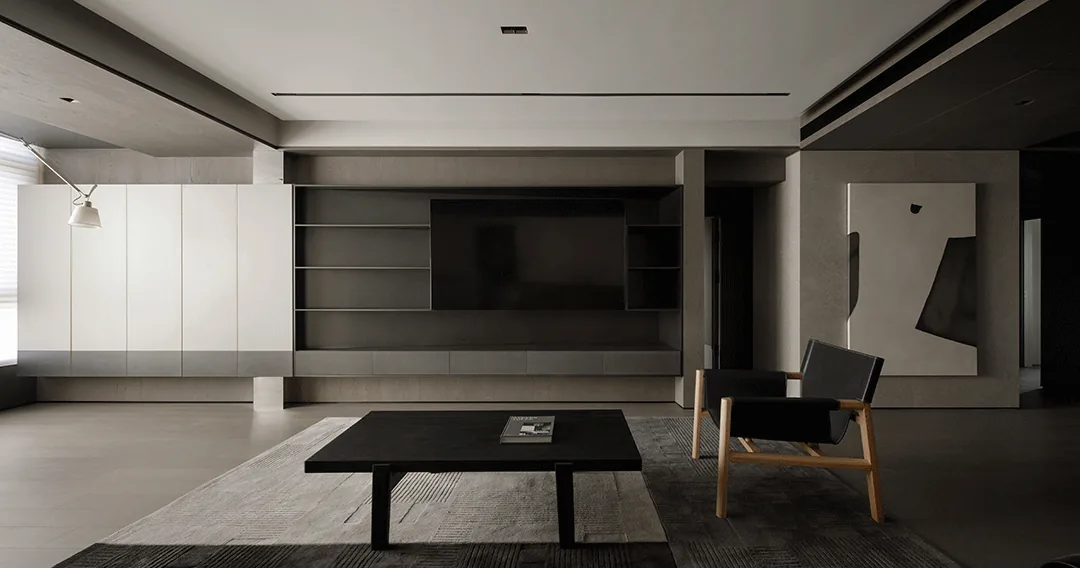
The living room TV cabinet follows the angled wall, aligning its edges precisely. The balcony has been opened up to strengthen spatial continuity, allowing flexible soft furnishings to adapt effortlessly to diverse scenarios. A leather-clad accent wall extends from the entryway through to the balcony, enhancing spatial interaction.
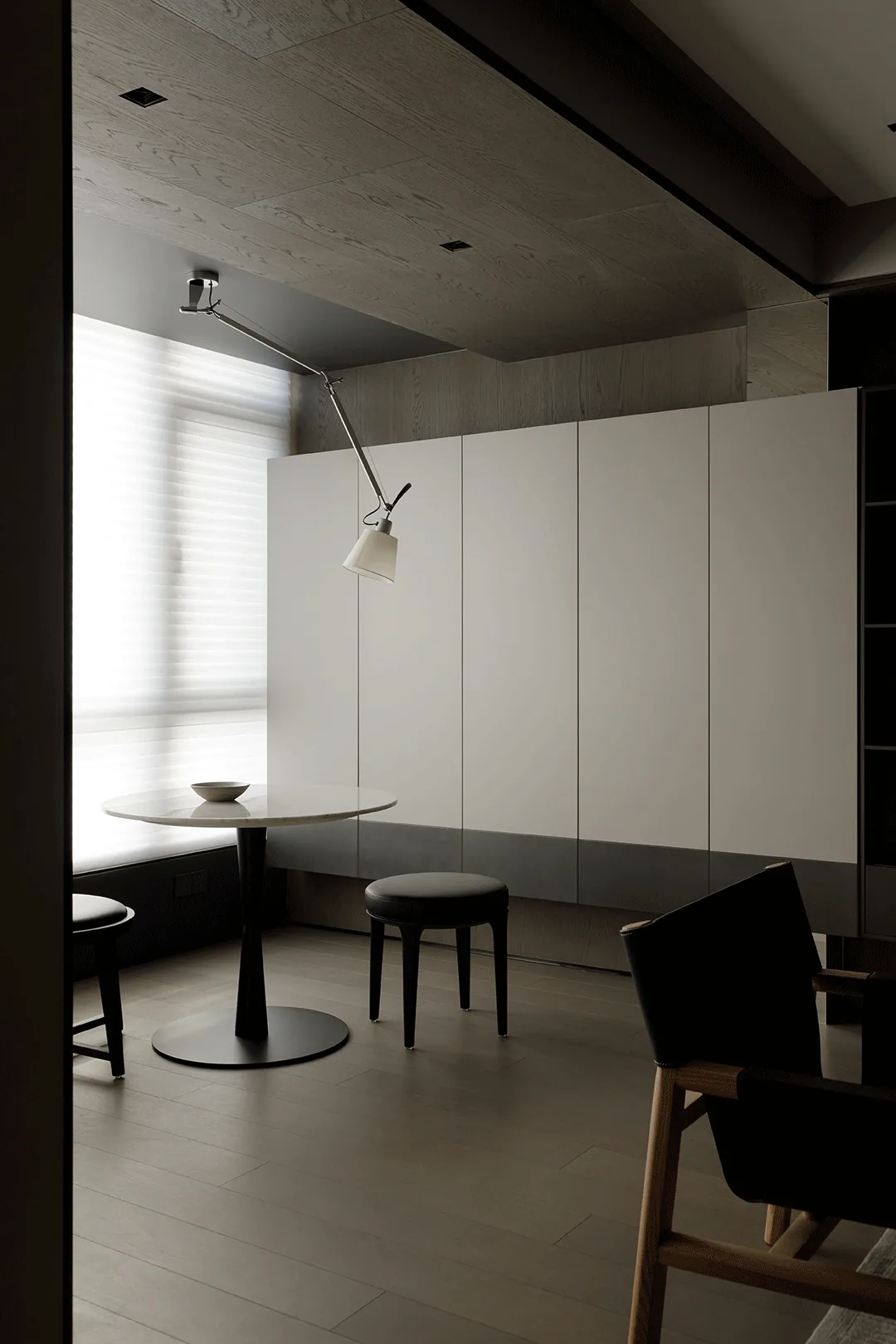
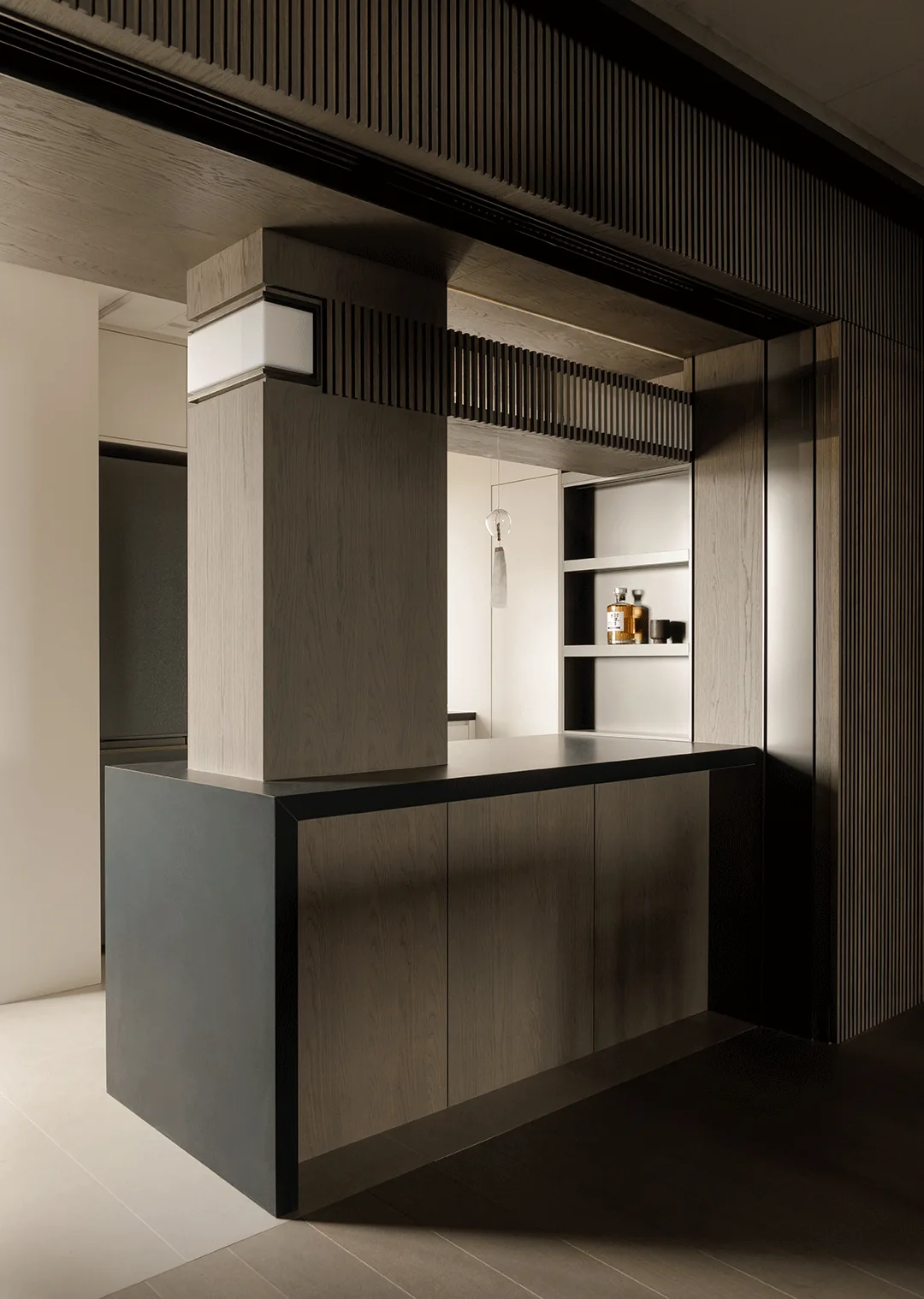
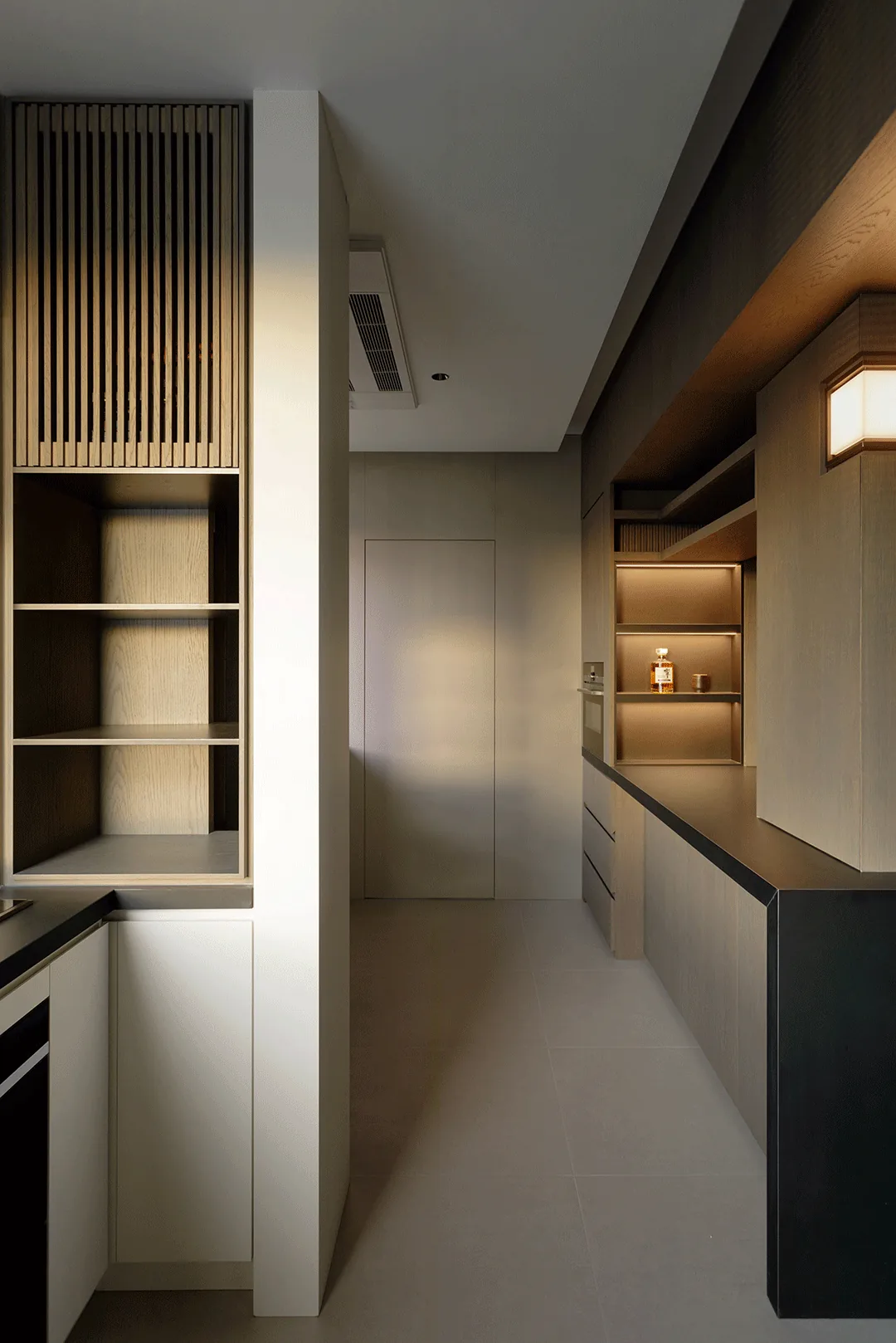
The dining and living areas enjoy fluid connectivity via a square-patterned pivot door. The island, sideboard, wine cabinet, and wet bar collectively deliver comprehensive functionality. Under natural light, a thoughtful mix of materials creates an elegant, refined atmosphere.
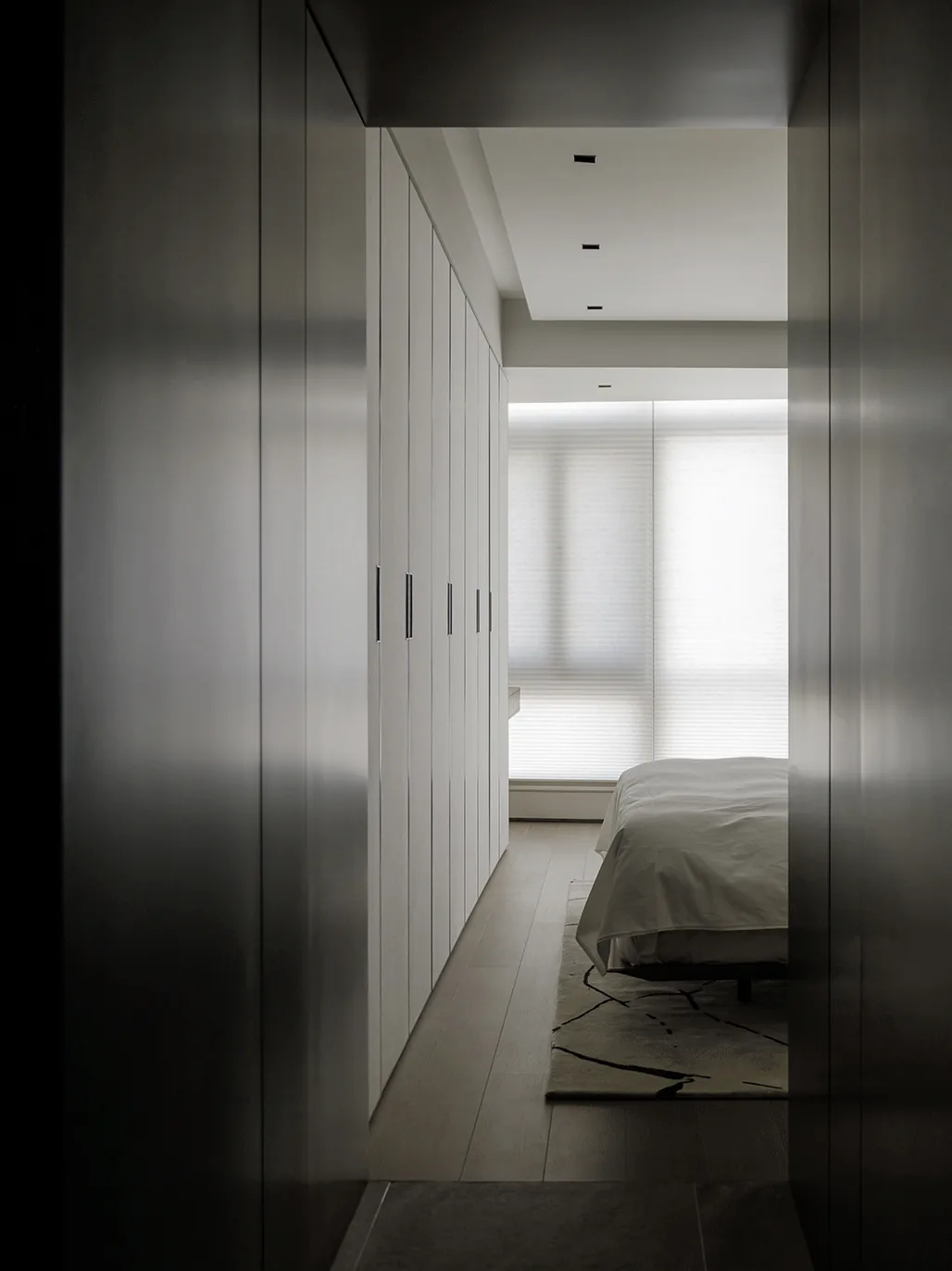
The master bedroom exudes understated serenity, cultivating a tranquil environment conducive to restful sleep.
The tatami platform, desk, and cabinetry form a cohesive unit—serving multiple purposes including relaxation, writing, storage, display, and integrated lighting. A playful feature wall offers creative potential for future young residents.