This case introduces a modern-style, whole‑house design. Let’s take a look at it together!
This is a high‑end, modern home design that is truly breathtaking. Through an interwoven volumetric approach, pure material details, and a dynamic play of solidity and void, the space has been meticulously crafted to evoke the relaxed ambiance of a mountain retreat. In such a living environment, you’ll discover that poetry and distant horizons are right here, within reach.
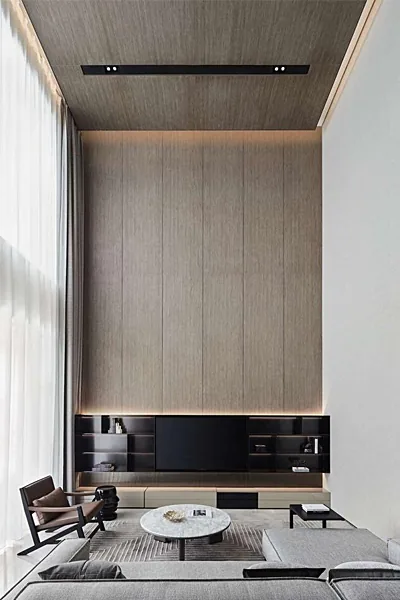
Step into the first floor and you’re immediately greeted by a generous layout, complemented by expansive floor‑to‑ceiling windows, where a sense of grandeur and refined comfort unfold naturally. Every aspect—spatial extension, lighting, materials, and formal transitions—has been carefully calibrated to enhance the charm of even the smallest details.
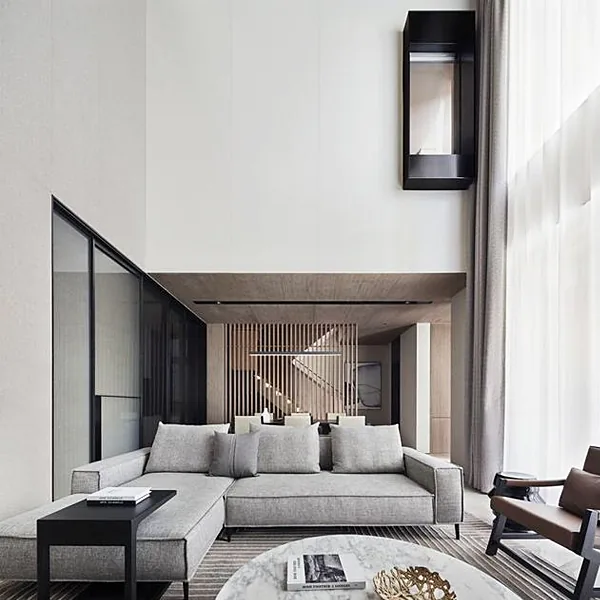
To foster a sense of openness and interaction, the second floor features an outward‑protruding BOX on its facade: much like a viewer perched above, it elevates the spatial hierarchy while framing views of the surroundings.
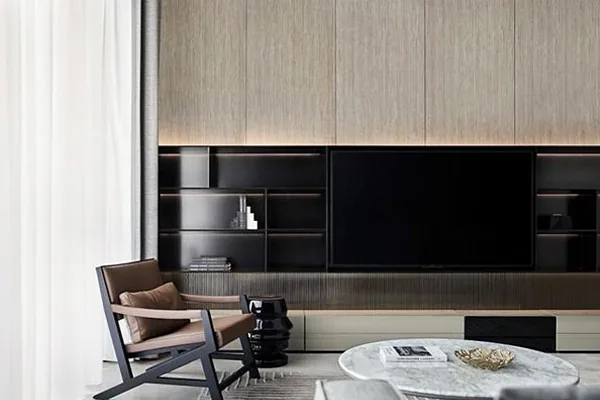
Adhering to a principle of restrained balance, the living and dining areas avoid excessive ornamentation, satisfying functional needs while subtly articulating a sense of spatial zoning. The double‑height façade steps back in a cascading sequence, with the dining area emerging organically from this rhythm—both a natural response to scale and a flexible orchestration of planes and volumes.
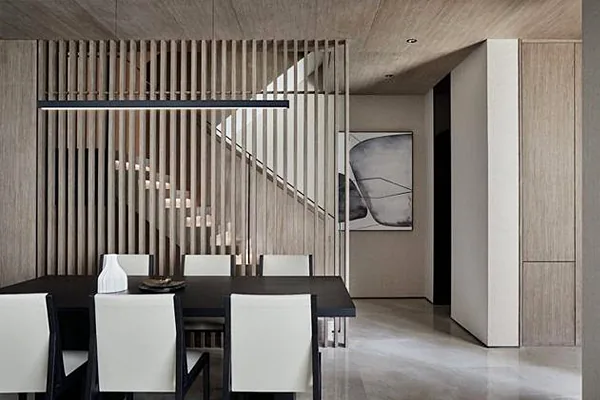
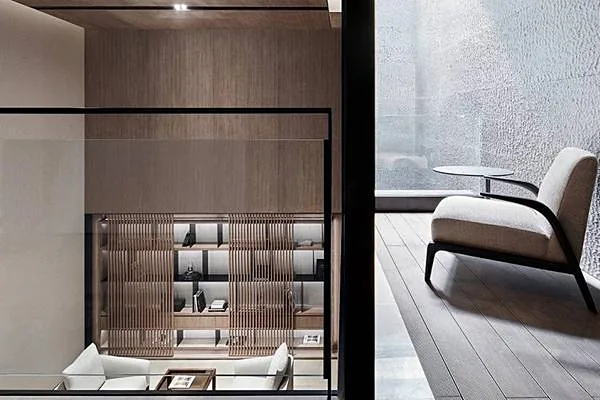
Within a semi‑enclosed setting, wired glass seamlessly connects the dining area and kitchen. A rhythmic wooden latticework paired with linear lighting evokes the scattered starlight filtering through a forest, infusing the space with joy and romance.
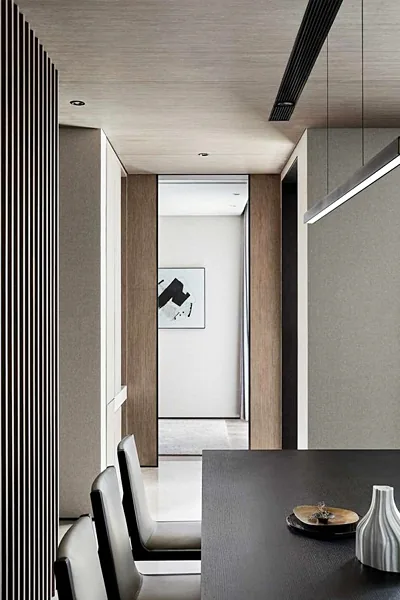
In the stairwell, delicate lines weave together connection and independence; the cleverly suspended handrail exemplifies the harmonious integration of function, aesthetics, and craftsmanship. With each step, one can savor the beauty of shifting light and shadow, while a convenient elevator stands in thoughtful dialogue with the staircase.
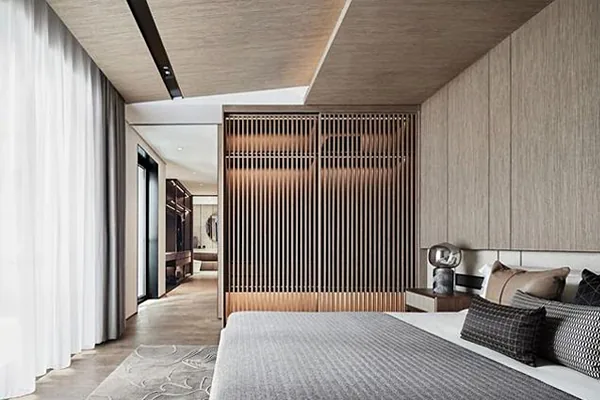
On the second floor, the master suite further refines spatial permeability and sensory delight. Drawing inspiration from layered mountain ranges, the designer orchestrates relationships of extension, intersection, and collision among broad planes, creating a staggered, interlocking composition. Sliding wooden lattice doors add a touch of ease and softness to the space.
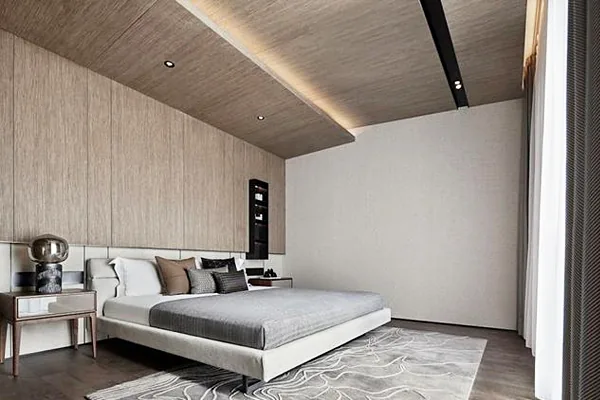
Extensive wood cladding imbues the room with a simple, warm atmosphere. A terrace extends the bedroom’s reach, offering a tranquil outdoor haven and elevating the overall quality of living—a testament to the suite’s meticulous design.
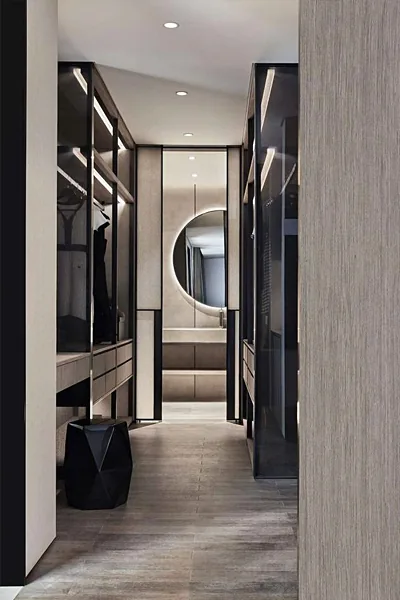
The open‑plan walk‑in closet is both transparent and lightweight, meeting practical needs while allowing a discerning taste to emerge subtly through its refined divisions.
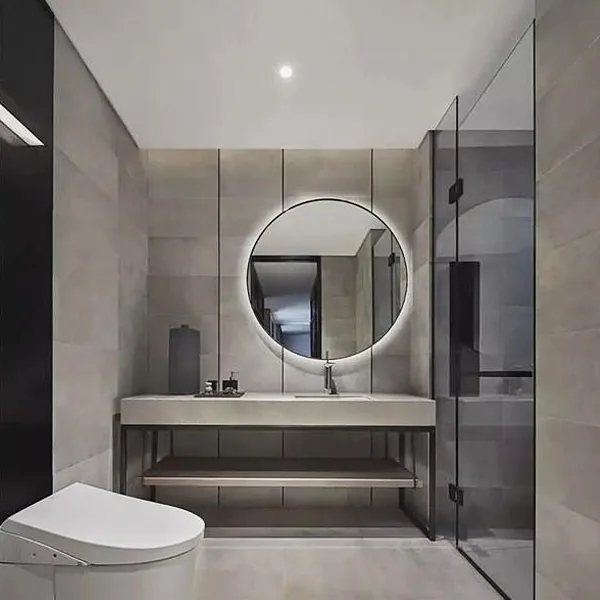
In the master bathroom, walls and floors are crafted from a single type of stone, punctuated by softly rounded mirrors—a perfect fusion of crisp minimalism and balanced elegance.
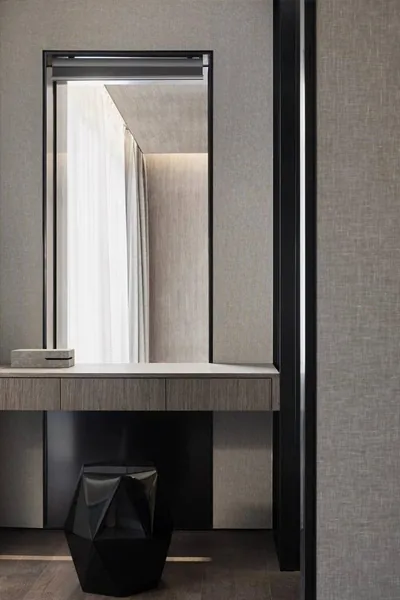
The vanity unit weaves together the vertical and horizontal axes of the space, forging strong connections. Seated at the vanity and gazing toward the living room feels like standing atop a mountain, taking in the surrounding landscape.
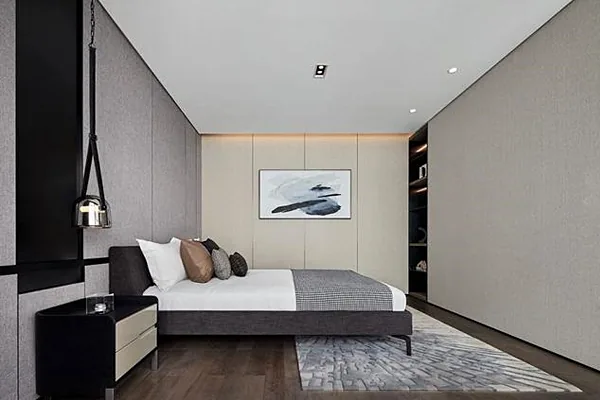
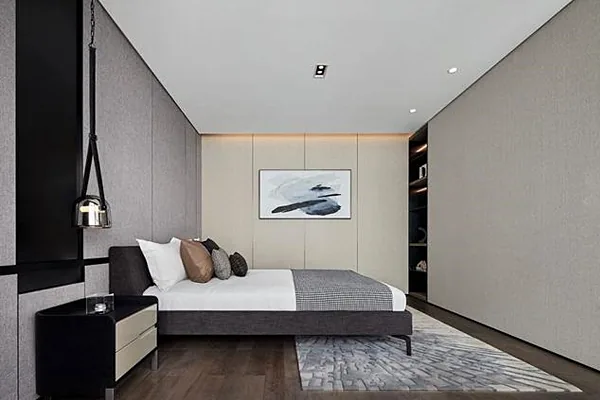
In the secondary bedroom suite, varying shades of gray create an elegant, understated texture, embodying the honest serenity of residential aesthetics. Brushed stainless steel with black titanium accents adds visual interest, breaking the monotony of a monochromatic bed backdrop and enlivening the room’s expression.
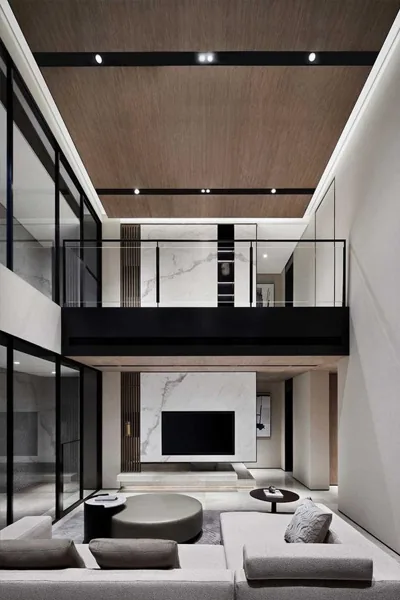
The basement level follows a similar layout to the ground floor, also featuring a semi‑double‑height design, with the warm, natural tone and textural details carried through. A light well brings natural illumination into the space, while the open‑plan arrangement ensures versatility and flexibility, accommodating a range of activities such as tea tasting, social gatherings, and movie‑watching.
That concludes our introduction to this modern-style, full‑home design. If you enjoyed it, feel free to leave us a comment and join the conversation!