Whole-House Design Case | Warm, Exotic Light Classicism
Living Knowledge · 2023.06.07

Whole-House Design Case | Warm, Exotic Light Classicism

This project showcases a full‑house design in the American style. Let’s take a look together! The living room is like a soft fabric gently draped across the ceiling, its rounded, undulating lines delicately wrapping around the central beam, subtly blurring the sense of structural mass. By employing flowing curves, the space maintains its original ceiling height while cleverly exposing the concealed air‑conditioning vents, ensuring that the open-plan living and dining areas enjoy excellent climate control. In this way, the public spaces are seamlessly interconnected, opening up a bright, unobstructed panoramic view. The dining area, bathed in warm natural daylight, is further enhanced by an elegant pendant light, warm‑toned moldings, and carefully arranged greenery...

This case showcases a full‑house design in the American style. Let’s take a look together!

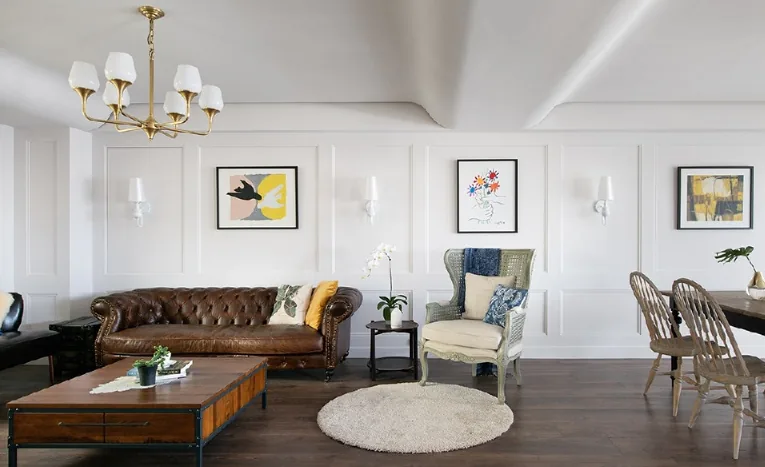
The living room resembles a soft fabric gently draped across the ceiling, its rounded, undulating lines delicately enveloping the central beam. By subtly blurring the structure’s substantial mass, the design maintains the original ceiling height while cleverly exposing concealed air-conditioning vents, ensuring that the spacious open-plan living and dining areas enjoy excellent climate control. In doing so, it seamlessly connects the public spaces, opening up a bright, unobstructed panoramic view.
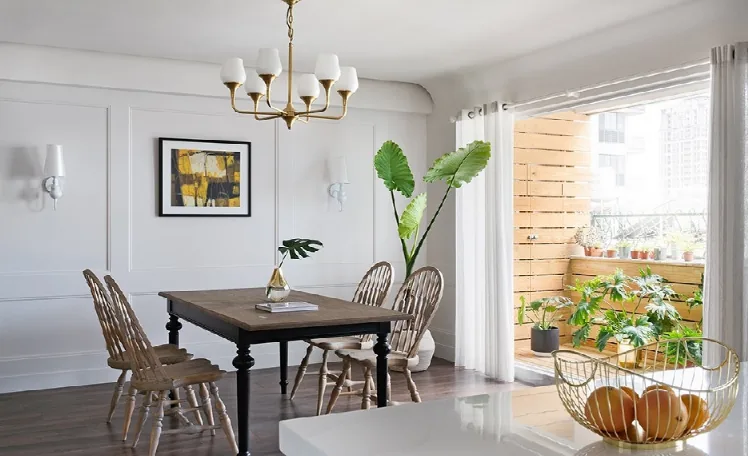
Bathed in warm natural light, complemented by an elegant pendant lamp, warm-toned skirting boards, and lush greenery, the dining area creates a delightful and inviting setting for meals—and serves as the first comforting scene one encounters upon returning home.
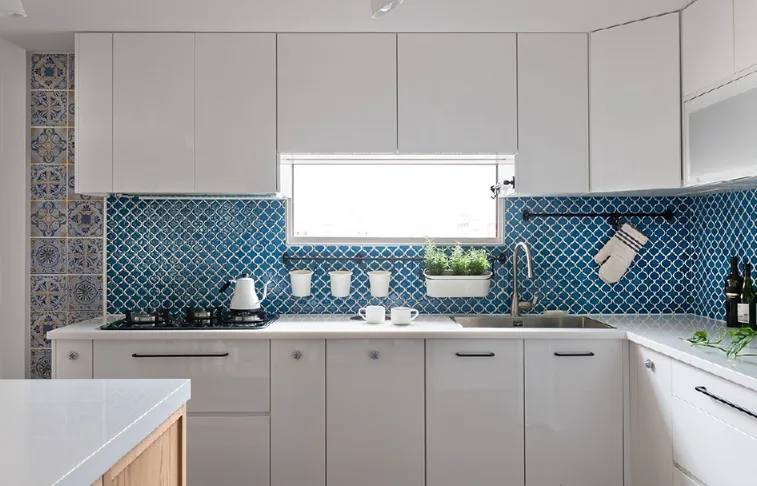
The kitchen features a custom-built storage cabinet that combines space for everyday essentials, a large oven, and a spot for small appliances, creating a smooth, unobstructed workflow. A compact yet thoughtful countertop, slightly lowered and extended into a cozy nook, invites residents to display potted plants or decorative accents, infusing daily life with a natural, artistic flair and bringing their dream culinary environment to life.
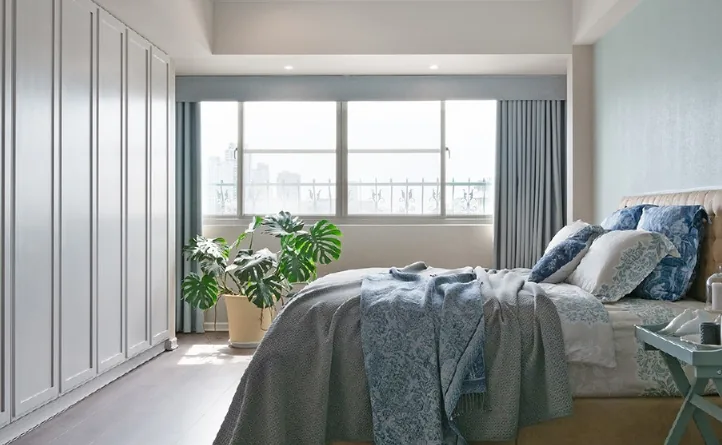
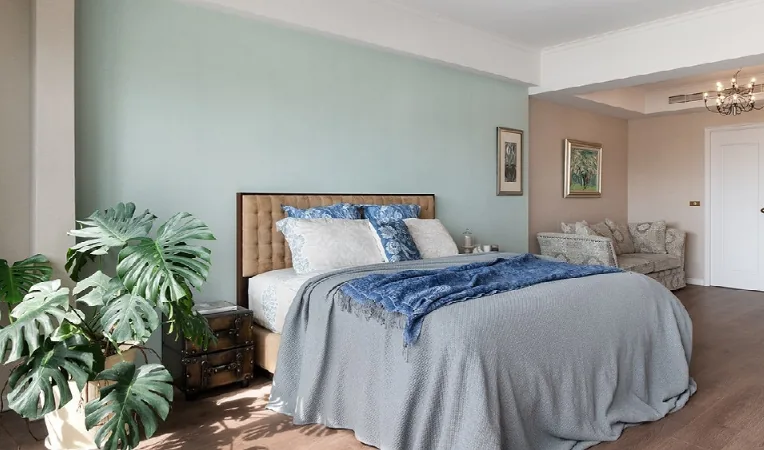
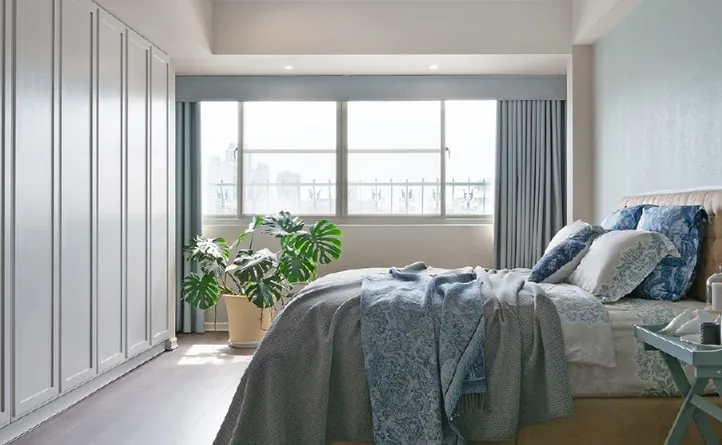
The bedroom merges the two end rooms into a single, independent master suite, crafting a spacious and comfortable retreat. Taking advantage of the generous floor plan, the design incorporates a fully equipped layout, drawing inspiration from hotel‑style interiors and dividing the space into three main zones aligned with the existing beams.
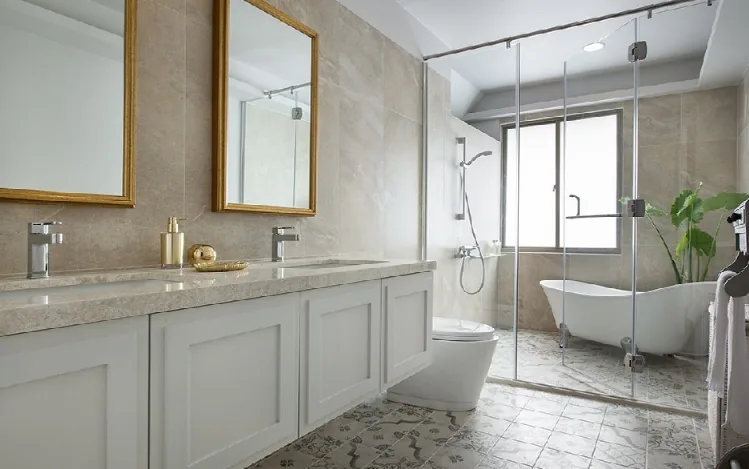
In the bathroom, partition walls are pierced at diagonal angles, allowing light and air to circulate freely and alleviating the challenge of having no exterior windows.
That concludes our introduction to this American-style whole-house design case. If you like it, feel free to leave us a comment!
More Articles

More Posts
How should the internal structure of a custom wardrobe be designed to maximize usability? The zoning logic determines storage efficiency.
Living Knowledge · 2026.10.29

How should the internal structure of a custom wardrobe be designed to maximize usability? The zoning logic determines storage efficiency.

How should you design the internal structure of a custom wardrobe to make it truly functional? The zoning logic determines storage efficiency. The effectiveness of a custom wardrobe depends on whether its internal layout aligns with your household’s actual clothing inventory and your habits for putting things in and taking them out. The correct design sequence is: first, take stock of your clothes; second, determine the zones; and only then consider the overall style. This article provides a set of zoning principles and dimension guidelines that you can apply directly. 1. Inventory First, Design Later: A wardrobe is a reflection of your clothing collection...

How to coordinate color schemes for whole-house customization? The 60-30-10 rule and four space-specific strategies.
Living Knowledge · 2026.10.29

How to coordinate color schemes for whole-house customization? The 60-30-10 rule and four space-specific strategies.

How do you coordinate colors for whole‑house customization? The 60–30–10 rule and four space‑specific strategies. The most common reason why color schemes in whole‑house customization fall flat isn’t that the colors themselves are unattractive, but rather that there are too many colors, the proportions are out of balance, or the materials and colors aren’t well integrated. Master one fundamental principle—the 60–30–10 ratio—and then choose a strategy based on the specific spatial conditions, and you’ll be able to make color choices you won’t regret. I. The 60–30–10 Rule: Let each color...

A Guide to Avoiding Pitfalls in Whole-House Customization: 6 Things You Must Confirm Before Signing the Contract
Living Knowledge · 2026.10.29

A Guide to Avoiding Pitfalls in Whole-House Customization: 6 Things You Must Confirm Before Signing the Contract

1. Board Material Environmental Safety: Rely on Test Reports, Not Verbal Promises It’s common for sellers to tout “environmentally friendly boards” without providing any official test reports. The formaldehyde emission limit for E1‑grade boards is ≤0.124 mg/m³; some retailers use this as a claim of eco‑friendliness, but it falls short for households with elderly residents or young children. A more reliable choice would be ENF‑grade (≤0.025 mg/m³) or E0‑grade (≤0.05 mg/m³), ...

BOOK A CONSULTATION

Want to Apply These Ideas to Your Own Home?

It can explain the apartment area, decoration stage and preferred style. The BOSNIE team will combine the home encyclopedia, real cases and product systems to provide one-to-one custom suggestions for the entire home.

Whole-House Design Case | Warm, Exotic Light Classicism | BOSNIE Official Website