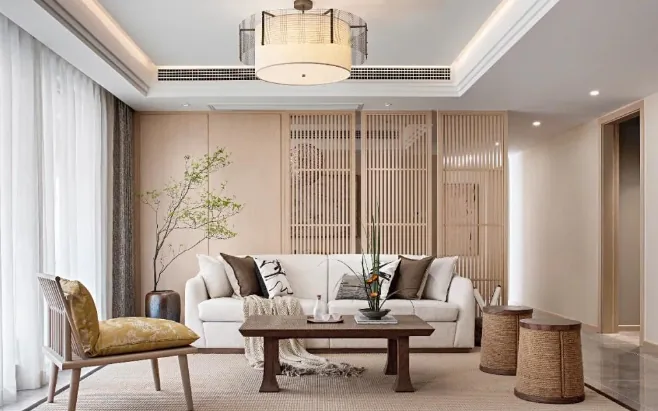
This case showcases a whole-house design in the New Chinese style—let’s explore it together with the BOSNIE editorial team!
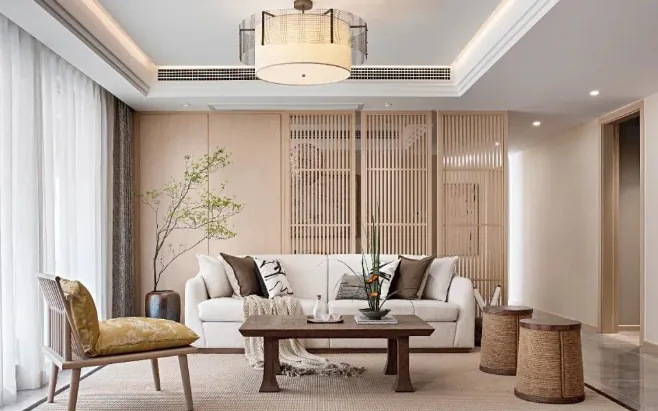
The living room serves as the family’s central hub for interaction. Floor-to-ceiling windows open widely, flooding the space with natural light and views. Every residence features windows that frame scenic vistas, enveloping occupants in fresh, oxygen-rich air.
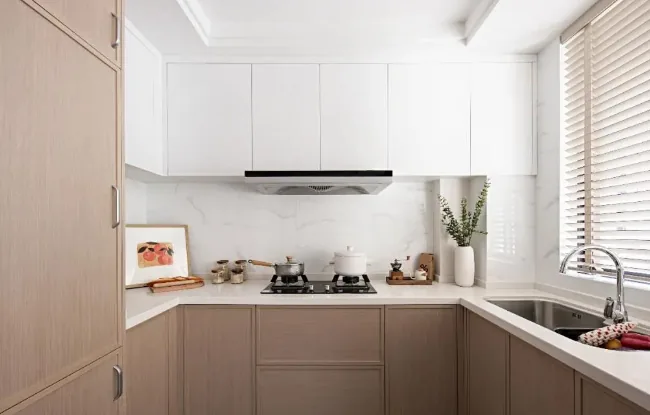
The kitchen features clean, straight lines that define a pure and rustic spatial aesthetic. Decorative artwork and vases soften the rigidity of its horizontal and vertical geometry, while the minimalist “letting go” philosophy leaves only essential elements—evoking a sense of natural simplicity.
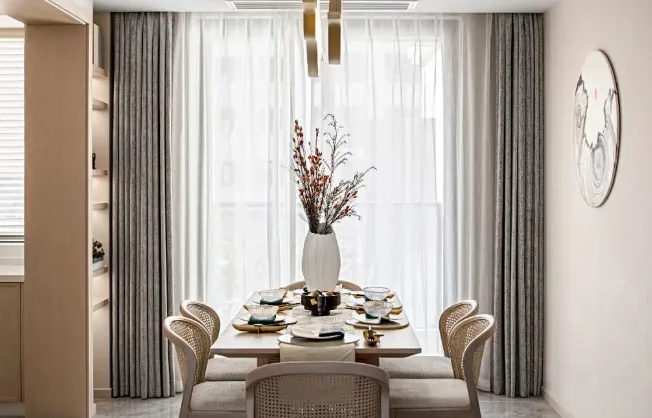
The dining area continues the living room’s warm palette of natural wood and pure white. Woven rattan dining chairs introduce a rustic, organic touch, while the solid wood square table fosters both warmth and ceremonial order around the dining experience.
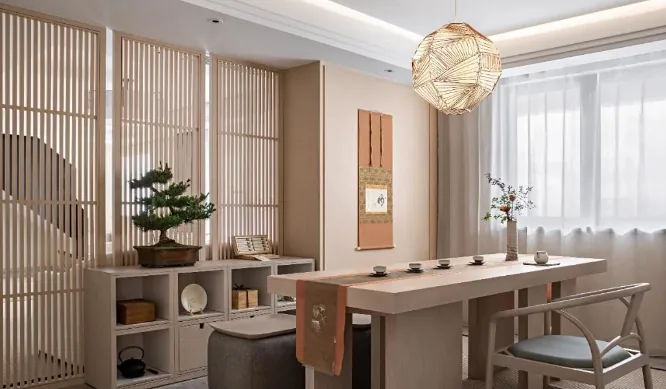
The tea-hanging artwork in the tea ceremony area features the single kanji character “Myō” (meaning “wonderful” or “sublime”), penned by Sen no Rikyū, the revered Japanese tea master. “Myō” conveys subtle, intangible qualities—inner textures that remain beyond precise definition yet are intuitively sensed. This singular, ineffable experience is thus captured perfectly in one word: “Myō.”
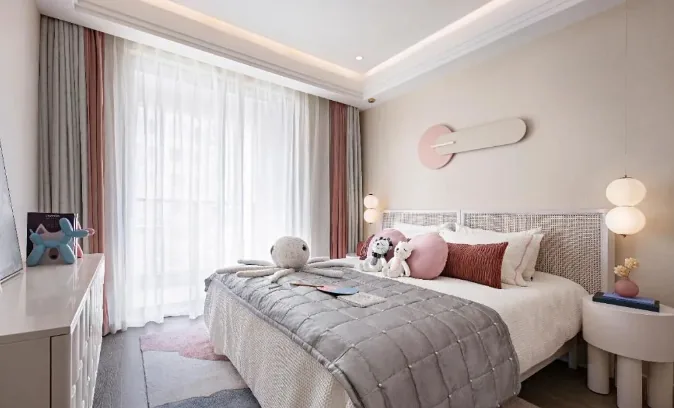
A soft pink-and-blue palette defines the visual aesthetics of the daughter’s bedroom. Adorable, intricately crafted decorative objects—paired with furniture featuring rich, expressive lines—interact dynamically within the space, creating a vibrant, cheerful, and engaging atmosphere. Minimalist Japanese-style cabinet fronts and wall art subtly complement the gentle pink tones, thoughtfully aligning with the younger daughter’s lively and endearing personality.
That concludes our showcase of this whole-house customization project in the New Chinese style. If you enjoyed it, feel free to leave a comment for BOSNIE’s editorial team!