Whole-House Design Case | Thoughtfully Creating a Sanctuary for the Soul
Living Knowledge · 2023.05.29

Whole-House Design Case | Thoughtfully Creating a Sanctuary for the Soul

This project showcases a minimalist‑style, whole‑house design. Let’s take a look together! The entryway seamlessly blends diverse materials, with subtle contrasts that highlight each area’s distinct function. A spacious entry balcony paired with floor-to-ceiling windows dramatically expands the view, preserving an expansive sense of openness and light within the space—softening the atmosphere while enhancing both physical and emotional comfort. The living room and dining area feature an integrated, open‑plan layout, creating a clean, flowing ambiance with unobstructed sightlines. While blending these spaces, functional zones remain clearly defined...

This case showcases a minimalist, whole‑home design. Let’s take a look together!

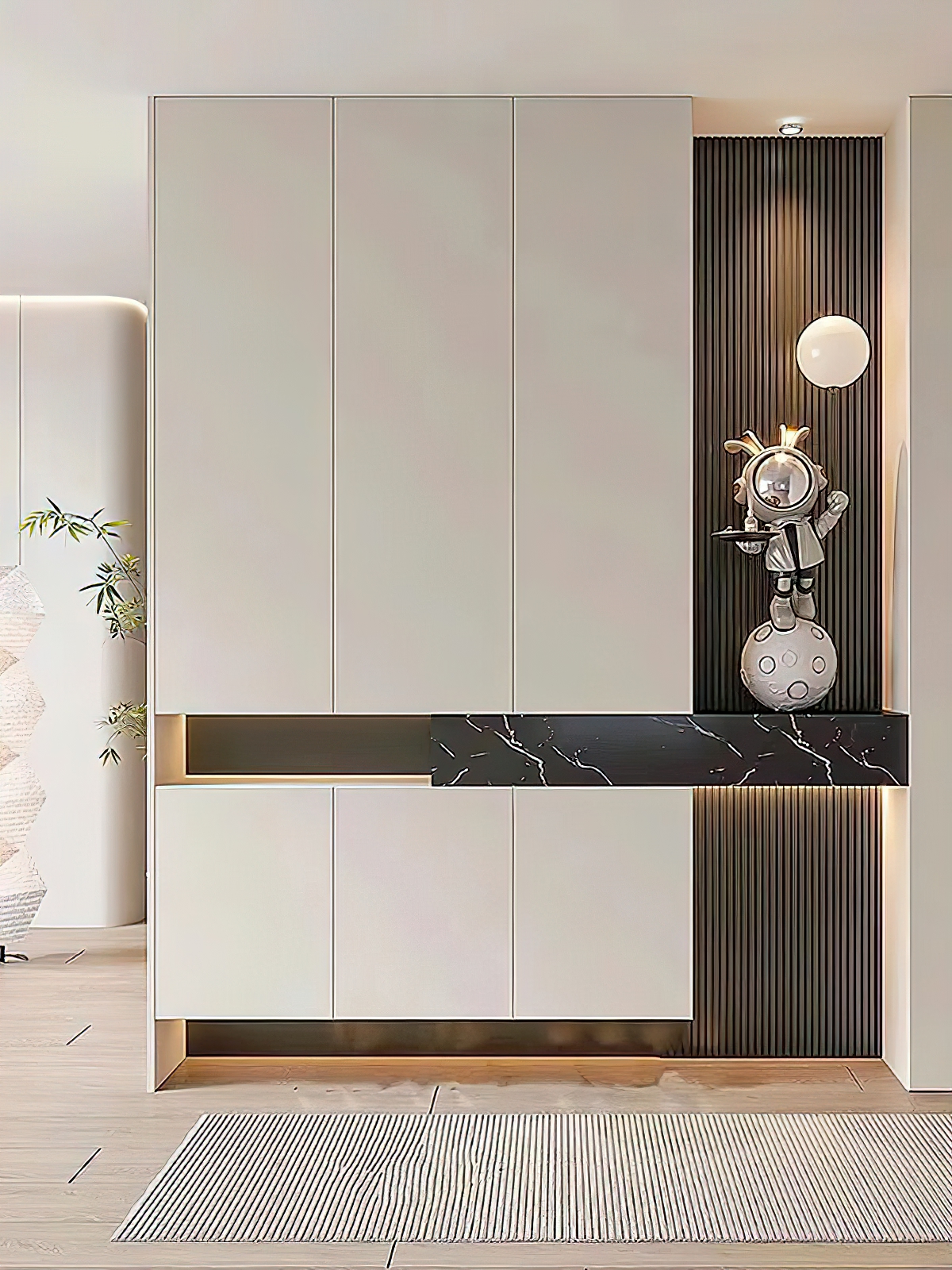
The entryway seamlessly blends diverse materials, skillfully leveraging contrasts to highlight each area’s functionality. A spacious entry balcony paired with floor-to-ceiling windows dramatically expands the view, preserving an expansive sense of light and space that gently warms the atmosphere and enhances overall comfort for body, mind, and spirit.
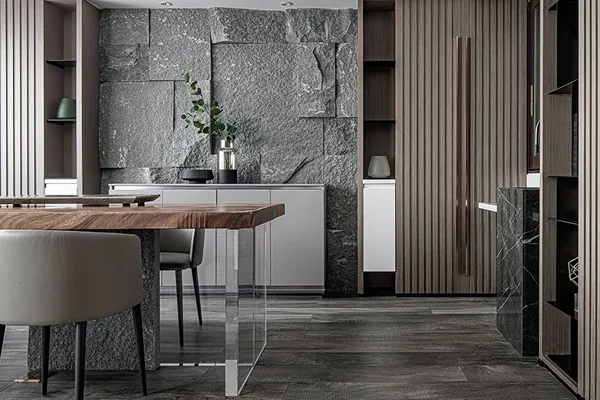
The living room and dining area adopt an integrated, open-plan layout, creating a clean, unobstructed flow and unimpeded visual connection. While blending into one cohesive whole, they maintain distinct functional zones; crisp, fluid lines and layered compositions foster a dynamic, flowing spatial ambiance.
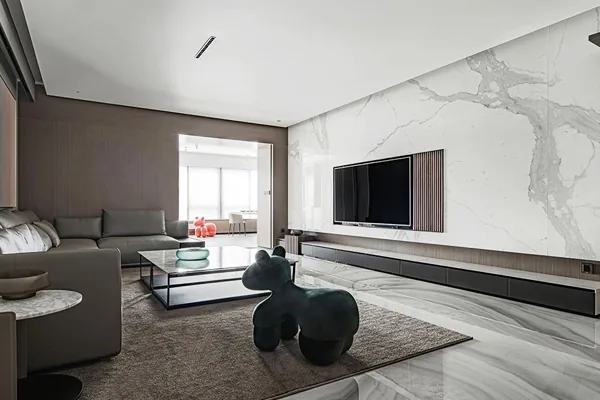
As a hub for social interaction, the living room employs continuous material choices to unify the space. An artistic gray-toned Italian handcrafted finish serves as a transitional backdrop, while an Italian fish‑belly white stone slab TV wall acts as the primary visual focal point. Complemented by irregular, streamlined large-format floor tiles, the design exudes individuality, evoking a touch of futuristic flair. The interplay of curves and straight lines sets the rhythm of the space, resonating throughout.
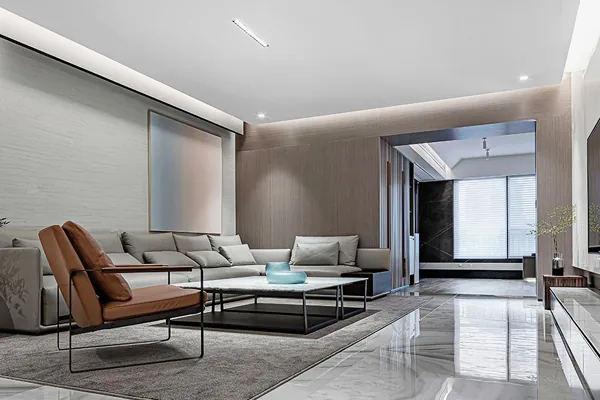
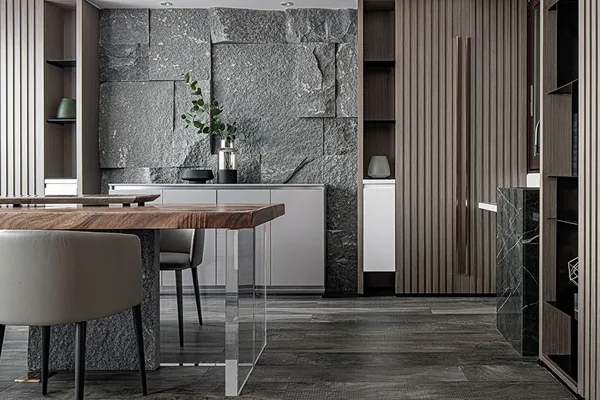
The open‑plan dining area feels airy and inviting, with warm wooden finishes juxtaposed against hand‑painted walls that emphasize the space’s character. Subtle accents of cool and warm tones, punctuated by scattered lighting, create a cozy, intimate atmosphere around the table through a layered progression of points and lines.
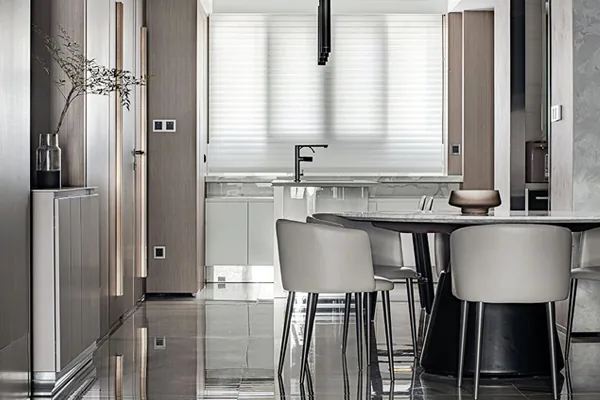
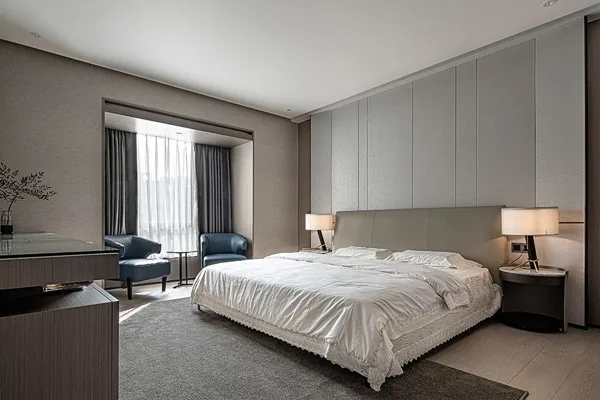
The master bedroom is anchored by low‑saturation hues, while high‑saturation accents add depth and texture. Soft, fabric‑like textural lines on the feature wall infuse the space with delicate, lively charm. Varied textures unfold distinct moods, stripping away clutter to naturally invite authenticity—bringing life and warmth into the room.
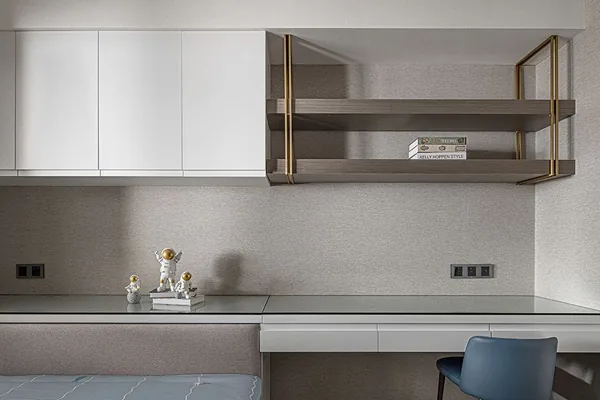
With a minimalist, pared‑down layout and a design approach that deconstructs and reassembles architectural elements, the scheme draws out subtle layers from its clean color palette. Though seemingly understated, it quietly guides the senses without overt display.
That concludes our introduction to this minimalist whole-house design project. If you like it, feel free to leave us a comment!
More Articles

More Posts
How should the internal structure of a custom wardrobe be designed to maximize usability? The zoning logic determines storage efficiency.
Living Knowledge · 2026.10.29

How should the internal structure of a custom wardrobe be designed to maximize usability? The zoning logic determines storage efficiency.

How should you design the internal structure of a custom wardrobe to make it truly functional? The zoning logic determines storage efficiency. The effectiveness of a custom wardrobe depends on whether its internal layout aligns with your household’s actual clothing inventory and your habits for putting things in and taking them out. The correct design sequence is: first, take stock of your clothes; second, determine the zones; and only then consider the overall style. This article provides a set of zoning principles and dimension guidelines that you can apply directly. 1. Inventory First, Design Later: A wardrobe is a reflection of your clothing collection...

How to coordinate color schemes for whole-house customization? The 60-30-10 rule and four space-specific strategies.
Living Knowledge · 2026.10.29

How to coordinate color schemes for whole-house customization? The 60-30-10 rule and four space-specific strategies.

How do you coordinate colors for whole‑house customization? The 60–30–10 rule and four space‑specific strategies. The most common reason why color schemes in whole‑house customization fall flat isn’t that the colors themselves are unattractive, but rather that there are too many colors, the proportions are out of balance, or the materials and colors aren’t well integrated. Master one fundamental principle—the 60–30–10 ratio—and then choose a strategy based on the specific spatial conditions, and you’ll be able to make color choices you won’t regret. I. The 60–30–10 Rule: Let each color...

A Guide to Avoiding Pitfalls in Whole-House Customization: 6 Things You Must Confirm Before Signing the Contract
Living Knowledge · 2026.10.29

A Guide to Avoiding Pitfalls in Whole-House Customization: 6 Things You Must Confirm Before Signing the Contract

1. Board Material Environmental Safety: Rely on Test Reports, Not Verbal Promises It’s common for sellers to tout “environmentally friendly boards” without providing any official test reports. The formaldehyde emission limit for E1‑grade boards is ≤0.124 mg/m³; some retailers use this as a claim of eco‑friendliness, but it falls short for households with elderly residents or young children. A more reliable choice would be ENF‑grade (≤0.025 mg/m³) or E0‑grade (≤0.05 mg/m³), ...

BOOK A CONSULTATION

Want to Apply These Ideas to Your Own Home?

It can explain the apartment area, decoration stage and preferred style. The BOSNIE team will combine the home encyclopedia, real cases and product systems to provide one-to-one custom suggestions for the entire home.