

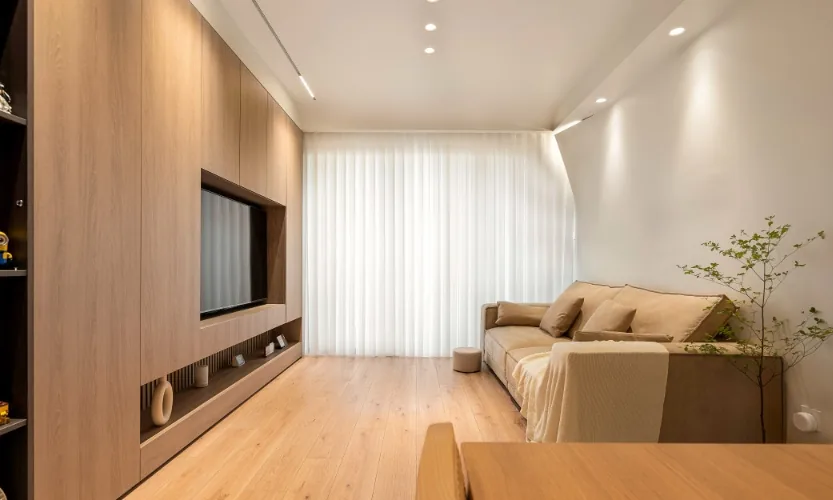
Whole-House Design Case | Wabi-Sabi Creamy Style — All Things Thrive and Grow
Living Knowledge · 2023.10.05

Whole-House Design Case | Wabi-Sabi Creamy Style — All Things Thrive and Grow

This case introduces a wabi-sabi creamy‑style whole‑house design. Let’s take a look at it together with BOSNIE’s editor! The entryway doesn’t need excessive storage; what matters more are refinement and a sense of welcome. An artful, irregular mirror makes it a striking focal point on the wall. A wall‑mounted, floating cabinet replaces a shoe‑changing stool, while a wooden latticed wall serves to hang everyday outerwear and loungewear. Though seemingly minimalist, this arrangement has been carefully planned according to the owner’s daily flow. At its core, the wabi‑sabi living room creates a piece of open wilderness within the home—right at its heart, we can feel the wind, feel...

This case introduces a whole‑house design in the wabi‑sabi cream style. Let’s take a look at it together with BOSNIE’s editor!

The entryway doesn’t need excessive storage; what matters more are refinement and warmth. An artful, irregular mirror makes it a striking focal point on the wall. A wall‑mounted, floating cabinet replaces a shoe‑changing stool, while a wooden latticed panel serves to hang everyday outerwear and loungewear. Though minimalist in appearance, this layout has been carefully planned to align with the owner’s daily flow.
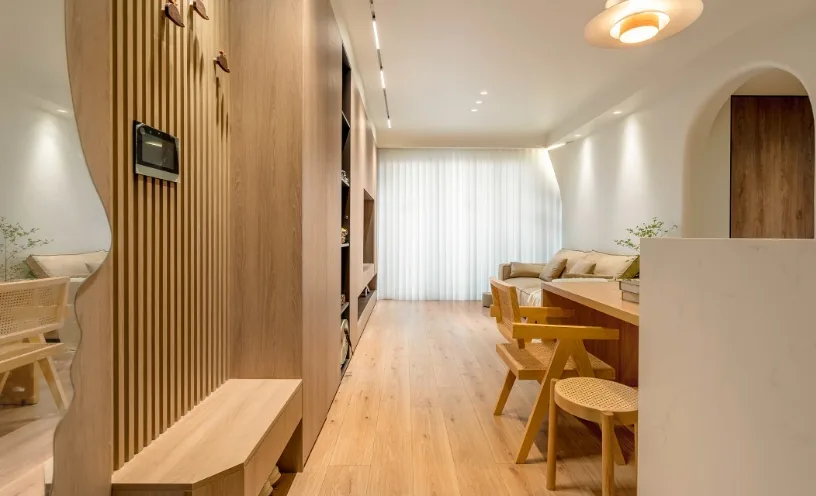
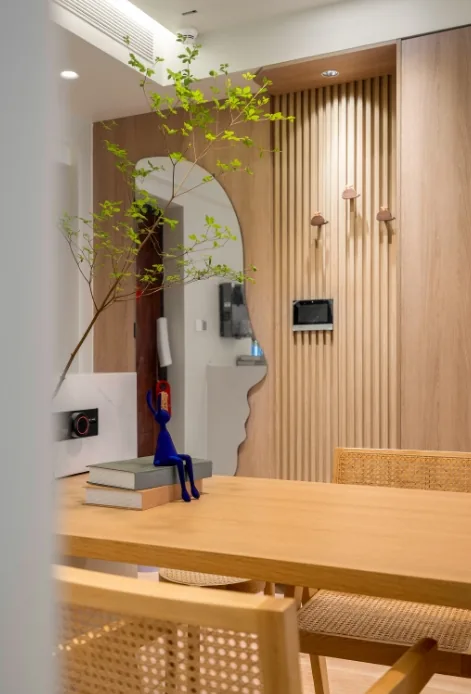
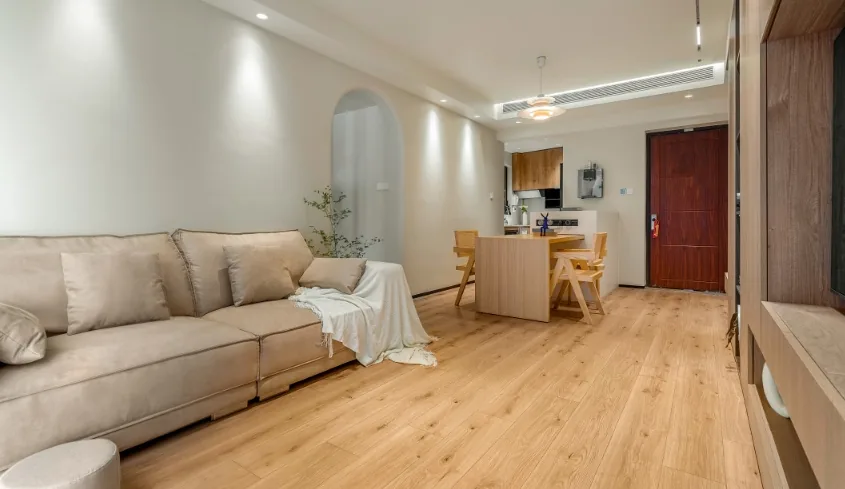
At its core, the wabi‑sabi living room creates a sense of open wilderness within the home—right at its heart, we feel the breeze, witness sunrises and sunsets, and experience time slipping away like sand in an hourglass. Every movement here is imbued with poetry, becoming the very essence of what we’ve long sought.
The TV backdrop is designed as a storage unit, blending ruggedness with meticulous precision. The former lies in the boundless expanse of wood veneer, brimming with primal energy; the latter emerges from the finely calibrated proportions, with vertical wooden grilles extending along the hollowed-out sections. At the base, a wall‑hung wooden cabinet conceals the TV’s wiring and outlets, keeping the space impeccably clean.
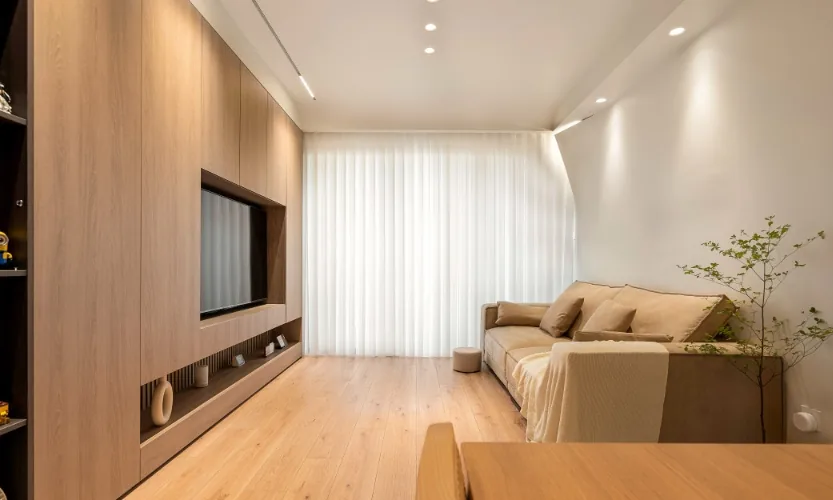
In the pursuit of wabi‑sabi’s pared‑down minimalism, a lighting scheme that reveals light but not fixtures is essential, delivering a natural, evenly diffused glow even at night.
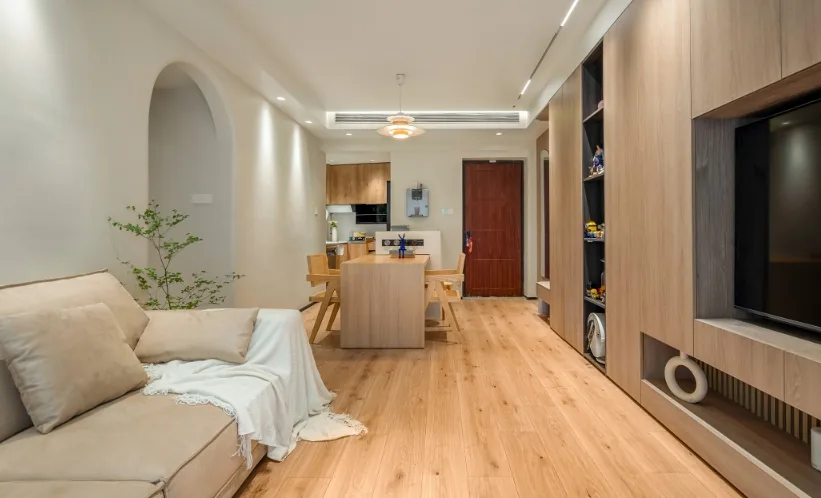
In the dining area, we’ve combined the currently popular island with the dining table, adding track‑mounted sockets to the island for convenient power access.

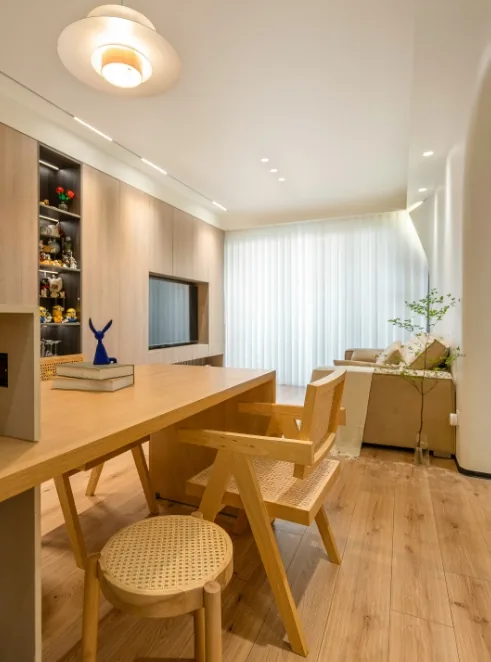
The log‑toned, woven rattan dining set is crafted with artisanal care, its hand‑made elegance evident everywhere. Beyond meals, it’s also a place to sip wine and chat with friends—not every day needs to be perfect, but when joy arrives, we can savor it to the fullest.
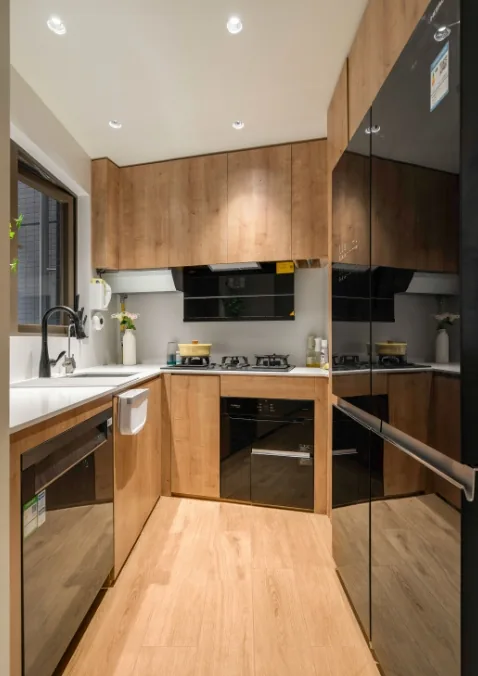
The kitchen adopts an open‑plan design for greater ease of use and to alleviate any feeling of tightness. Its U‑shape maximizes space, with the oven and dishwasher built into the cabinetry, and a French door fridge tucked into a tall cabinet, ensuring even a small area feels fully equipped.
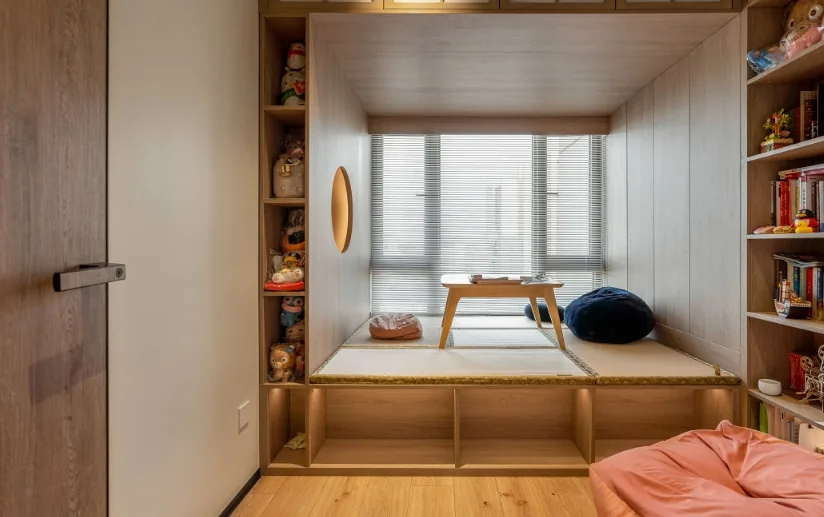
With the owner’s extensive book collection, the second bedroom almost doubles as a study. Adding the piano they love means playing here is always undisturbed. By day, they’re a keyboard‑tapping coder; by night, an elegant musician. A truly great home embraces the many facets of its owner’s identity.
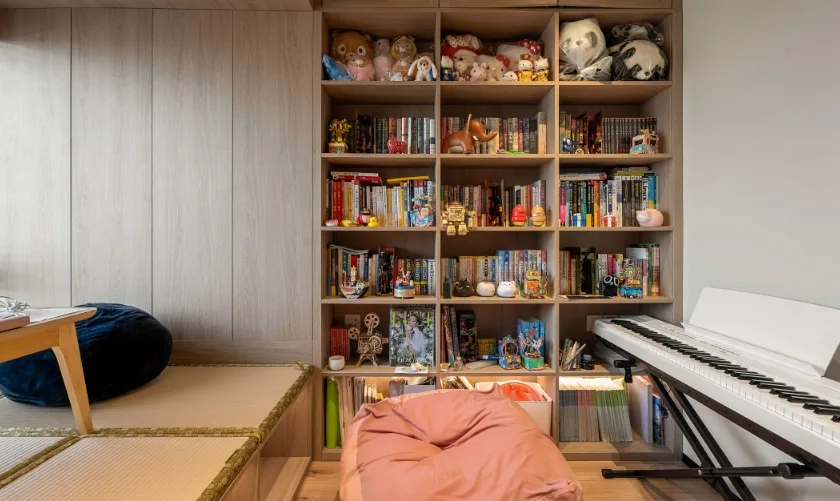
Primarily intended for leisure and entertaining, the second bedroom features a Japanese tatami design: storage wraps around the perimeter, while a side table and cushions occupy the center, transforming the space into a tea room. In our busy lives, carving out a moment to step into this “quiet sanctuary” allows us to cultivate mindfulness and nurture ourselves—a way to lead a multi‑dimensional life even in a fast‑paced city.
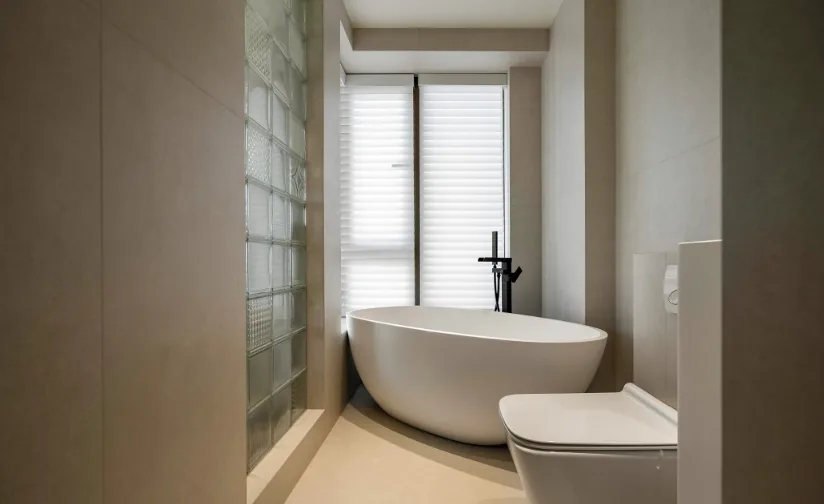
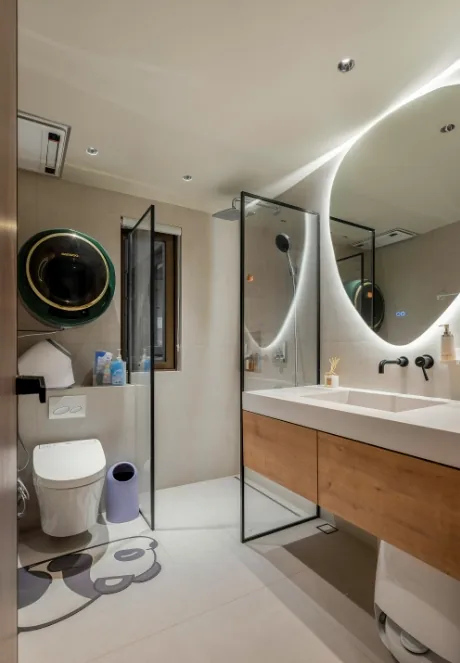
Wabi‑sabi aesthetics run throughout, including the bathroom. Micro‑cement‑look tiles are an excellent choice for achieving this style; though not as seamlessly jointed as true micro cement, large-format tiles laid in a single direction with matching grout achieve a similar effect—while being easier to maintain and offering better value.
That concludes our introduction to this wabi‑sabi whole‑house design. If you enjoyed it, feel free to leave a comment and interact with BOSNIE’s editor!
More Articles

More Posts
Creamy Mid-Century Style | Gentle without being cloying, vintage without feeling oppressive
Living Knowledge · 2026.06.23

Creamy Mid-Century Style | Gentle without being cloying, vintage without feeling oppressive

Creamy Mid-Century Modern | Gentle but not cloying, vintage yet not oppressive. If you love the soft, soothing charm of cream‑toned interiors but worry that an all‑white palette can feel too plain or grow tiresome, and if you’re drawn to the timeless, textured appeal of mid‑century modern design but fear dark wood tones might weigh things down and make your home feel dim and stifling, then this cream‑and‑mid‑century‑modern whole‑house customization is just what you’ve been looking for. It strikes the perfect balance, blending the best of both styles to create a home décor that’s both enduring and endlessly appealing—perfect for long‑term living. A purely cream‑based aesthetic tends to feel light and lacks visual anchor, which can make it feel monotonous over time; meanwhile…

Creamy Mid-Century Style | Gentle without being cloying, vintage without feeling oppressive
Living Knowledge · 2026.06.23

Creamy Mid-Century Style | Gentle without being cloying, vintage without feeling oppressive

Creamy Mid-Century Modern | Gentle but not cloying, vintage yet not oppressive. You love the soft, soothing charm of cream‑toned interiors, but worry that an all‑white palette might feel too plain or grow tiresome over time; you admire the timeless, textured appeal of mid‑century design, yet fear dark wood tones could make a space feel heavy and gloomy. Today’s featured whole‑house customization in creamy mid‑century modern strikes the perfect balance, seamlessly blending the strengths of both styles to create a home décor that stands the test of time and feels endlessly inviting. A purely cream‑based aesthetic tends to feel light and lacks visual focal points, which can make it feel monotonous after a while; meanwhile…

4 Major Trending Sideboard Styles: Copy the Design Without Failing
Living Knowledge · 2026.06.18

4 Major Trending Sideboard Styles: Copy the Design Without Failing

4 Popular Sideboard Styles: Avoid Common Pitfalls When Renovating Whether your dining room looks inviting or not often hinges on the sideboard—after all, it sets half the tone! Today, we’ve rounded up four trending styles—minimalist, French, New Chinese, and Mid‑Century Modern—breaking down their key design features and ideal audiences. At BOSNIE Private Residence Customization, we offer end‑to‑end solutions that balance style with practicality. Minimalist Sideboards: Subtle Spacing and Negative Space Minimalism is a fail‑proof, versatile choice; its essence lies in...

BOOK A CONSULTATION

Want to Apply These Ideas to Your Own Home?

It can explain the apartment area, decoration stage and preferred style. The BOSNIE team will combine the home encyclopedia, real cases and product systems to provide one-to-one custom suggestions for the entire home.