

Whole-House Design Case | Using Natural Wood Tones as the Main Color for a Particularly Simple and Rustic Feel
Living Knowledge · 2023.09.17

Whole-House Design Case | Using Natural Wood Tones as the Main Color for a Particularly Simple and Rustic Feel

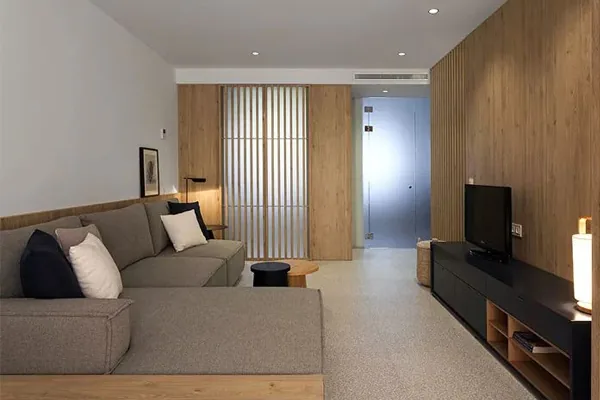
This case introduces a whole-house design in a natural wood style. Let's take a look at this example with BOSNIE's editor! The L-shaped bench in the dining and living area can be used to store shoes and books, and with a small round table, it is extremely practical while occupying minimal space. The dining and living areas are connected, which frees up an extra room in smaller homes. Using natural wood tones as the main color gives the space a particularly simple and rustic feel. In the living room, which also serves as a passageway, a mini coffee table or no coffee table at all is recommended to ensure easy movement. The small kitchen is open, so attention should be paid to managing cooking fumes...

This case presents a whole-house design in a natural wood style. Let's take a look at this project with BOSNIE's editor!

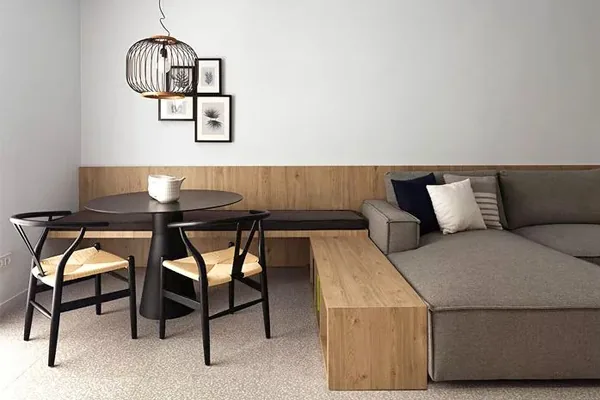
The L-shaped seating in the dining and living area provides ample space for storing shoes and books underneath, and with a small round table, it is incredibly practical while occupying minimal space. By combining the dining and living areas, smaller homes can free up an extra room.
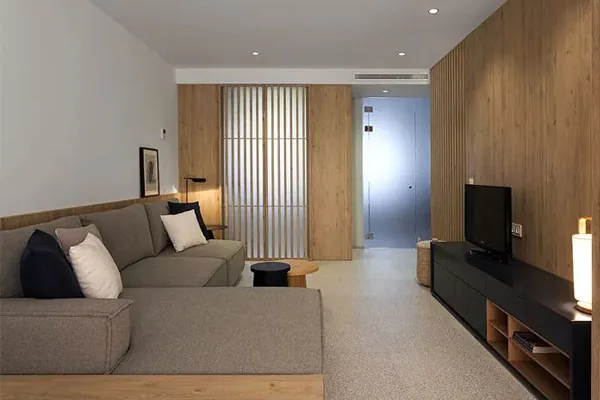
With natural wood as the primary color, the space exudes a simple and unadorned charm. In the living room, which also serves as a passageway, a mini coffee table or no coffee table at all is recommended to ensure easy movement through the space.
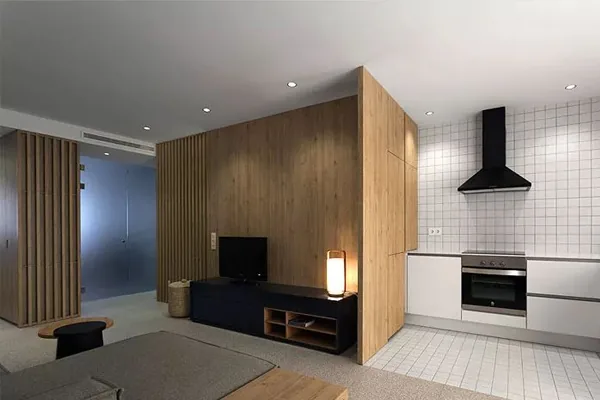
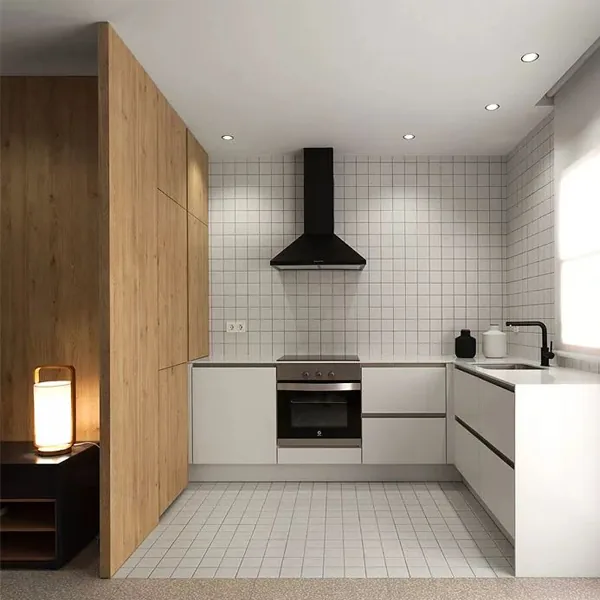
The compact kitchen is open-concept, so attention must be paid to managing cooking fumes. Hidden cabinets have been integrated near the living area, providing ample storage space.
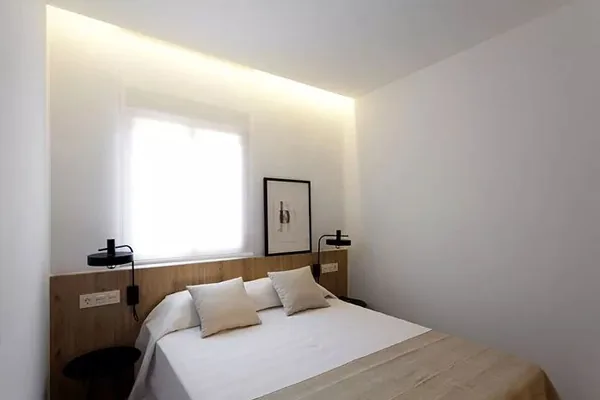
The master bedroom is kept simple without any elaborate decorations. A bed with a headboard that doubles as storage, and small chairs on either side instead of traditional nightstands, make the most of the available space.
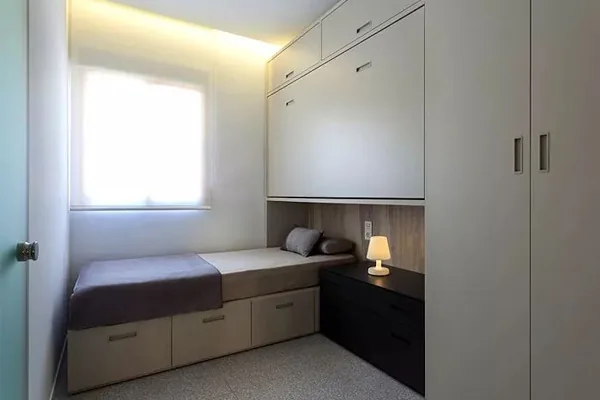
The secondary bedroom features a combination of a tatami mat and wardrobe, maximizing the use of the small space. Additional overhead cabinets above the tatami mat provide even more storage.
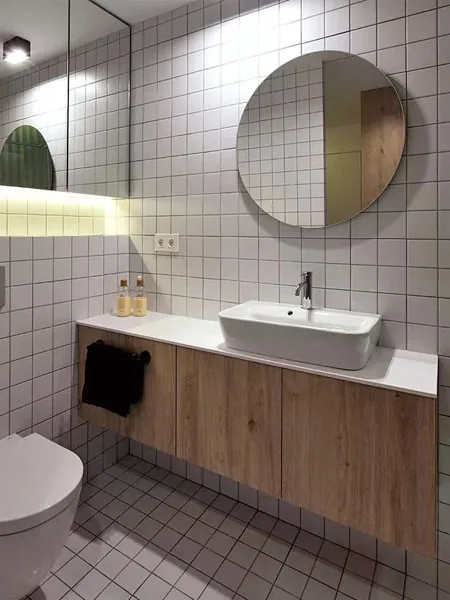
The bathroom is designed with a dry-wet separation, using a palette of white and natural wood. Despite being a windowless bathroom, the combination of lighting and colors prevents it from feeling too dim.
That concludes our introduction to this whole-house design in a natural wood style. If you like it, feel free to leave a comment and interact with BOSNIE's editor!
More Articles

More Posts
When our longing for home…
Living Knowledge · 2026.09.18

When our longing for home…

When our longing for home evolves from “one-size-fits-all” to “private residence customization,” the headaches of whole-house customizations—wood panel shrinkage, environmental safety concerns, low‑quality hardware, and endless add‑on charges—can feel overwhelming. How can you break free? The worry‑free answer is simple: entrust your dream home to a reliable system. BOSNIE Private Residence Customization delivers your ideal home, from design to completion, with six premium features. 01 Design | From the perspective of a private residence...

A Must-Read on Home Aesthetics: From Creamy Neutrals and French Chic to Wabi-Sabi—The Essence of Six Mid-Century Modern Styles Explained in One Go
Living Knowledge · 2026.09.09

A Must-Read on Home Aesthetics: From Creamy Neutrals and French Chic to Wabi-Sabi—The Essence of Six Mid-Century Modern Styles Explained in One Go

You often hear people ask: “Why does the mid‑century style I want look so different from what I end up with?” That’s because the nuances of mid‑century design lie in the details. A shade darker or lighter, a more pronounced or subtler grain on the door panels, brass hardware versus matte iron—each choice shapes a distinct aesthetic. So how can you achieve that perfect match and avoid any missteps? Today, we’ll break down the core principles behind six major mid‑century styles: creamy mid‑century, French mid‑century, modern mid‑century, and more.

14 Sideboard and Wine Cabinet Combo Ideas—Follow These Designs to Avoid Any Fails
Living Knowledge · 2026.09.09

14 Sideboard and Wine Cabinet Combo Ideas—Follow These Designs to Avoid Any Fails

How do you choose between a sideboard and a wine cabinet without making a mistake? Just copy this collection of 14 designs. A mix of hidden and exposed elements looks sophisticated: keep everyday drinkware within easy reach, store your wine in a glass-front cabinet, and tuck away odds and ends out of sight. For color schemes, remember this formula: start with a creamy white or natural wood base, then add pops of darker hues for contrast—timeless and versatile. As for dimensions, here’s the key: leave a 40‑centimeter gap on the countertop to comfortably fit a coffee machine or water dispenser. You don’t have to choose between style and practicality. BOSNIE Private Residence Customization—tailored to your home’s space...

BOOK A CONSULTATION

Want to Apply These Ideas to Your Own Home?

It can explain the apartment area, decoration stage and preferred style. The BOSNIE team will combine the home encyclopedia, real cases and product systems to provide one-to-one custom suggestions for the entire home.

Whole-House Design Case | Using Natural Wood Tones as the Main Color for a Particularly Simple and Rustic Feel | BOSNIE Official Website