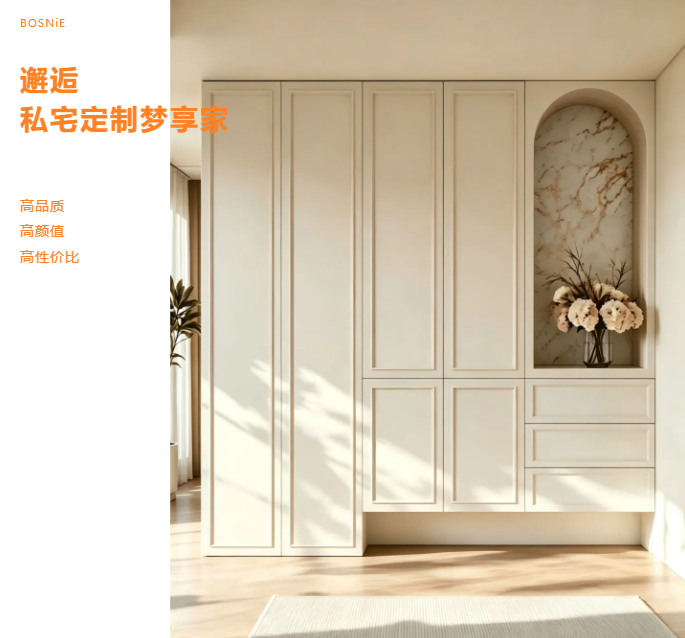
How to choose a whole-house customization style? An analysis of the three hottest styles in 2026.
Whole-house customization isn’t just about building cabinets—it shapes the entire home’s aesthetic. In 2026, these three styles are setting the trend, each with its own devoted followers and distinct appeal.
I. Modern Minimalism: Less is More, a Restrained Sense of Sophistication
The essence of modern minimalism is not “simplicity,” but “precision”—every line has a purpose, and every material serves a functional role.
In terms of color scheme, the design is anchored by white, light gray, warm gray, and natural wood tones, eschewing anything flashy. Cabinet doors largely feature flat, unadorned surfaces, paired with concealed handles or push‑to‑open mechanisms, allowing the cabinetry to blend seamlessly into the wall like an extension of it.
In terms of materials, PET‑finished door panels are this year’s popular choice, offering a silky‑smooth touch reminiscent of baby skin and resisting fingerprints. Paired with matching edge banding, they appear seamlessly integrated from a distance.
Key detail: This style places extremely high demands on craftsmanship. With no lines or contours to mask imperfections, the flatness of cabinet doors, the precision of edge banding, and the uniformity of gaps are all laid bare. If the workmanship falls short, a cheap, low‑quality feel will be immediately apparent.
Modern minimalism suits young people who favor clean, streamlined aesthetics and don’t want to spend much time on household chores. With its most restrained expression, it creates a sense of open, uncluttered space.
II. Italian-Inspired Light Luxury: The Balance of Rationality and Romance
If modern minimalism is about “subtraction,” then Italian light luxury is about “multiplication”—infusing restraint with refinement and blending rationality with romance.
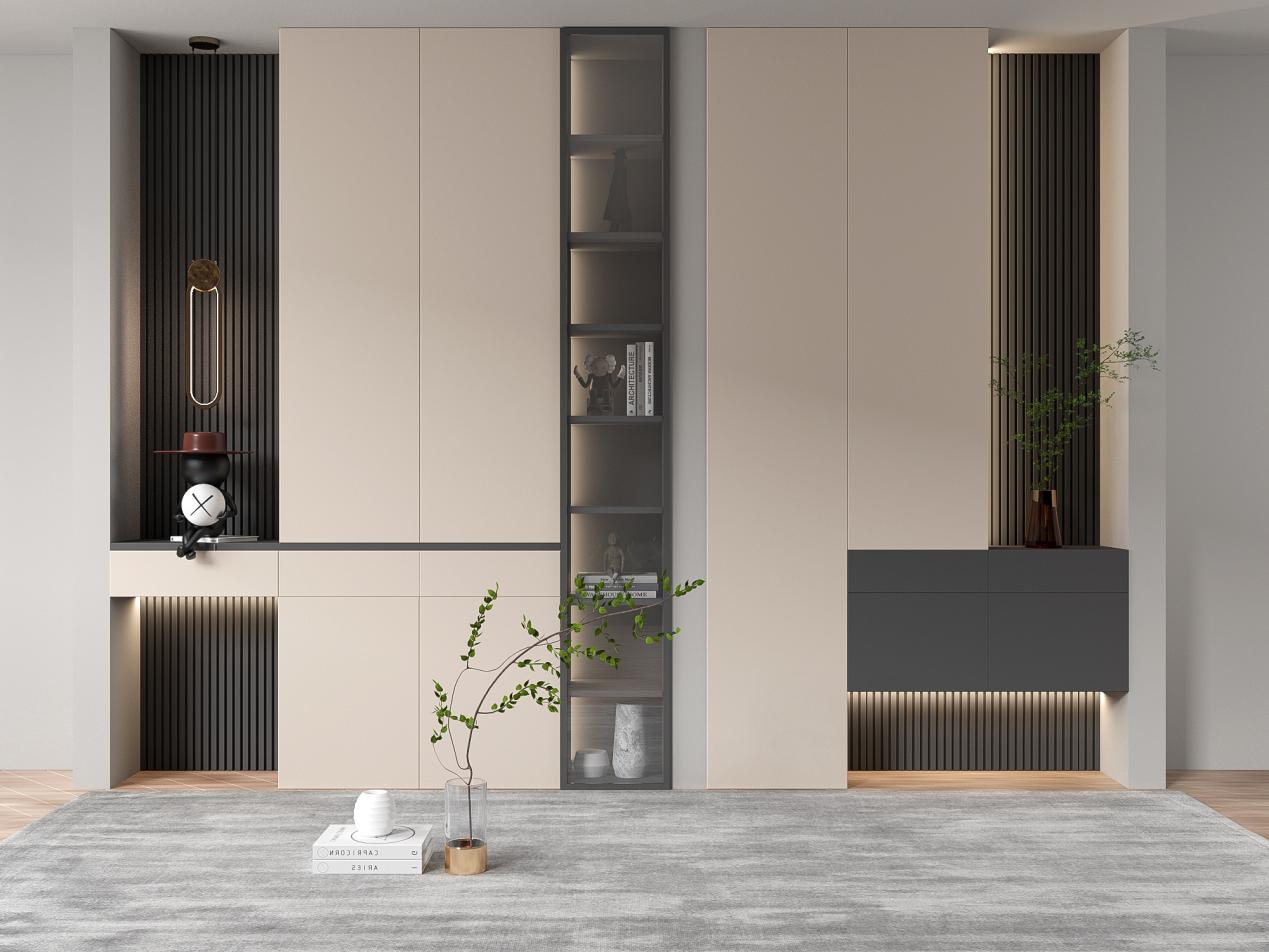
In terms of color scheme, the palette centers on dark gray, olive green, camel, and coffee tones, accented with touches of metallic hues. Cabinetry typically favors deep shades, while open shelving and glass doors help to lighten the overall look.
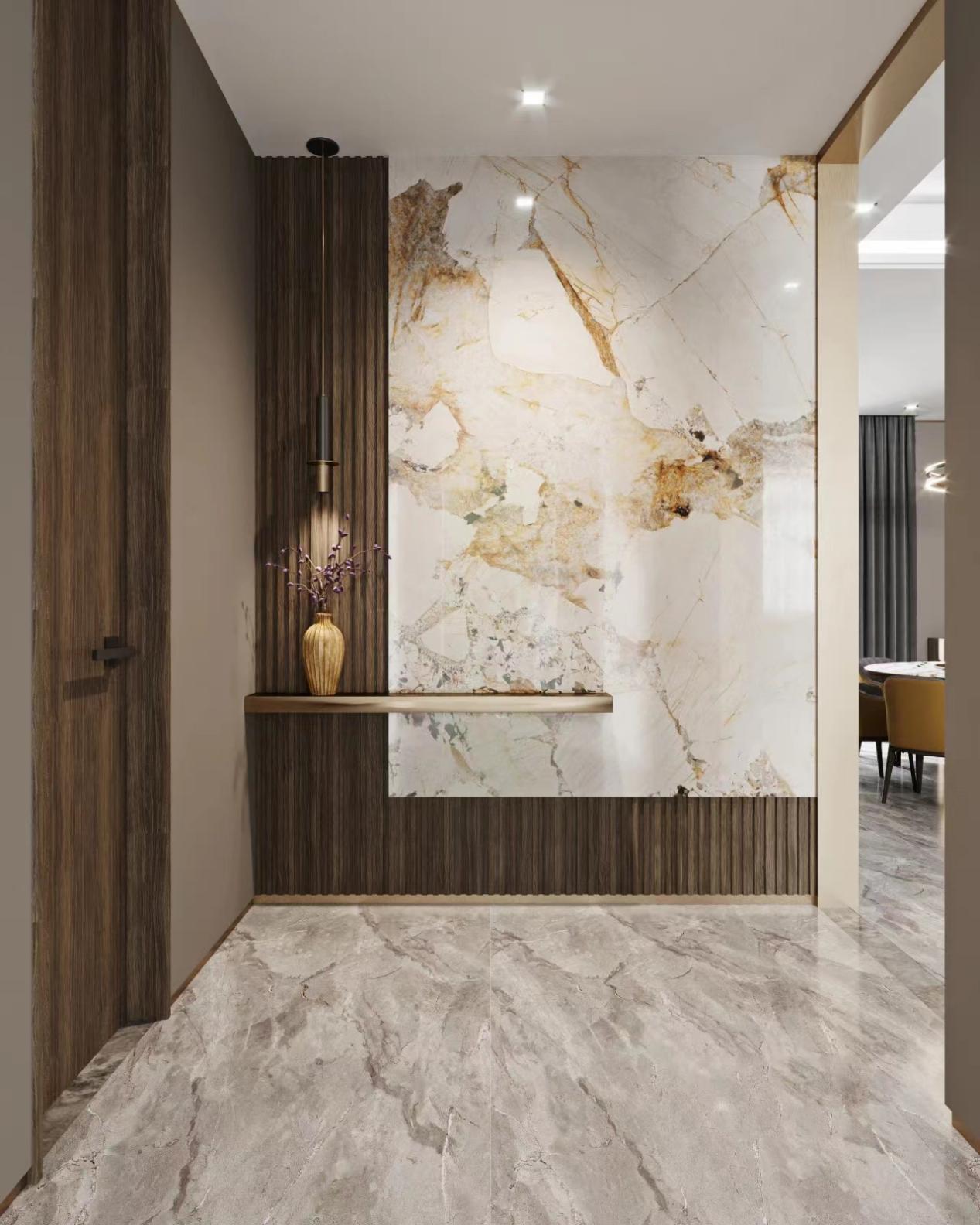
In terms of materials, stone slabs, marble‑inspired textures, metal aluminum frames, leather, and wooden lattice panels are signature elements of Italian‑style light luxury. For instance, the countertop of a sideboard is crafted from stone slab, while the cabinet doors feature ultra‑narrow aluminum frames set with gray glass; recessed 3000K warm‑white LED strips illuminate the shelves, and when the lights are switched on at night, the ambiance is instantly elevated.
Key detail: The biggest pitfall of Italian‑style light luxury is overdoing it. Avoid excessive metal accents, and keep glass‑door panels to no more than 20%; otherwise, the design can easily veer from “light luxury” to “bling.” True, high‑end Italian light luxury strikes a balance—“hide half, reveal half”: enclosed cabinets tuck away clutter, while open shelves showcase refined taste.
Italian‑inspired understated luxury is perfect for those with life experience who seek a sense of refined quality. It’s subtle and unpretentious, yet every detail whispers: “I know how to live.”
III. Creamy Vintage Style: A Retro Charm Within Gentleness
Creamy Mid-Century style is a dark horse of 2026. It combines the gentle, soothing warmth of cream tones with the vintage charm of mid-century furniture, much like a steaming cup of latte—enough to melt away your worries the moment you step through the door.
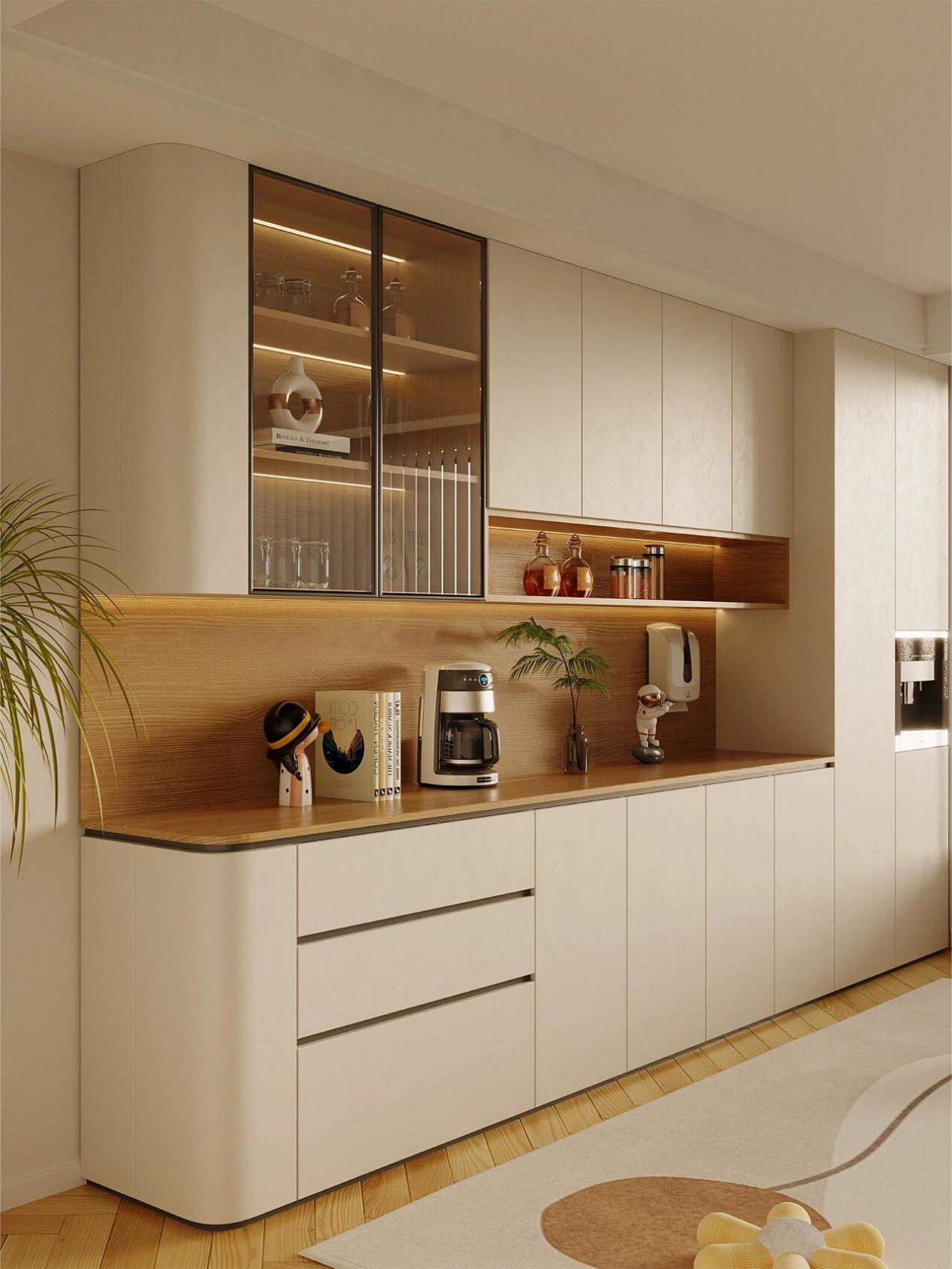
In terms of color scheme, the palette is dominated by creamy white, latte brown, and oatmeal beige, accented with walnut and cherry wood tones. The overall hue leans warm, evoking the patina of old book pages kissed by sunlight.
In terms of design, the mid‑century style’s most distinctive features are its “structural lines” and “rounded arcs.” Cabinet doors can incorporate narrow frame moldings to evoke the framing aesthetic of vintage furniture, while rounded corners soften the space’s sharp edges. Wicker doors, stained glass, and brass pulls are all signature accents that define the mid‑century look.
Key details: The cream‑colored vintage style places high demands on achieving a “distressed” and “handcrafted” aesthetic. Avoid overly smooth, high‑gloss finishes; matte or semi‑open‑pore varnishes better capture wood’s warm, natural texture. As for rattan elements, opt for genuine natural materials rather than plastic imitations—otherwise, the overall tactile quality will be severely compromised.
Creamy mid-century style is perfect for those who love a warm, cozy atmosphere and have a fondness for retro aesthetics. It transforms your home from a mere living space into a time‑honored vessel, inviting you to savor each moment.
No matter which style you choose, the key lies in “coherence”—the cabinet’s color, materials, and design language must harmonize seamlessly with the walls, flooring, and soft furnishings. Many homes fall short not because individual pieces are unattractive, but because a modern‑minimalist cabinet is paired with an Italian‑inspired, luxe‑yet‑subtle sofa, or an Art Deco‑style sideboard sits next to an esports gaming chair—creating clashing aesthetics and a sense of disharmony throughout the space.
BOSNIE Private Residence Customization maintains a steadfast commitment to translating style into reality. For instance, when pursuing a modern‑minimalist aesthetic, they subdivide white into three distinct shades—warm white, cool white, and creamy white—to ensure harmonious tonal unity between cabinet doors and wall paint. In the case of Italian‑inspired light luxury, they rigorously control the proportion of metallic accents; designers even provide detailed “material‑ratio diagrams” that specify the surface area of each slab, glass, and metal element, preventing over‑accumulation. And for a creamy mid‑century vibe, BOSNIE offers specialized customizations such as natural rattan weaving, bone‑line door panels, and curved‑edge detailing, faithfully recreating an authentic retro texture.
BOSNIE Private Residence Customization eschews “template-driven design,” instead tailoring each project to the homeowner’s lifestyle and aesthetic preferences by selecting the most suitable options from a globally curated library of premium panel finishes, bringing their dream home to life.