Creamy White + Warm Wood: An Italian‑Style Minimalist Sideboard—Beautiful and Practical Both
The dining area is often a hotspot for clutter, with coffee cups, delivery packages, small appliances, and scattered receipts quickly piling up on the countertop. To achieve both sophisticated elegance and everyday practicality, an Italian‑style minimalist sideboard in creamy white paired with warm wood tones is the ideal choice. BOSNIE Private Residence Customization specializes in residential design, seamlessly balancing aesthetics, storage, and workflow to tackle the challenge of a cluttered dining space—perfectly suited for both compact apartments and spacious open‑plan layouts.
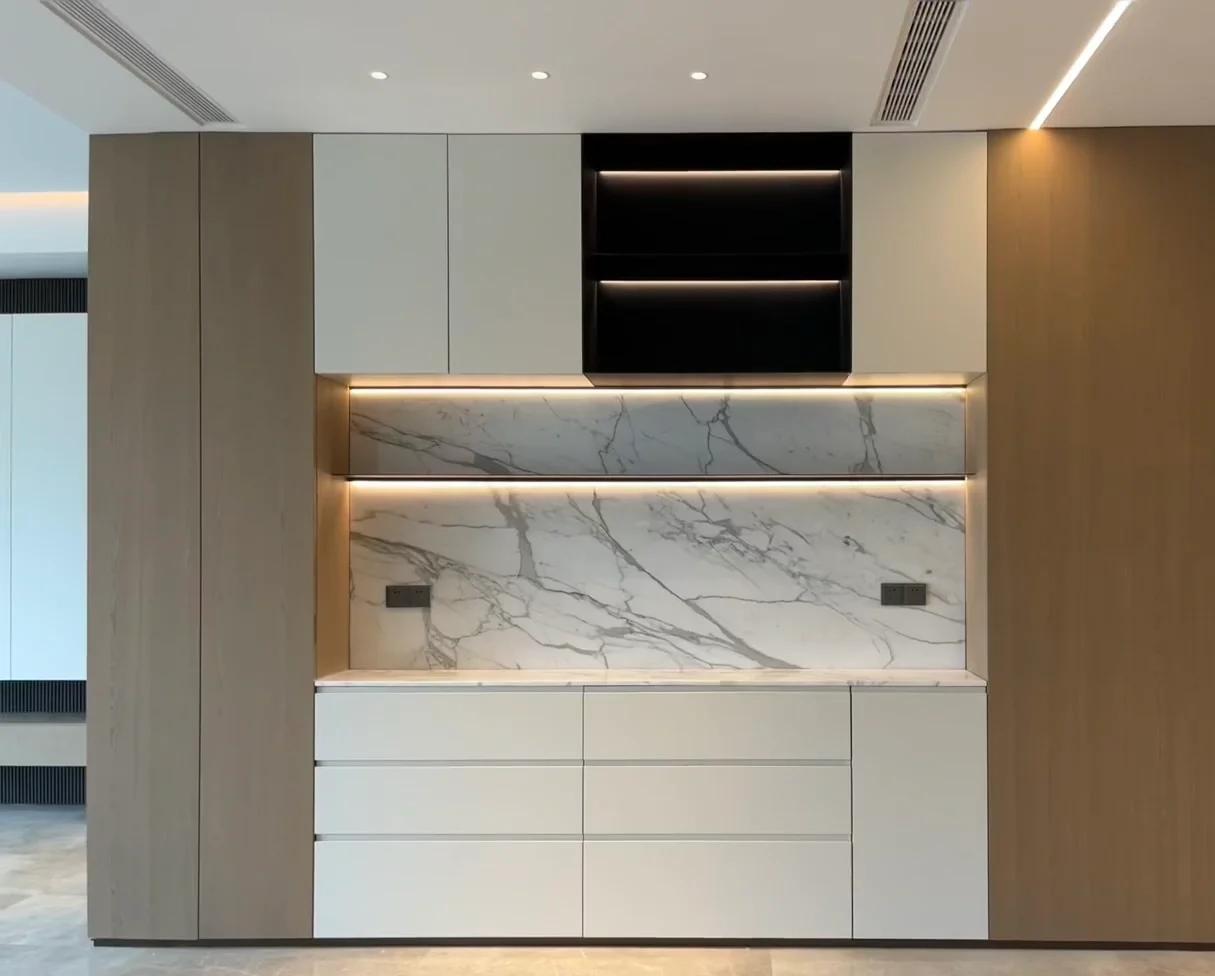
Provides a full-sized worktop, ensuring ample space for everyday use.
Many homeowners run into a common pitfall: dining cabinets with a shallow depth of just 40 cm leave almost no workspace once a coffee machine or water purifier is placed inside. BOSNIE Private Residence’s custom‑made dining cabinet features a standard 60 cm depth, with a seamless, level bar counter built right in the middle—providing ample space for brewing tea, making coffee, and slicing fruit. The design boasts clear layering, with upper and lower cabinets offering distinct storage zones that keep the countertop uncluttered. If your budget allows, you can add built‑in outlets, ambient LED strips, and a compact under‑sink water filtration unit, eliminating the hassle of constantly moving appliances and wiping down the surface—saving you time and effort over the long term.
Master the balance between coverage and allure, and maintain a sophisticated look that never goes out of style.
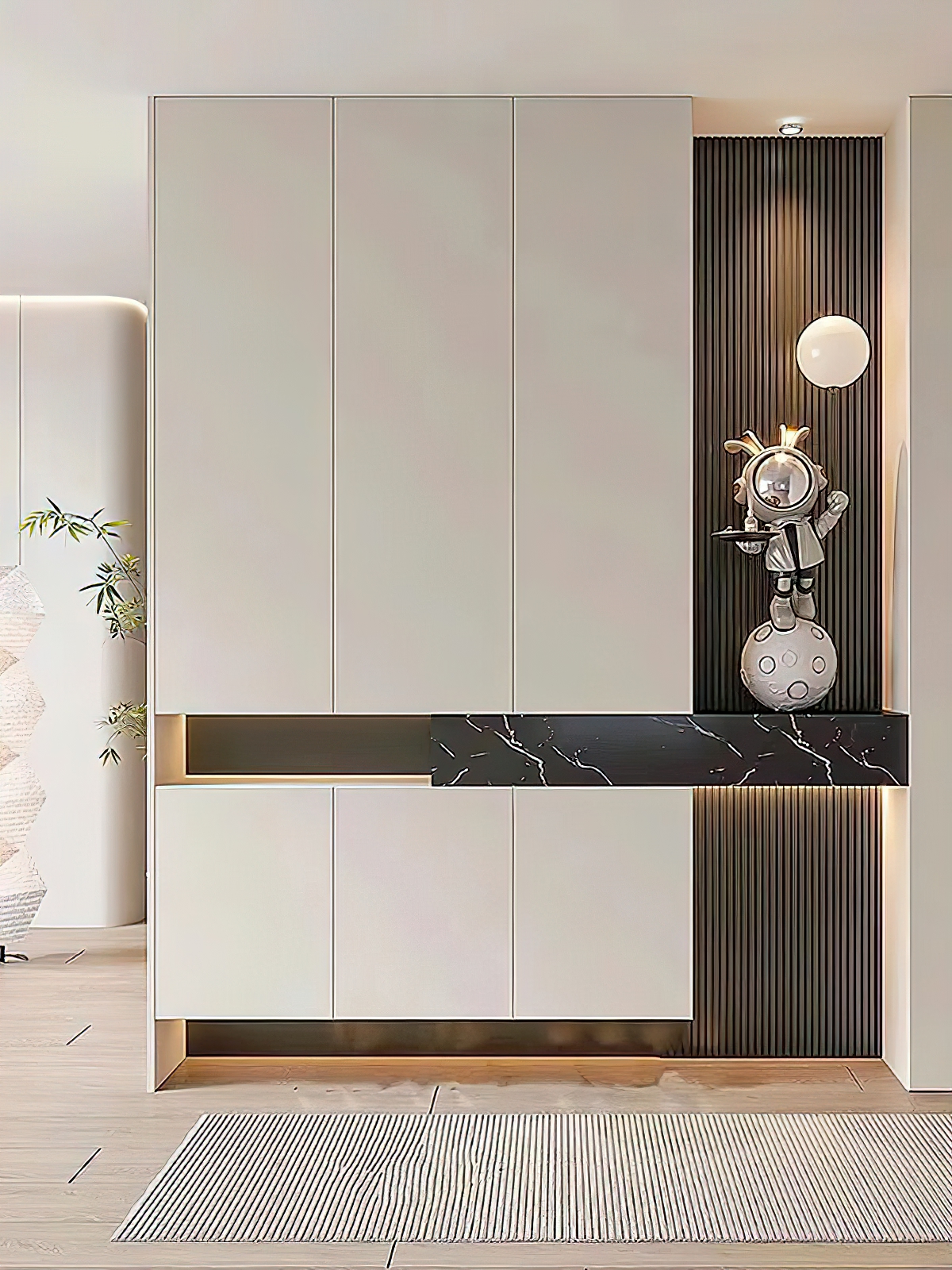
Two common misconceptions in sideboard design: fully enclosed cabinets that require repeatedly opening and closing doors to access items, and large open shelves that look great in photos but quickly accumulate dust in everyday use. BOSNIE adopts a “seven parts closed, three parts open” storage approach: most everyday clutter is tucked away in closed cabinets, with only a few carefully chosen pieces displayed. A small section of glass‑door display area is reserved for wine glasses and dinner plates, adding visual depth; full‑height glass cabinets are avoided to prevent the nighttime glow from resembling a commercial showcase, which can feel visually oppressive. This restrained, open‑yet‑controlled design minimizes the need for frequent tidying, keeping the dining space neat and organized over time.
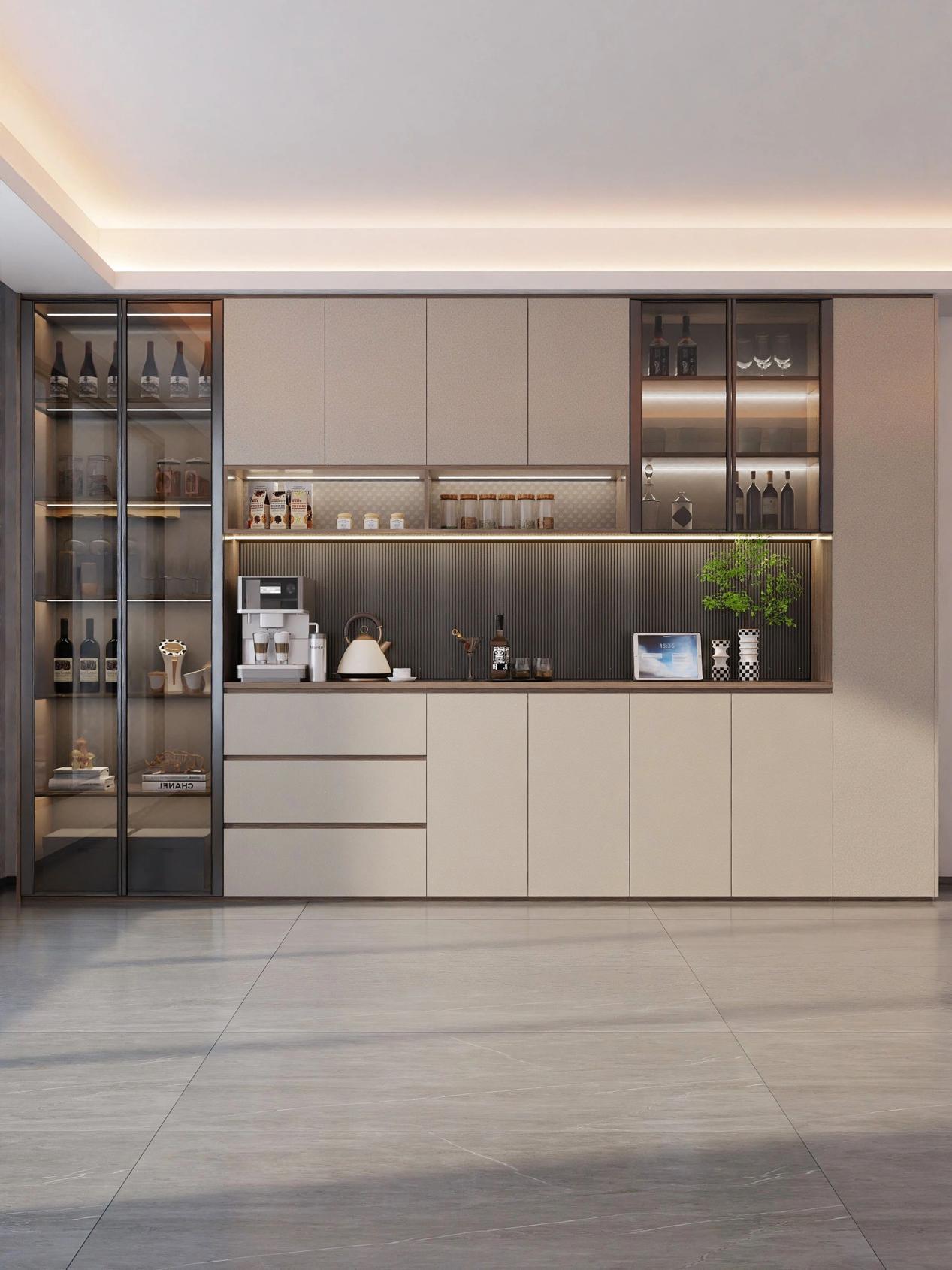
Simple color scheme with clean, tailored edges, capturing the essence of pure Italian minimalism.
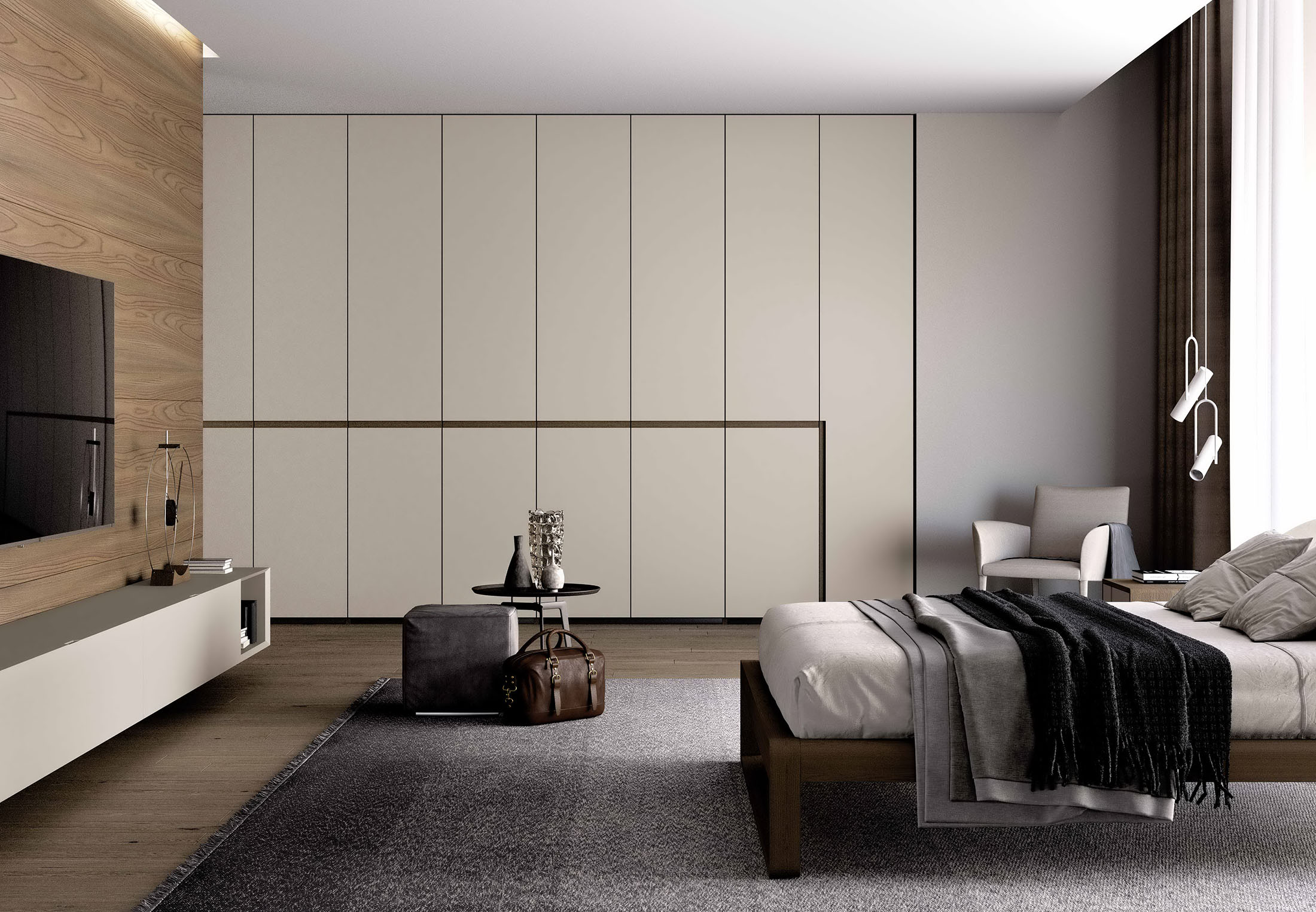
Italian minimalism eschews elaborate styling, with texture subtly embedded in door‑panel proportions, material transitions, and built‑in craftsmanship. BOSNIE Private Residence Customization features creamy white doors paired with warm‑toned wood cabinets; its low‑saturation palette exudes a soft, sophisticated elegance, while the clean, unified façade transforms the dining area into a relaxing living space—rather than a showroom for appliances. For open‑plan living rooms or spacious flats, deep natural wood tones can be retained; in smaller units, a light creamy white is preferred to enhance spatial openness and airiness. Consistent, streamlined edge‑finishing details, free of superfluous decorative moldings, ensure enduring visual appeal that resists aesthetic fatigue over the years.
First plan the layout of electrical appliances, then proceed with the interior design.
Six months after moving in, most families find their dining‑room sideboard cluttered—often because they failed to allocate dedicated space for small appliances upfront. Coffee machines, bread makers, water‑filtration systems, capsule organizers, thermal carafes, and children’s drinking cups all require their own designated zones. BOSNIE’s designers plan ahead, tailoring the layout to each household’s habits: integrating a steam‑convection oven, reserving slots for appliances, and equipping partitioned drawers with compartments for tissues and coffee accessories. This ensures that seniors and children can reach for items without bending or shifting furniture, creating smooth, comfortable traffic flows.
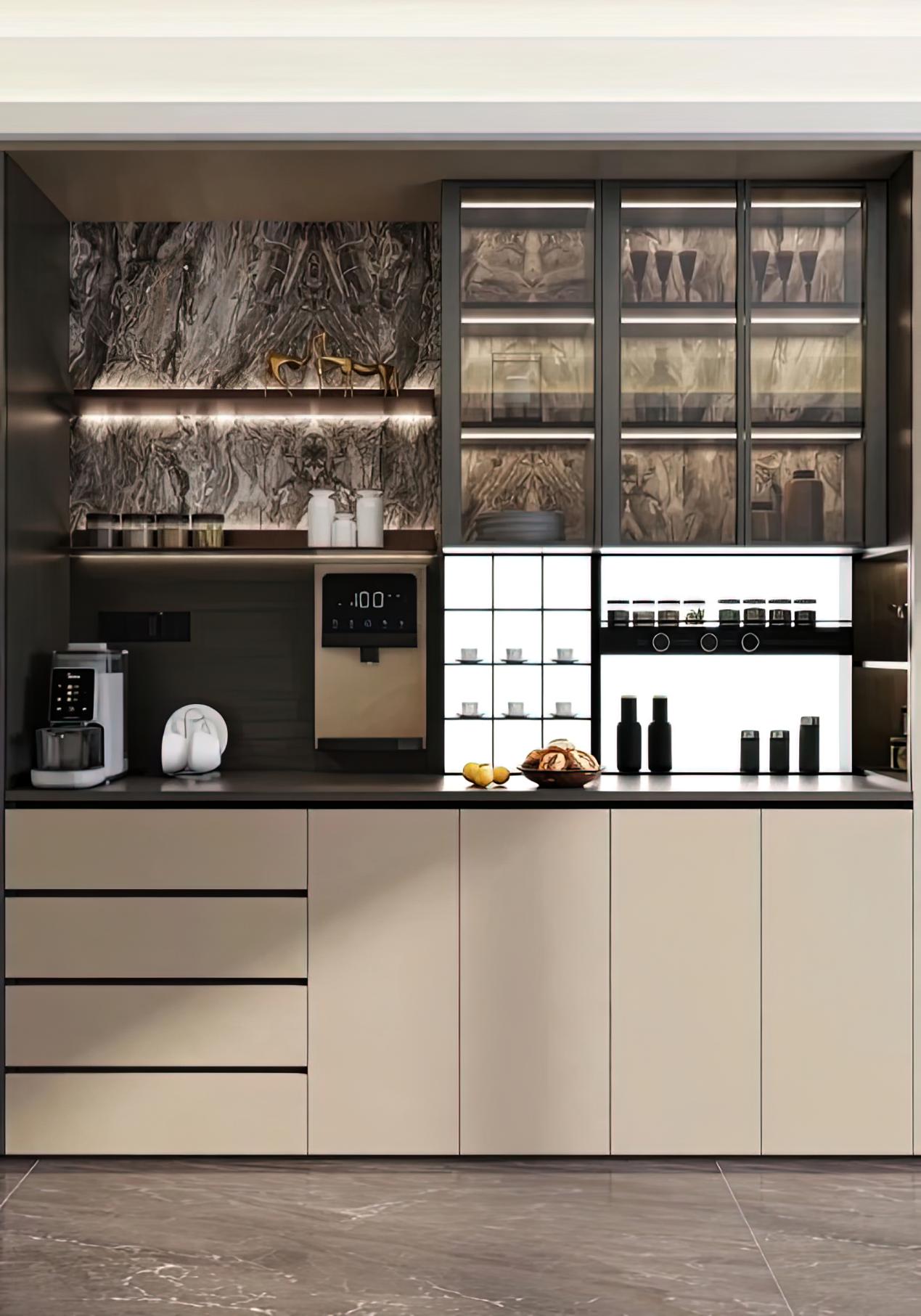
A high‑quality sideboard never overloads with trendy gimmicks; instead, it seamlessly integrates a water bar, storage, display, and cleaning functions. BOSNIE Private Residence Customization embraces a restrained, Italian‑inspired minimalist aesthetic that effortlessly accommodates everyday needs while balancing refined aesthetics with long‑term living comfort.