

Among the myriad home‑decor styles, minimalist cabinetry—characterized by clean, crisp lines and a restrained color palette—has become a timeless choice for the kitchen. By eschewing superfluous ornamentation and avoiding overly elaborate designs, it embraces the principle of “less is more,” striking a harmonious balance between visual appeal and practicality in the kitchen.
Living Knowledge · 2026.07.09

Among the myriad home‑decor styles, minimalist cabinetry—characterized by clean, crisp lines and a restrained color palette—has become a timeless choice for the kitchen. By eschewing superfluous ornamentation and avoiding overly elaborate designs, it embraces the principle of “less is more,” striking a harmonious balance between visual appeal and practicality in the kitchen.

Among the myriad home‑decor styles, minimalist cabinetry—defined by its clean, crisp lines and restrained color palette—has become a timelessly elegant choice for the kitchen. By eschewing superfluous ornamentation and avoiding overly elaborate forms, it embraces the principle of “less is more,” striking a harmonious balance between visual appeal and practicality to create a bright, uncluttered, and soothing cooking space. Its color schemes favor low‑saturation, cohesive tones, steering clear of the visual chaos that high‑contrast, saturated hues can bring. Large expanses are often rendered in pure white, off‑white…

Among the myriad home‑decor styles, minimalist kitchen cabinets—defined by their clean, crisp lines and restrained color palette—have become a timelessly elegant choice for the kitchen. By eschewing superfluous ornamentation and avoiding overly elaborate designs, they embrace the principle of “less is more,” striking a harmonious balance between visual appeal and practicality to create a bright, uncluttered, and soothingly inviting cooking space.

The color scheme aims for a unified, low-saturation aesthetic, eschewing the visual clutter of high‑saturation, contrasting hues. Large areas are rendered in soft, light tones—pure white, off‑white, pale gray, and light oak—to soften any sense of spatial confinement, making even small kitchens feel more spacious. For those who prefer depth, a two‑tone palette of light above and dark below works well: light upper cabinets brighten the space and maximize natural light, while dark lower cabinets resist grease and grime. The color choices are simple and restrained, ensuring long‑term appeal without tiring the eye. By avoiding jarring, clashing colors throughout, the kitchen achieves a cohesive, softly balanced tone that exudes an understated, sophisticated calm.
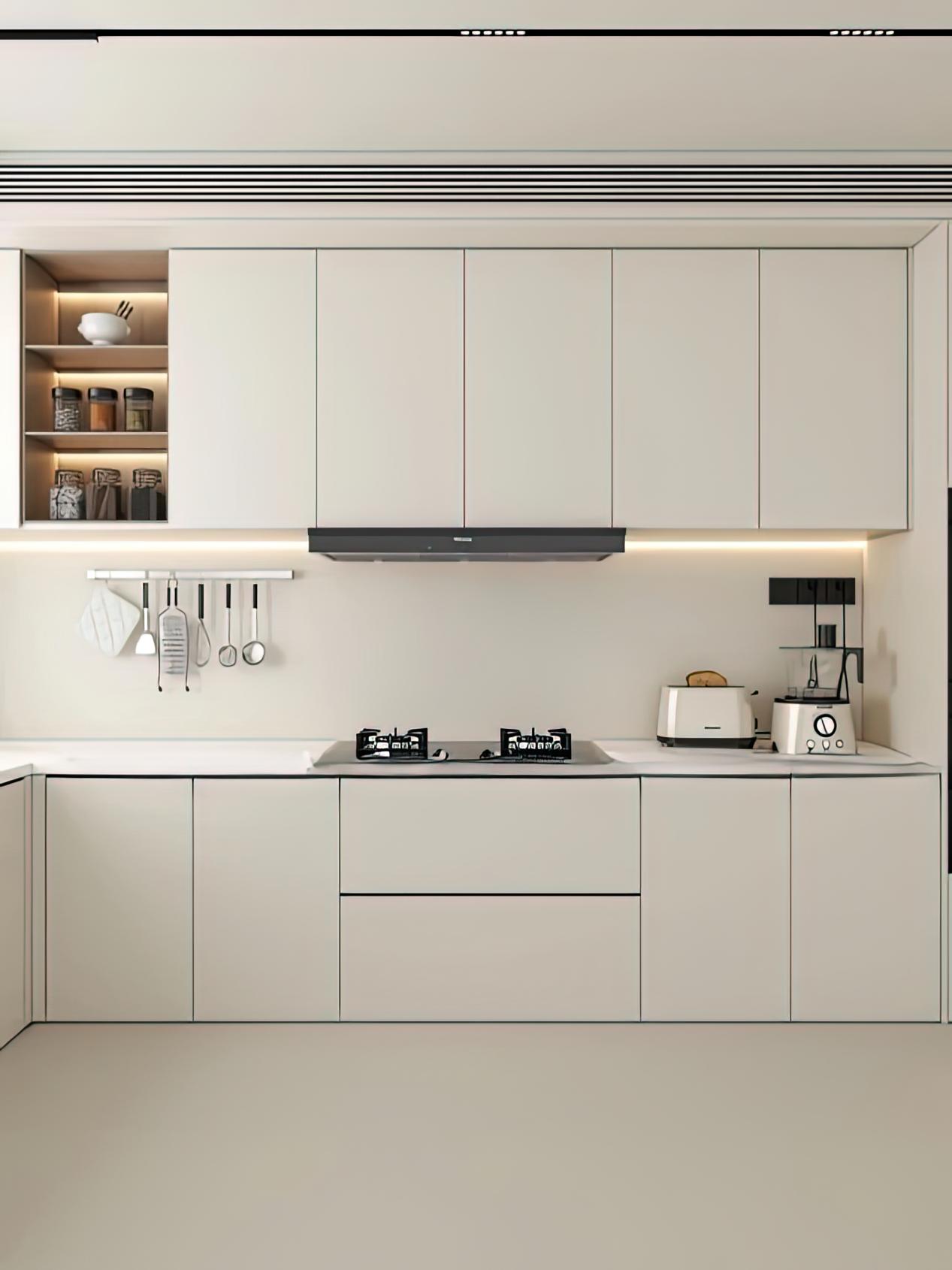
image1

For materials, matte, skin‑friendly panels are the top choice—essential for minimalist kitchen cabinets. Unlike glossy finishes, which readily show fingerprints and glare, matte surfaces resist water stains and grease, making them easy to wipe clean with a simple cloth, perfectly suited to the high‑traffic kitchen environment. The cabinet bodies feature uniform rounded corners and chamfered edges, eliminating sharp edges and reducing the risk of bumps and scrapes. As for the doors, decorative carvings, moldings, and ornamental edge banding have been eschewed in favor of solid, flat door panels, with clean, straight lines that deliver a crisp, uncluttered aesthetic.

The handleless, invisible design is a hallmark of minimalist cabinetry. By incorporating rebounders, concealed recesses, and under‑mounted hidden handles, it eliminates the fragmented lines created by exposed hardware, resulting in a seamless, unified cabinet facade. From base cabinets to wall cabinets, the surfaces flow smoothly and evenly, visually extending the walls and instantly making even a small kitchen feel more spacious—perfectly aligning with the core ethos of minimalism: clean, simple, and pure.
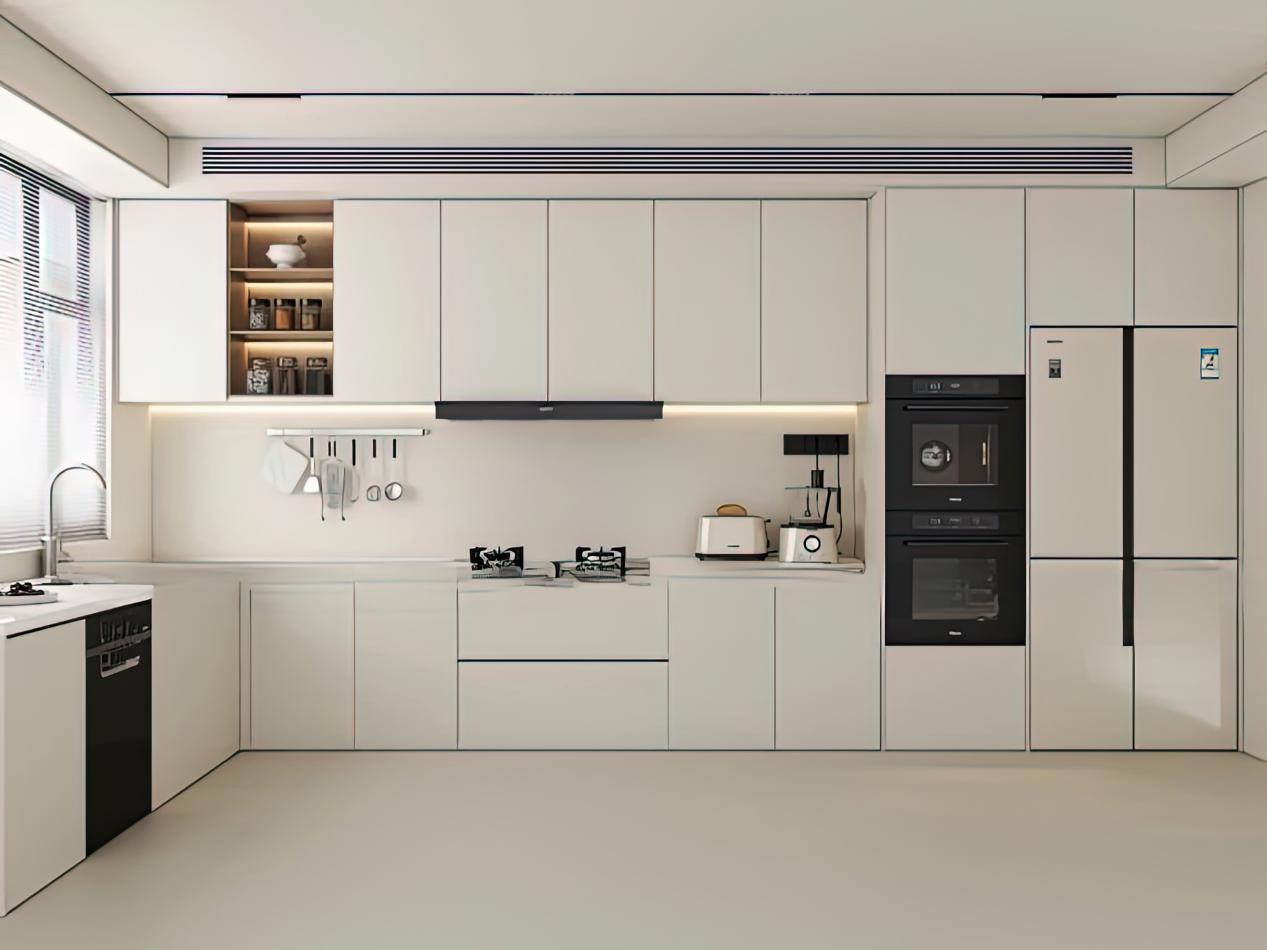
image2

The storage strategy embraces the “invisible storage” concept, tucking all clutter neatly into cabinetry to keep the countertop uncluttered and pristine. Small appliances like steam ovens, microwave ovens, and coffee makers are built‑in, freeing up valuable counter space; interior compartments feature tiered pull‑out baskets, corner organizers, and vertical zoning to ensure pots, dishes, and condiments are neatly sorted and easily accessible. A soft, concealed LED strip installed beneath the upper cabinets compensates for insufficient under‑cabinet lighting, while its gentle glow softens the cool, rigid feel of the cabinetry, infusing this minimalist space with a warm, inviting touch.
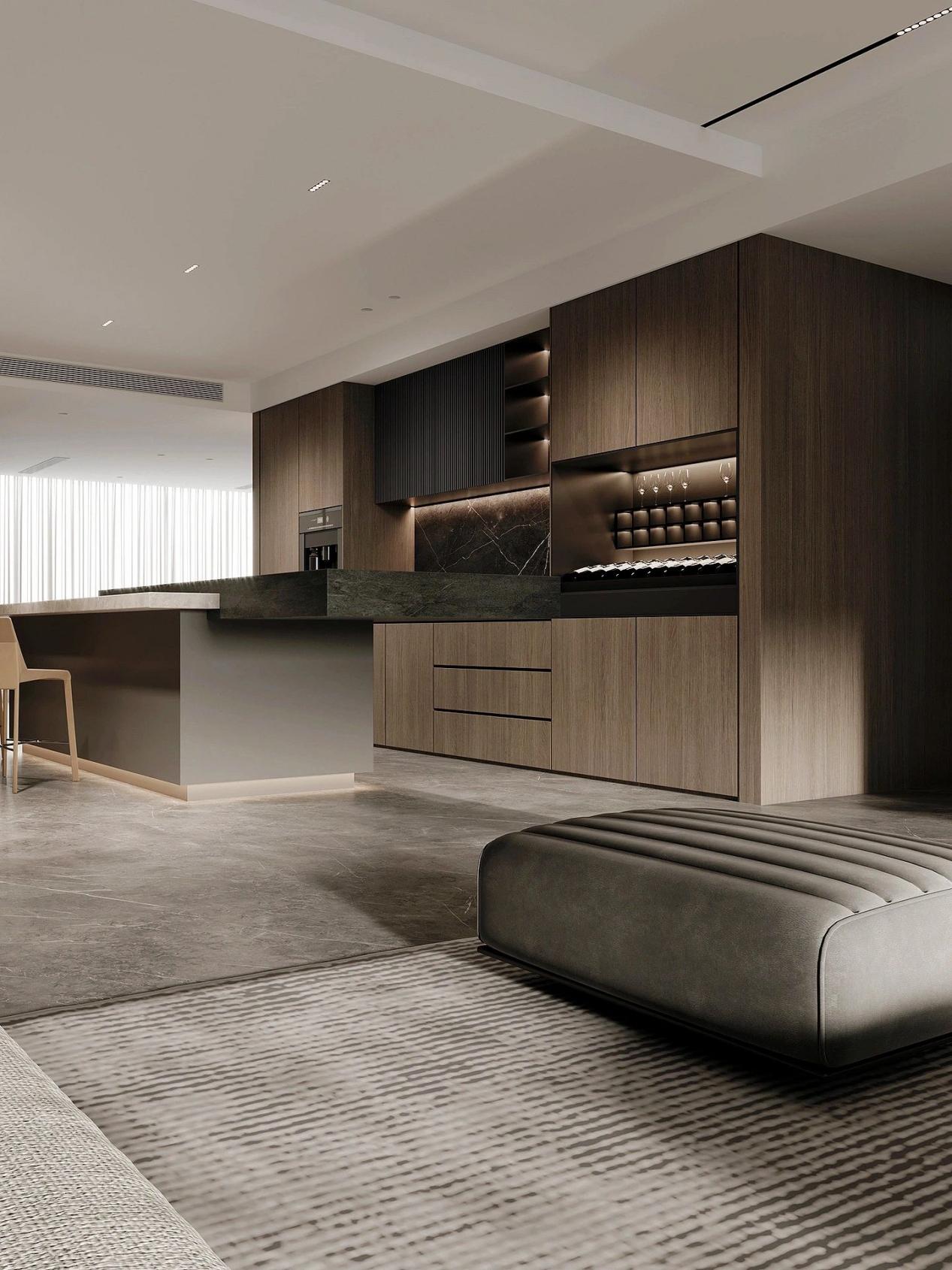
image3

Minimalism doesn’t mean spartan; it means stripping away the superfluous to retain designs that truly fit everyday life. No cluttered ornamentation—just sleek cabinetry, pristine countertops, and organized storage. With an unobstructed view while cooking and effortless upkeep, your kitchen sheds its cramped, chaotic feel and transforms into a serene, comforting haven where the warmth of home lingers.

BOSNIE Private Residence Customization can tailor minimalist cabinet color schemes and storage configurations to suit your kitchen layout and everyday habits, creating an ideal kitchen that’s clean, open, practical, and aesthetically enduring.
More Articles

More Posts
When our longing for home…
Living Knowledge · 2026.09.18

When our longing for home…

When our longing for home evolves from “one-size-fits-all” to “private residence customization,” the headaches of whole-house customizations—wood panel shrinkage, environmental safety concerns, low‑quality hardware, and endless add‑on charges—can feel overwhelming. How can you break free? The worry‑free answer is simple: entrust your dream home to a reliable system. BOSNIE Private Residence Customization delivers your ideal home, from design to completion, with six premium features. 01 Design | From the perspective of a private residence...

A Must-Read on Home Aesthetics: From Creamy Neutrals and French Chic to Wabi-Sabi—The Essence of Six Mid-Century Modern Styles Explained in One Go
Living Knowledge · 2026.09.09

A Must-Read on Home Aesthetics: From Creamy Neutrals and French Chic to Wabi-Sabi—The Essence of Six Mid-Century Modern Styles Explained in One Go

You often hear people ask: “Why does the mid‑century style I want look so different from what I end up with?” That’s because the nuances of mid‑century design lie in the details. A shade darker or lighter, a more pronounced or subtler grain on the door panels, brass hardware versus matte iron—each choice shapes a distinct aesthetic. So how can you achieve that perfect match and avoid any missteps? Today, we’ll break down the core principles behind six major mid‑century styles: creamy mid‑century, French mid‑century, modern mid‑century, and more.

When our longing for home…
Living Knowledge · 2026.09.09

When our longing for home…

When our longing for home evolves from “one-size-fits-all” to “private residence customization,” the headaches only multiply: board shrinkage, environmental safety concerns, low‑quality hardware, and endless add‑on charges. How can you break free? The worry‑free solution is simple: entrust your dream home to a reliable system—BOSNIE Private Residence Customization. With six top‑tier features, we bring your vision to life, from design through to completion. 01 Design | From a private‑home perspective, we craft a dream home uniquely yours. Creating your new home…

BOOK A CONSULTATION

Want to Apply These Ideas to Your Own Home?

It can explain the apartment area, decoration stage and preferred style. The BOSNIE team will combine the home encyclopedia, real cases and product systems to provide one-to-one custom suggestions for the entire home.

Among the myriad home‑decor styles, minimalist cabinetry—characterized by clean, crisp lines and a restrained color palette—has become a timeless choice for the kitchen. By eschewing superfluous ornamentation and avoiding overly elaborate designs, it embraces the principle of “less is more,” striking a harmonious balance between visual appeal and practicality in the kitchen. | BOSNIE Official Website