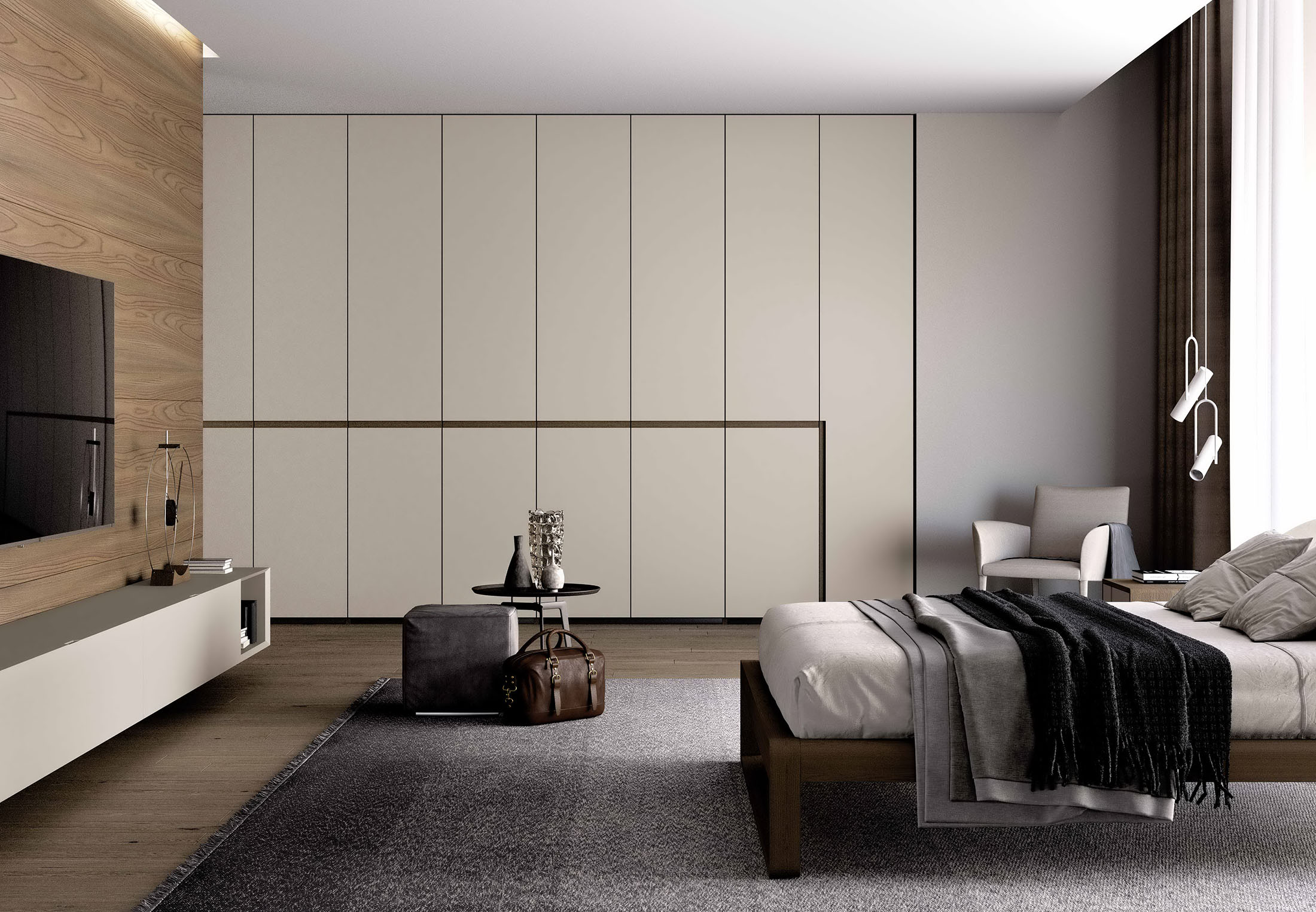
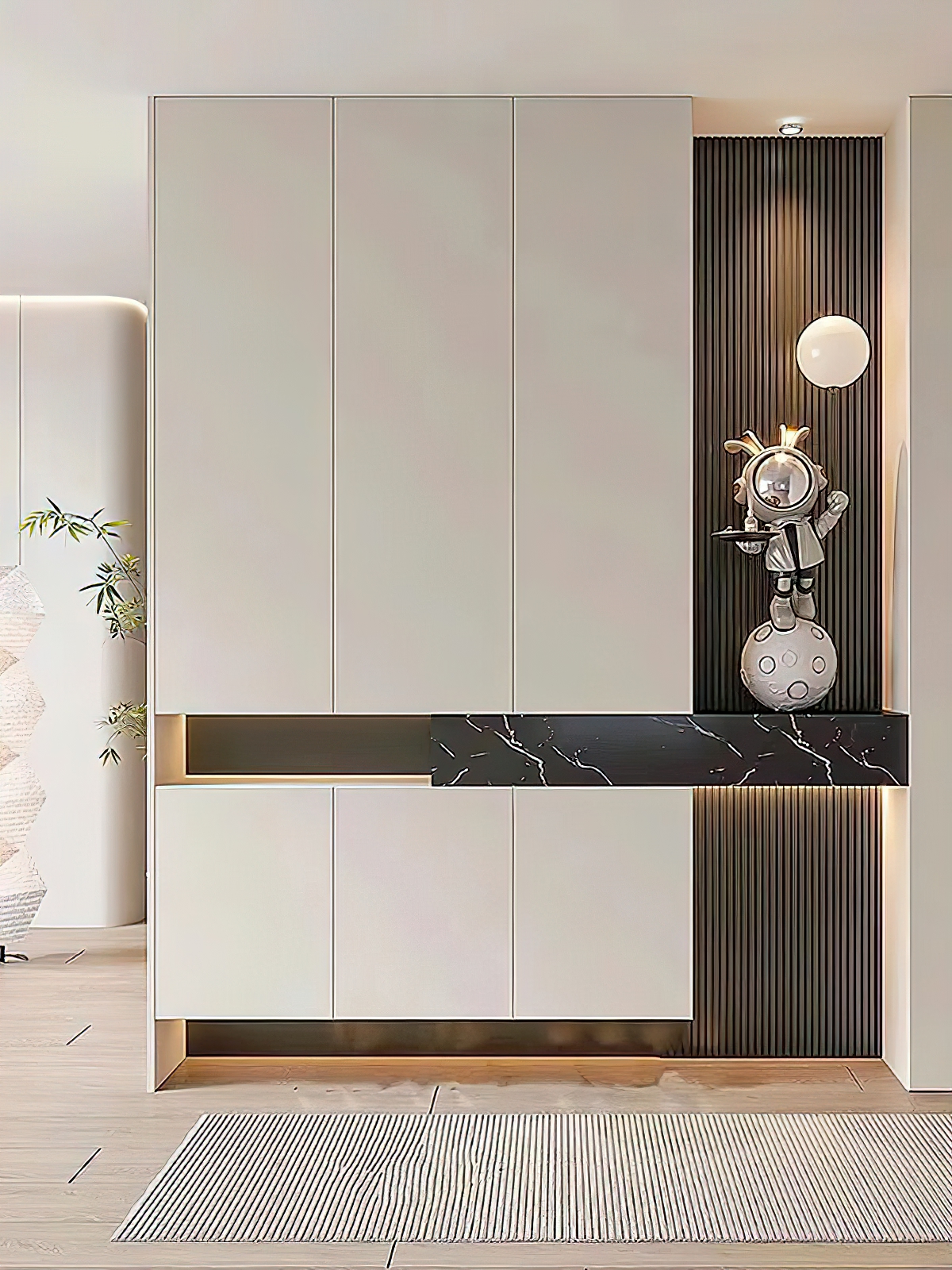
Among the many home‑decor styles, American vintage endures thanks to its warm, nostalgic texture. To recreate the relaxed, cinematic ambiance of old movies, it’s not enough to rely solely on soft furnishings; whole‑house customization of cabinetry is the core framework that defines the style. BOSNIE Private Residence Customization masters five key aspects—cabinet color schemes, design and craftsmanship, storage configurations, material pairings, and metal‑and‑glass accents—to effortlessly bring to life a sophisticated, timelessly appealing American‑vintage home.
I. Custom Color Scheme: Adhering to the 7:2:1 Retro Color Palette
The color scheme of the cabinetry sets the tone for the entire space, adhering to the classic 7:2:1 rule. Seventy percent of the base palette features creamy white and latte‑colored doors, brightening the room and softening the heaviness of dark wood. Twenty percent is reserved for a dominant hue—walnut or cherry‑tone natural wood veneers—to echo the warm, timelessly elegant texture of American‑style vintage wood. The remaining ten percent consists of accent colors—such as retro olive green and burgundy—applied selectively to the back panels of sideboards and TV cabinets, with open shelving left unadorned to avoid overwhelming the space.
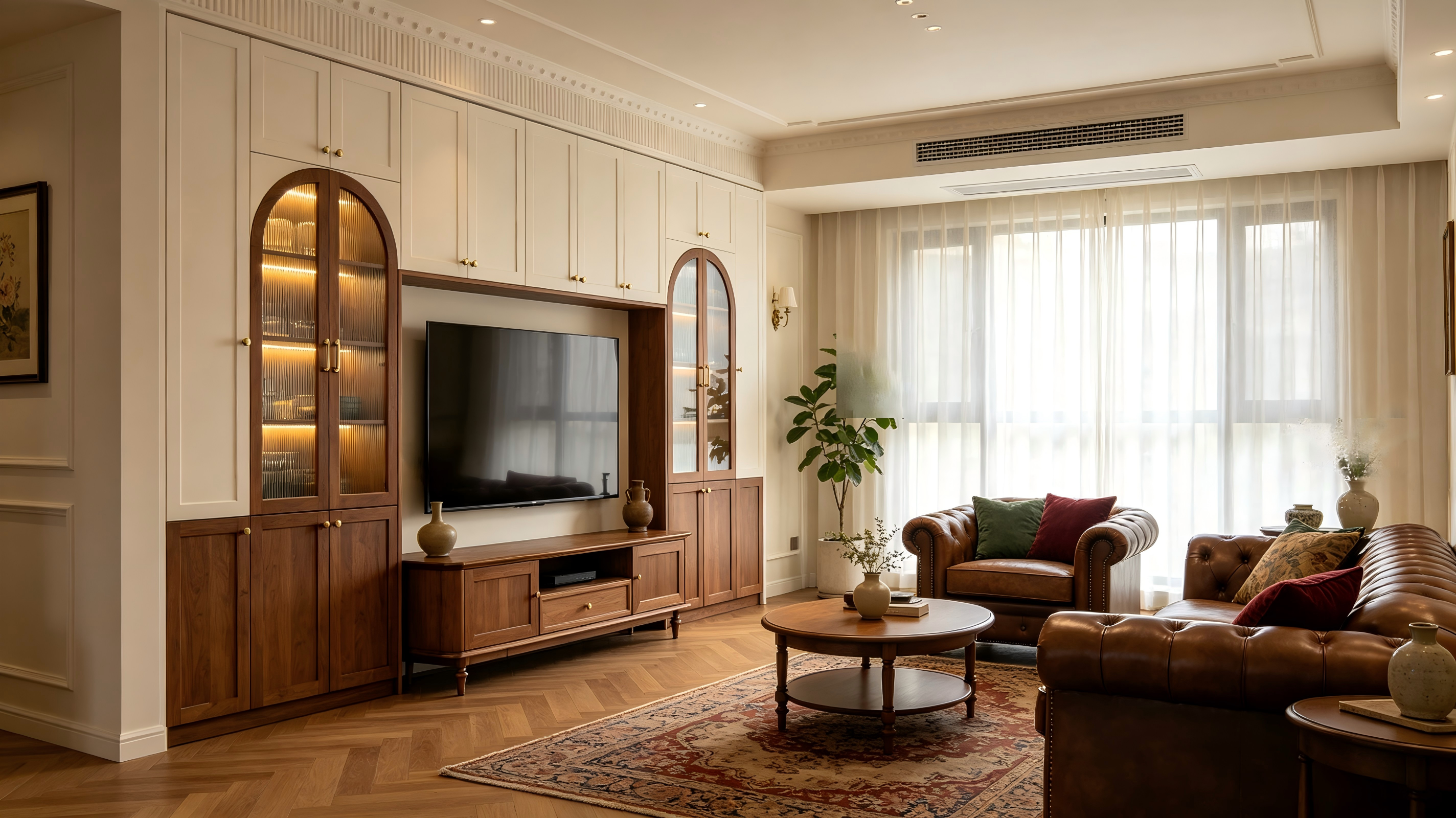
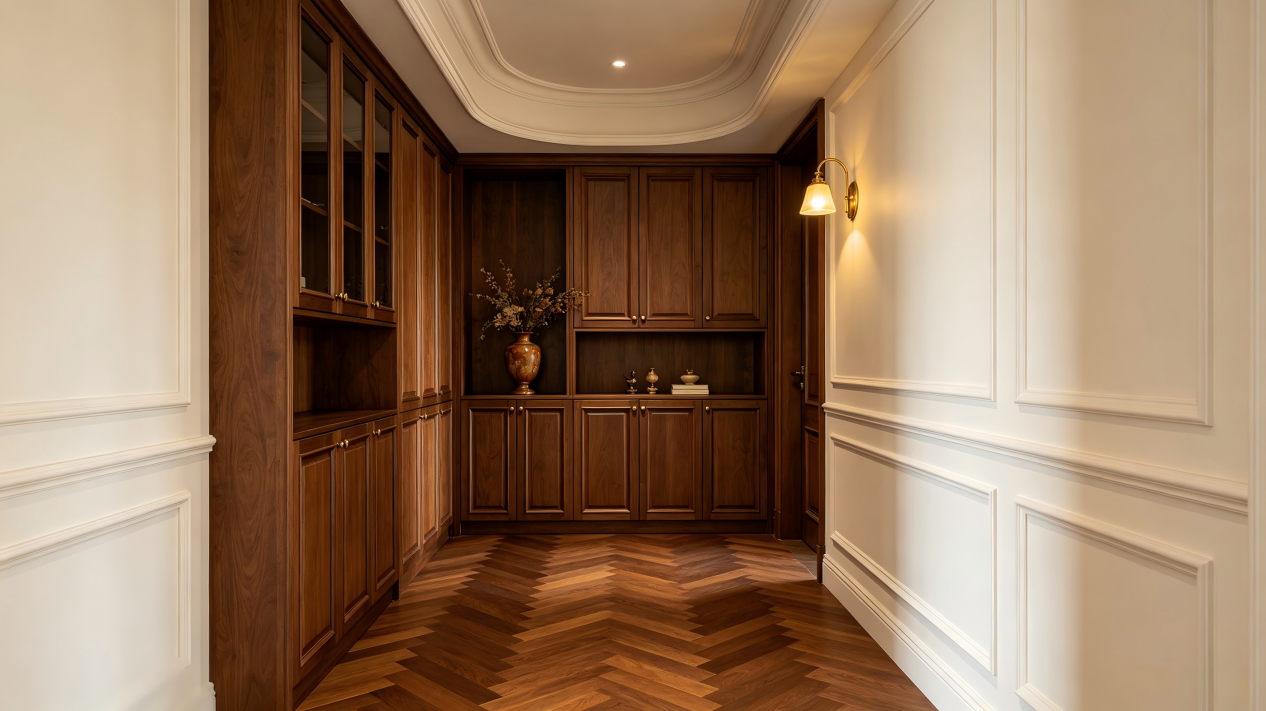
All cabinetry throughout the home follows a unified color scheme, with the entryway, living room, dining area, and bedrooms echoing one another to prevent disjointed color palettes. Paired with warm-toned herringbone hardwood flooring, the design gently amplifies a vintage, cozy ambiance.
II. Cabinet Design: Simplified vintage lines, with understated, heavy carved ornamentation.
Traditional American-style intricate carvings can easily look dated, whereas a modern, refined take on American vintage—custom‑designed to exude retro charm—employs clean, minimalist lines. Floor-to-ceiling cabinets are accented with shallow relief moldings, arched open shelves, and Roman columns at the edges, while the doors feature timeless designs such as skeletal lines, grid patterns, and long‑strip glass panels. The TV cabinet and sideboard adopt a staggered, tiered layout, eschewing bulky, cumbersome forms.
The entryway cabinet and the bedroom wardrobe both feature softly rounded edges, balancing safety with a vintage, gentle aesthetic. The wainscoting and the cabinet lines are seamlessly integrated, creating a cohesive woodwork ensemble that establishes a complete, retro‑inspired spatial foundation.
III. Storage Design: A blend of concealment and display, balancing practicality with aesthetic presentation.
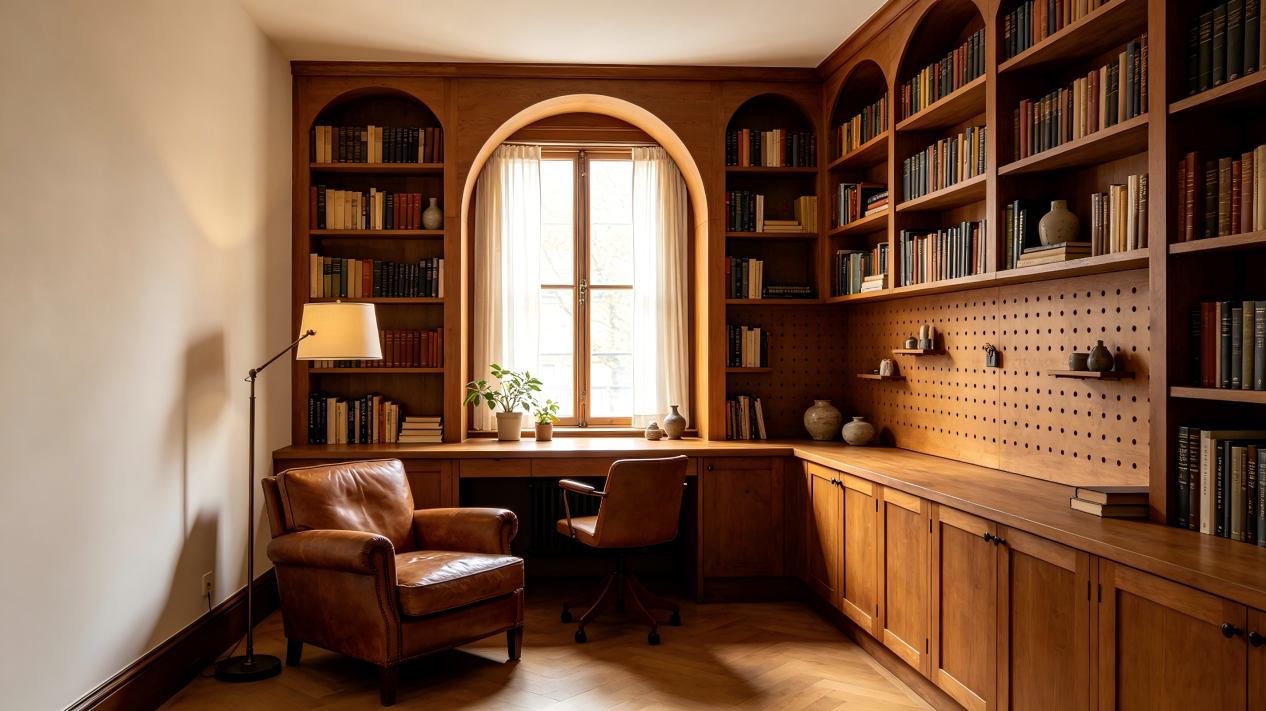
American‑style vintage design emphasizes a warm, lived‑in atmosphere, with custom cabinetry crafted according to the principle of “seven parts hidden, three parts revealed.” Large, enclosed cabinets tuck away odds and ends and clothing, keeping the space tidy, while select arched glass display shelves and recessed LED strip lighting highlight ceramic accents, vintage art books, and antique vessels.
A custom-built, wall-to-wall pantry cabinet in the dining room features lower drawers for storing tableware and small appliances, while the upper glass-fronted section showcases a collection of wine glasses. In the living room, a floor-to-ceiling TV cabinet seamlessly integrates storage for electronics with an open display area. Meanwhile, the bedroom’s floor-to-ceiling wardrobe is thoughtfully divided into sections for long and short hangers, drawers, and high‑level storage, balancing ample capacity with a vintage‑inspired aesthetic to meet the everyday storage needs of the entire family.
IV. Material Texture: Natural wood veneer and fabric upholstery complement each other.
Cabinet bodies are primarily crafted from walnut and cherry veneers with natural grain, subtly distressed to evoke the patina of time, eschewing glossy, high-gloss finishes. Select cabinets feature rattan‑woven doors and linen‑upholstered panels, adding visual depth and texture to the façade.
The cabinetry is thoughtfully coordinated with the soft furnishings: cotton‑linen plaid throw pillows, vintage floral curtains, and an oiled‑wax leather sofa gently temper the weighty warmth of the wood. Custom cabinets feature strategic open spaces for arranging decor, while the natural grain of the woodwork and the textured patterns of the fabrics complement one another, creating a relaxed, retro‑inspired home atmosphere.
5. Hardware and Glass: Brass Adds a Vintage Touch
Hardware and glass are the soulful details that define this American‑style vintage cabinetry. The entire home features matte brass pulls and hinges, eschewing the glossy silver of contemporary hardware. The sideboard and bookcase are adorned with tea‑colored iridescent glass and vintage plaid glass, complemented by built‑in warm‑tone LED strips that cast a soft glow, enhancing the retro ambiance. Brass wall sconces and metal‑framed decorative artwork harmonize with the cabinet’s golden hue, while the glass doors refract gentle light and shadow, ensuring every detail of this whole‑house customization is seamlessly unified and elevating the overall aesthetic to a refined, luxe‑vintage level.