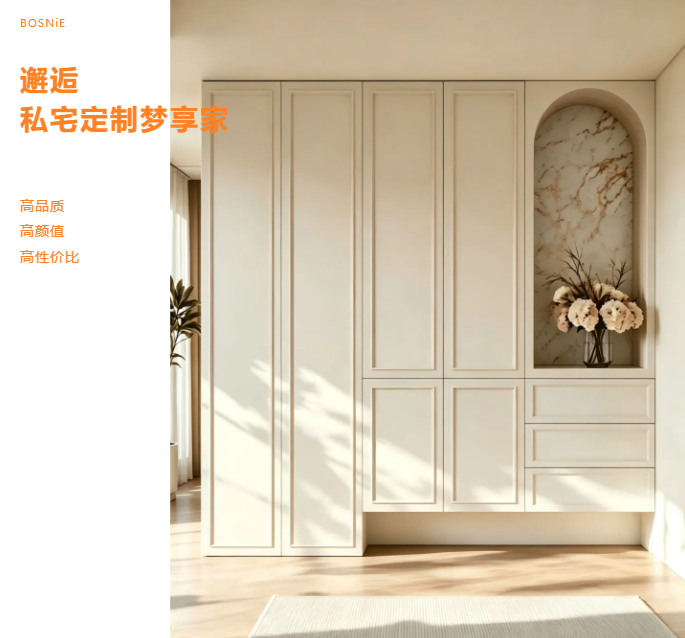
The entryway is the home’s “first impression” and the emotional starting point of every day upon returning. With a renovation budget of several hundred thousand, why does one home feel like a luxury residence as soon as you step inside, while another seems utterly unremarkable? The difference often lies not in how much money was spent, but in how the details are handled.
Today, we’re sharing seven elegant Italian‑inspired entryway designs—each one worth bringing home.
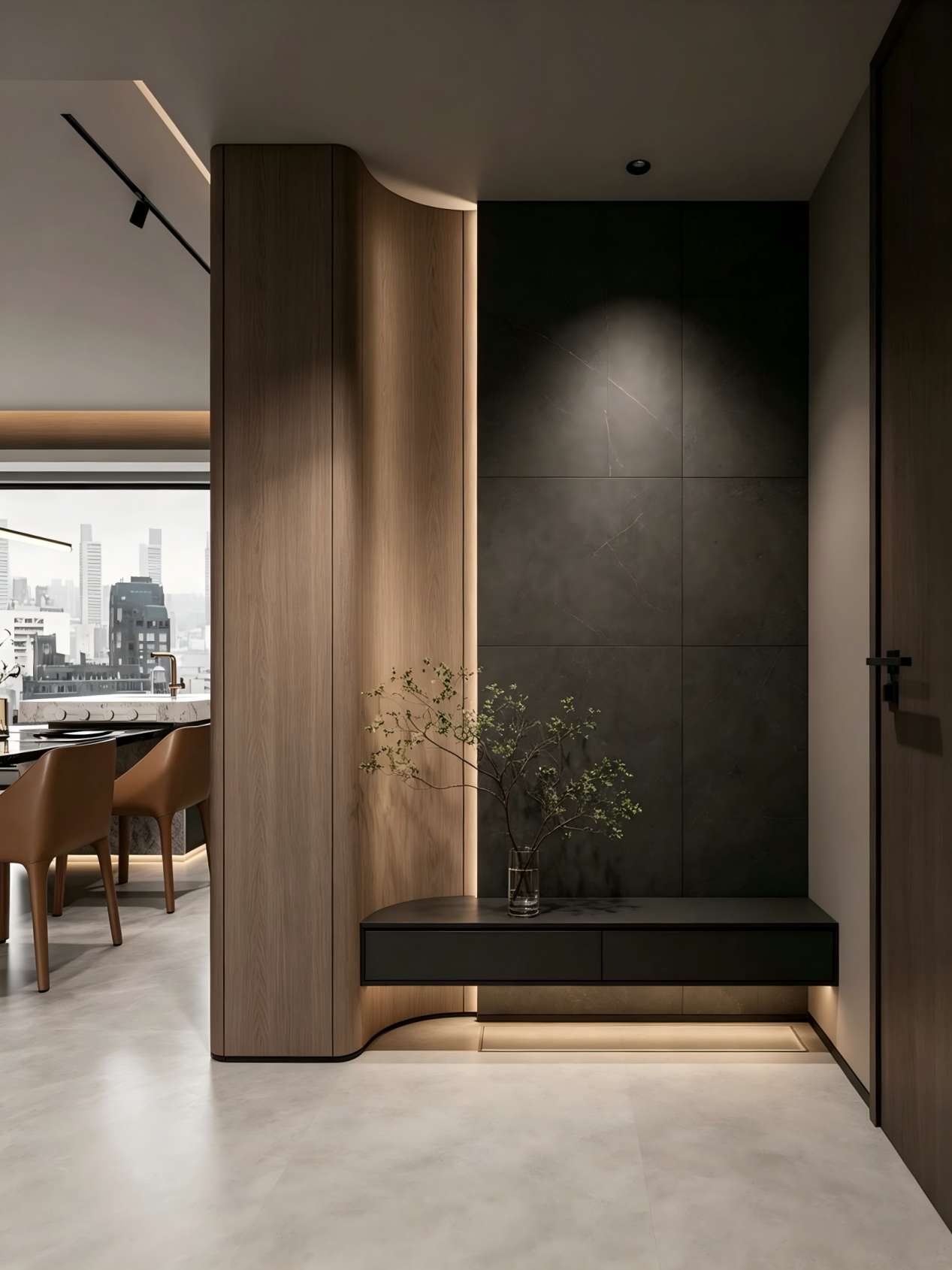
I. Subtraction in materials, addition in texture.
Many entryways look cluttered—not because there’s too much stuff, but because there’s too much material. Stone slabs, marble, wood veneer, leather, metal… each one looks luxurious on its own, but piled together they end up looking like a “materials showroom.”
The key to Italian‑inspired, understated luxury is selecting two or three materials and elevating their textures to the utmost. For example, pair a stone‑slab countertop with wood‑grain cabinetry, then accent it with a matte black metal trim—each material brings its own character while complementing the others without competing. Texture isn’t simply the sum of material costs; it’s the interplay between those materials.
II. The suspended design is the secret to its impressive size.
The entryway cabinet is suspended 20–30 centimeters off the floor—not just for aesthetic appeal. This floating design allows light to filter through the base, instantly lightening the visual weight of the space and giving even small apartments a sense of airiness. Place a few pairs of frequently worn shoes at the bottom to combine practicality with style.
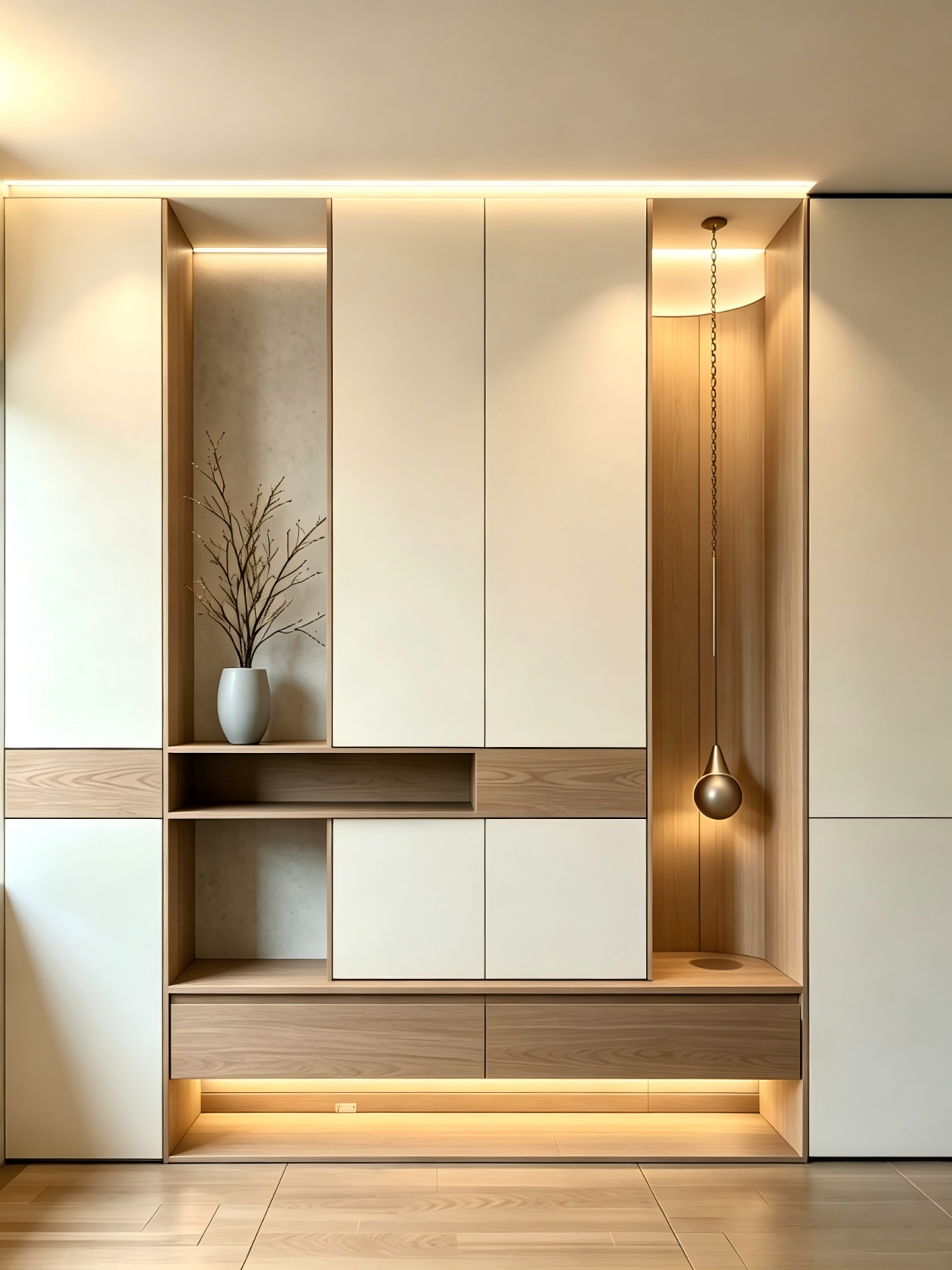
3. Lighting should “wash” the walls, not “strike” the face.
The key to an elegant entryway lies in lighting. Ditch the direct‑beam downlights—they only highlight imperfections. Instead, opt for under‑cabinet strips, ceiling‑mounted linear lights, and wall‑washing fixtures to let the light “flow” across the materials. Get the lighting just right, and even an ordinary veneer panel can take on a silk‑like sheen.
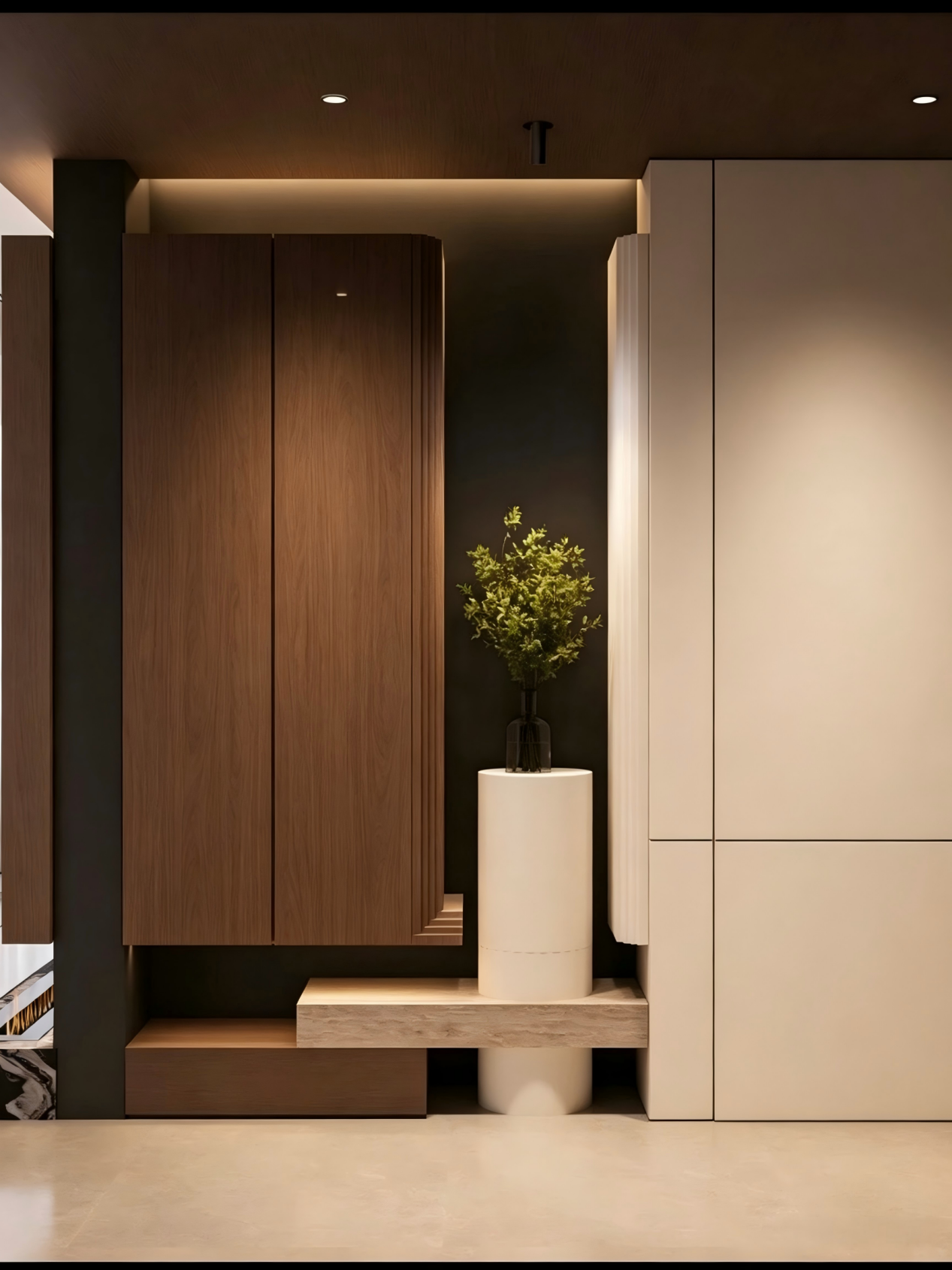
4. Only restrained use of color can achieve a sense of sophistication.
Stick to a neutral palette, with black, white, and gray as the dominant tones, and introduce at most one bold accent color or a single decorative piece to add just the right touch. The more restrained the color scheme, the more serene the space; and the more tranquil the space, the more keenly one can appreciate the subtle textures of the materials. This is also why the Italian style has endured through the ages.
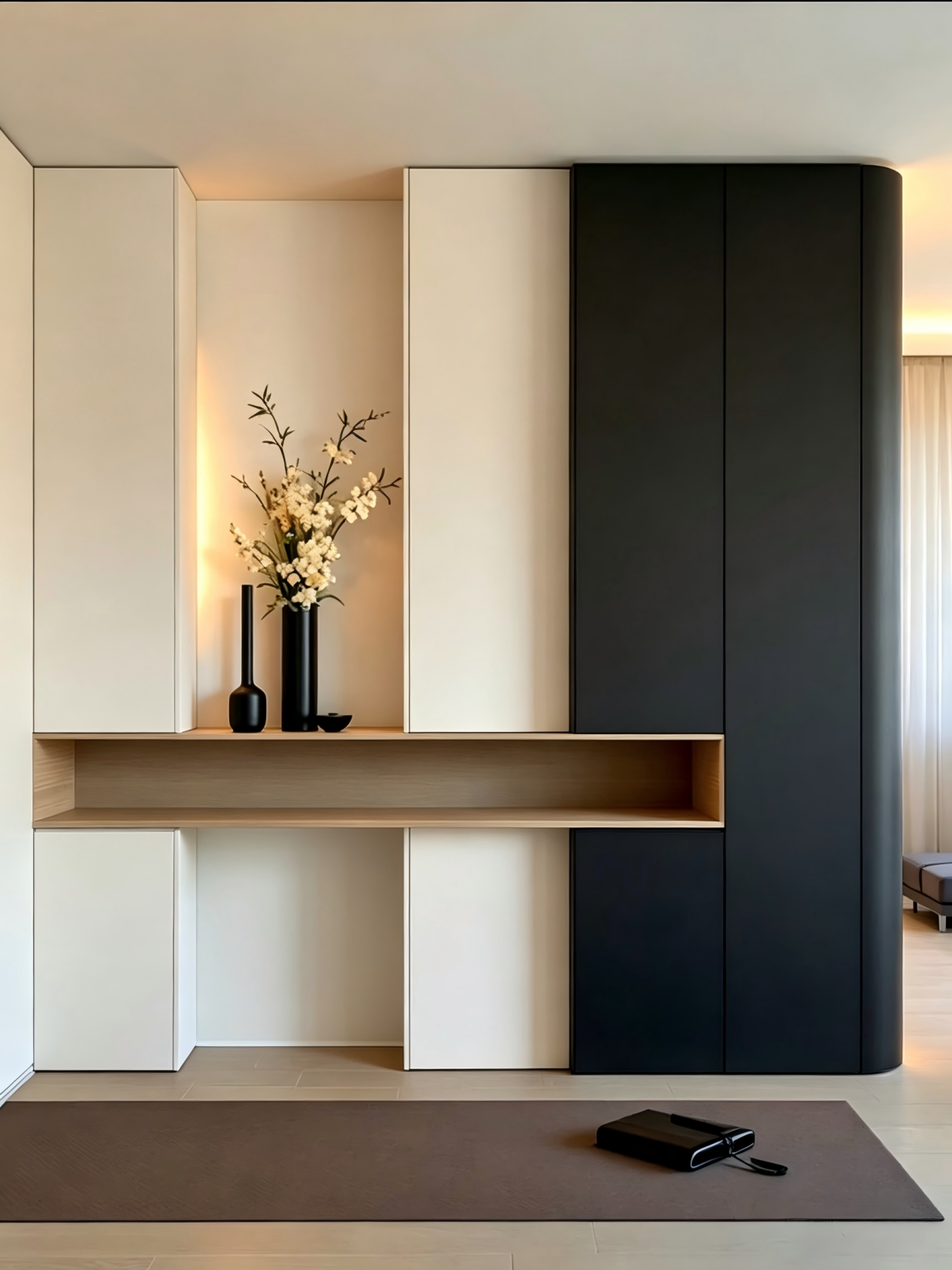
5. Lines must be straight, and proportions must be accurate.
The refined elegance of Italian‑style understated luxury is hidden in details just a few centimeters—or even millimeters—deep: whether cabinet doors and edge trims are flush, whether gaps are uniform, and whether handle placement has been carefully considered. These subtle touches may go unnoticed, yet they define the entire space’s sense of order.
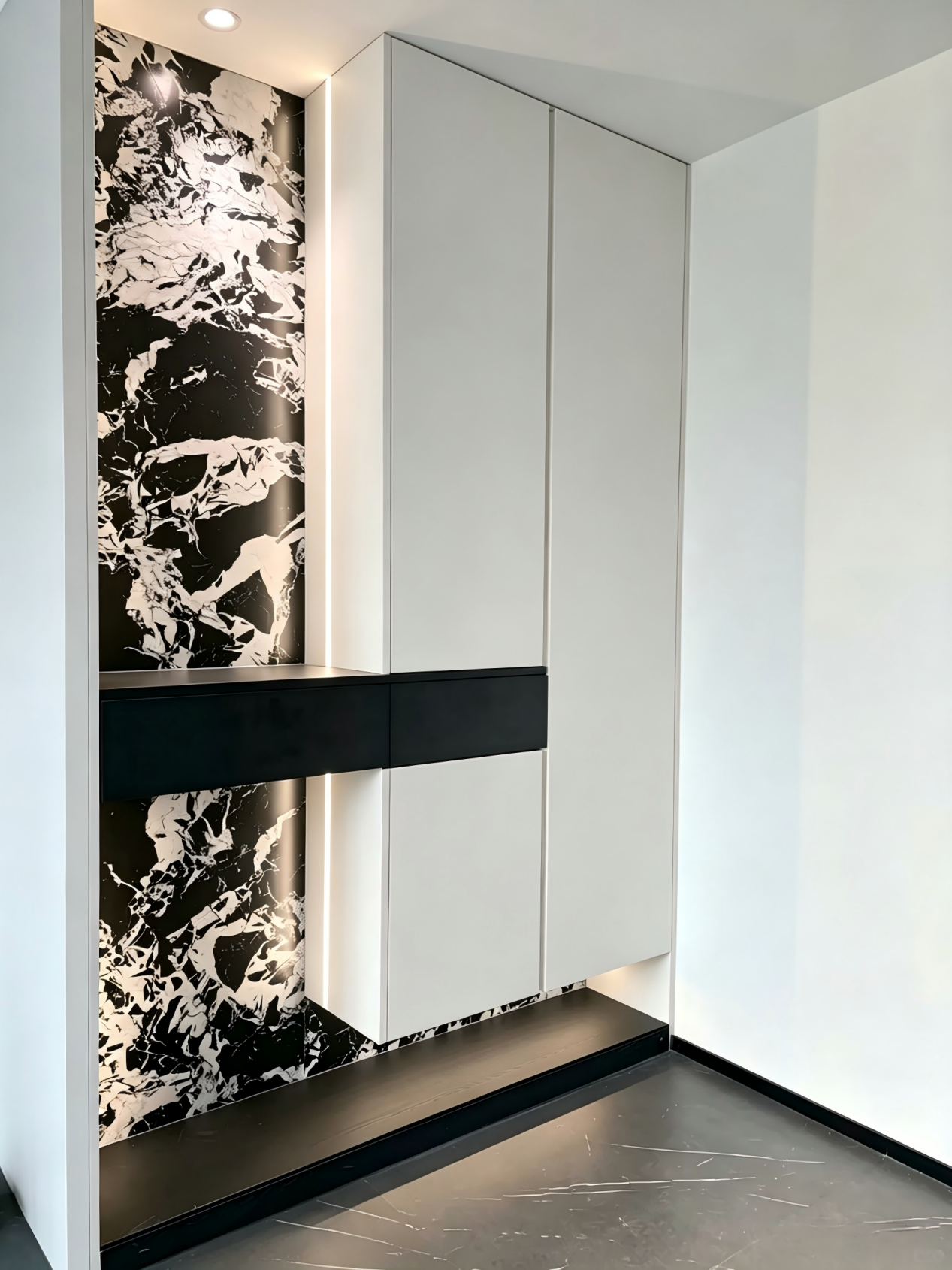
6. Textural contrast elevates the look, lending a more sophisticated touch than a single material alone.
Matte and glossy finishes, coarse and fine textures, cool and warm sensations—only when different materials “converse” with one another does a space gain depth and avoid feeling as cold and sterile as a showroom.
Why do the same renderings yield such drastically different real-world results?
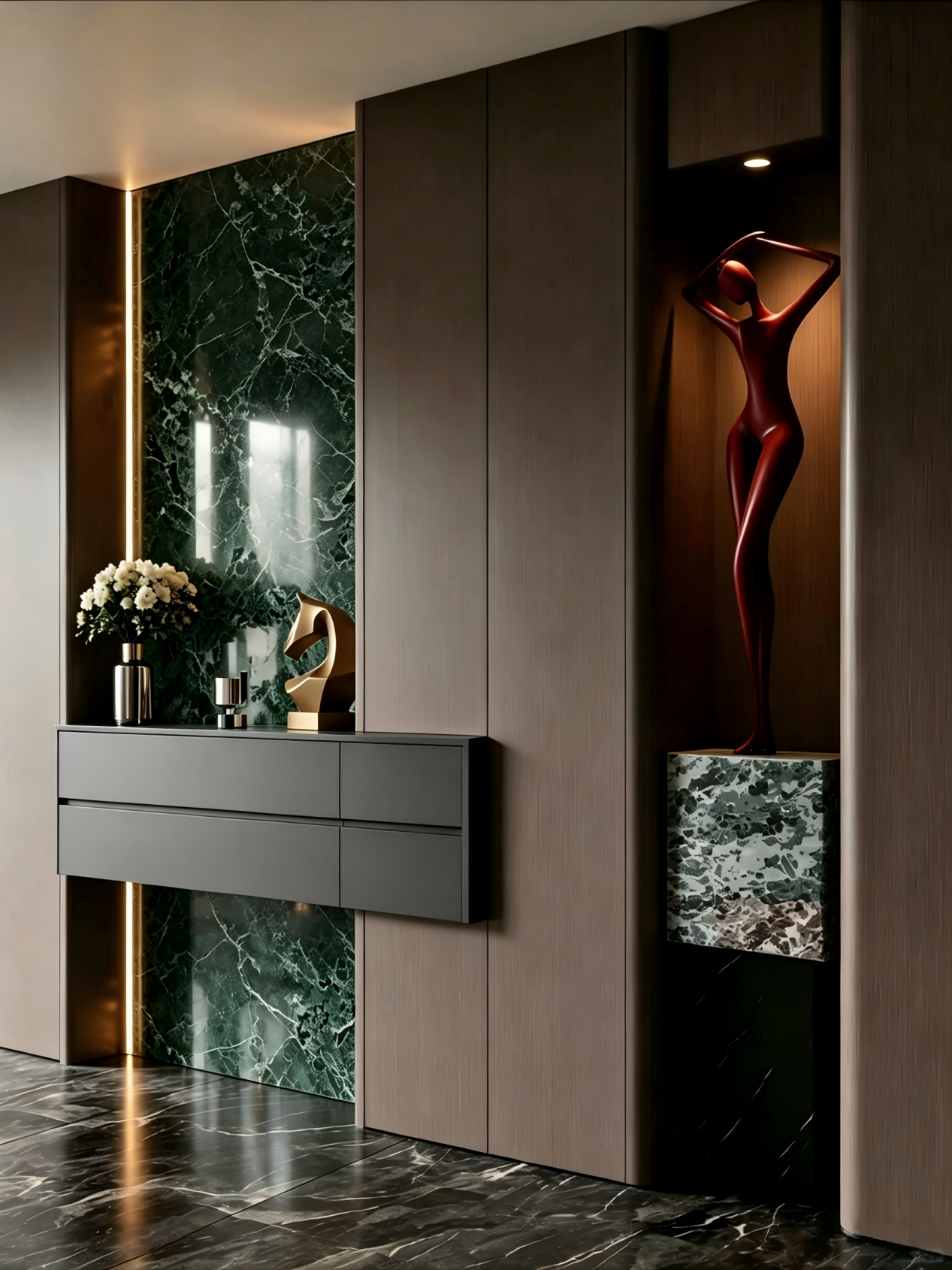
Understanding the design logic isn’t hard; the challenge lies in execution. How to seamlessly transition between materials, how to fine-tune the color temperature and angle of light strips, and how to manage even a few millimeters of dimensional tolerance—these are precisely what give rise to that sense of “high-end sophistication.”
BOSNIE Private Residence Customization treats the entryway as “the home’s first expression,” meticulously refining it from the moment you step through the door. Materials are carefully selected by the designer based on the floor plan and natural light, while the lighting scheme is seamlessly integrated with the cabinet structure. Every edge finish and every seam width adheres to strict craftsmanship standards. Rather than simply replicating trendy styles, we tailor each design to your home’s layout, ceiling height, and lifestyle.
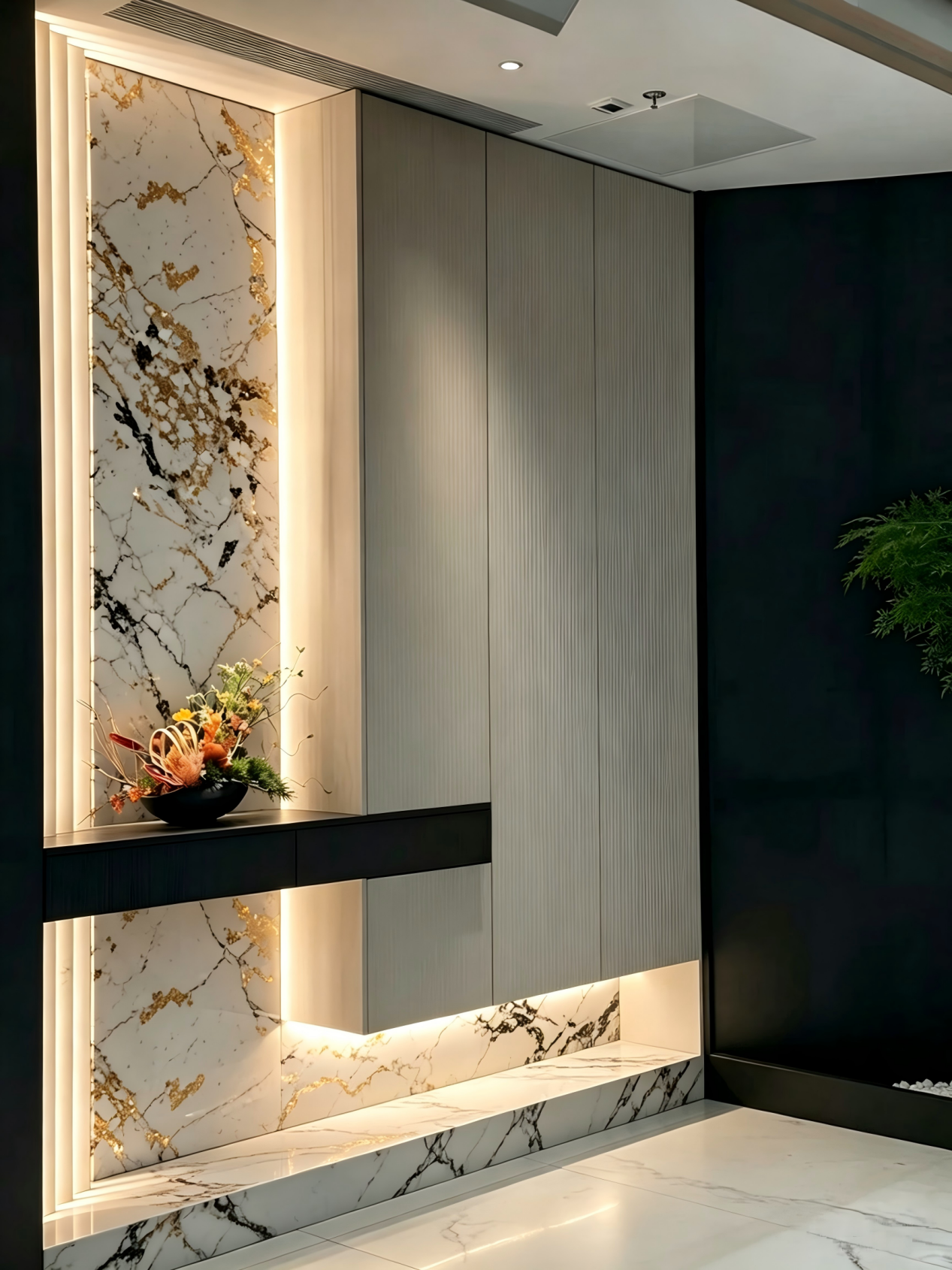
The “luxury” of Italian‑inspired understated elegance is never about a price tag; it’s the restrained materials, precise lines, and soft lighting that together create a sense of being truly and thoughtfully curated.
Though the entryway may be small, it’s a statement of your lifestyle. Rather than fumbling through trial and error on your own, leave it to the professionals for a flawless result—done right the first time.