Whole-House Design Case | Where You Feel At Ease Is Home
Living Knowledge · 2023.05.26

Whole-House Design Case | Where You Feel At Ease Is Home

This project showcases a modern minimalist whole-house design. Let’s take a look together! At the entryway, the shoe cabinet—while meeting storage needs and offering thoughtful organization—uses the simplest color palette and the most straightforward lines to capture the very first impression of home. The living room and dining area are separated by a hidden glass sliding door within the entry space, blurring the conventional functional boundaries while enhancing the spatial layering. This design also improves air circulation between the north and south sides of the interior, creating an atmosphere that feels fluid, multifaceted, and subtly ambiguous—full of imagination and endless possibilities. As for residential spaces...

This case showcases a modern minimalist whole‑home design. Let’s take a look together!

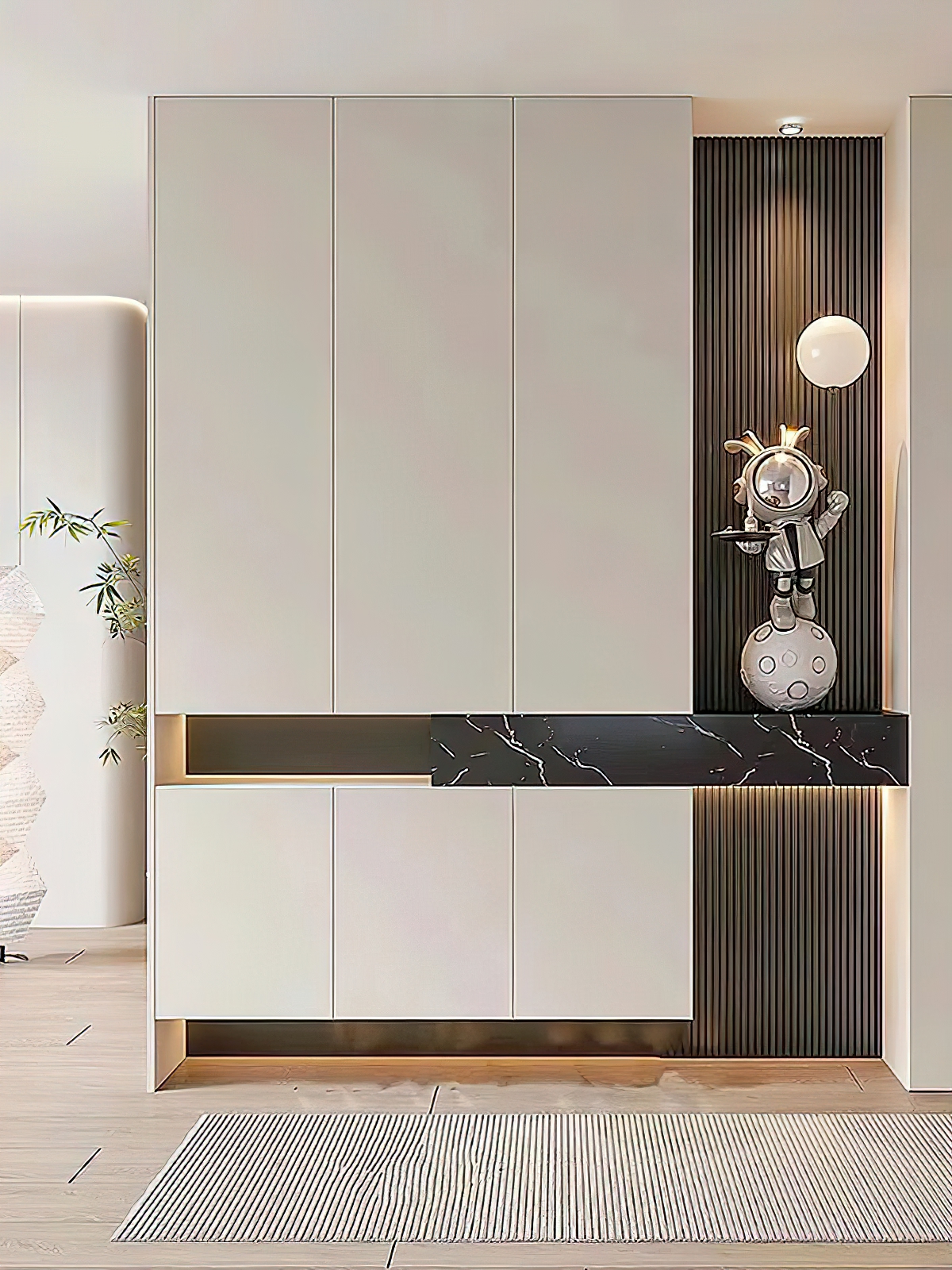
At the entrance, the shoe cabinet—while meeting storage needs and offering thoughtful organization—uses the simplest color palette and the most straightforward lines to capture the “first encounter” with home.
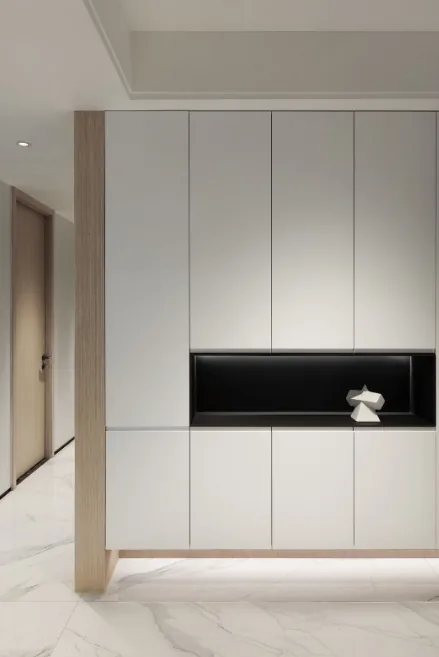
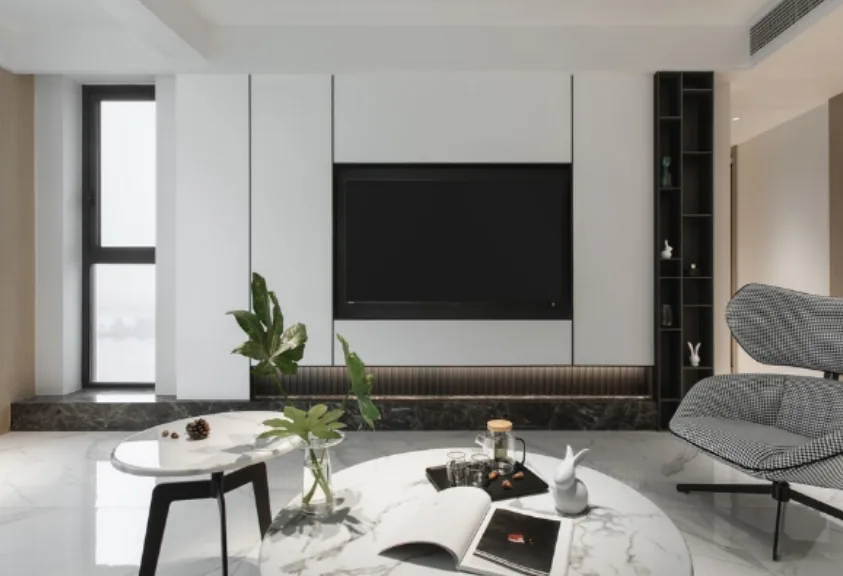
The living room and dining area are separated by a concealed glass sliding door within the entryway, blurring conventional zoning boundaries and enhancing the spatial layering. This design also improves air circulation between the north and south sides of the interior, creating a space that feels fluid, multifaceted, subtly ambiguous, and brimming with imagination and possibility.
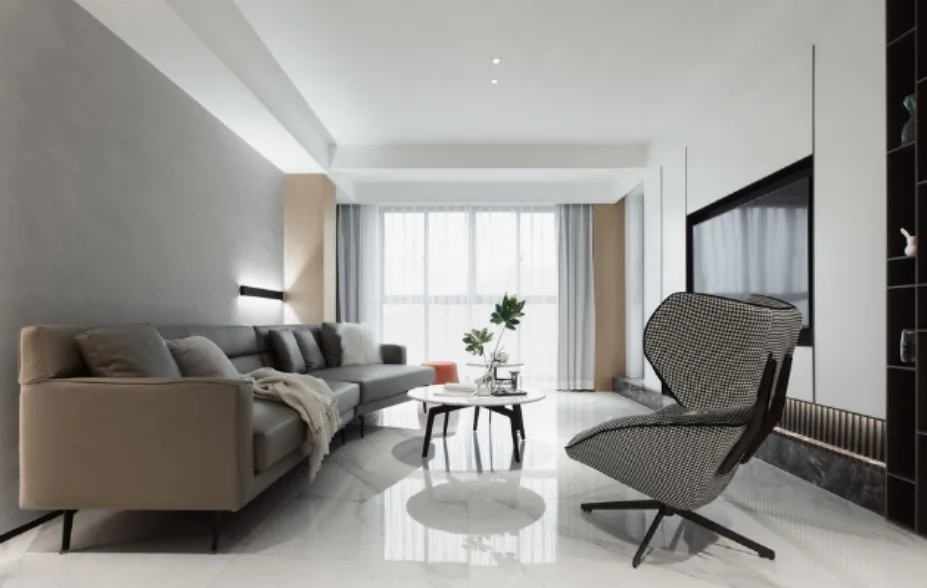
For residential spaces, piling up art pieces is counterproductive. What we aim for is just the right amount of artistic expression—not an excess of visible objects. When selecting artworks, the emphasis lies on inclusive, integrative expressions that seamlessly blend into daily life, fostering deeper artistic appreciation and opening up new possibilities.
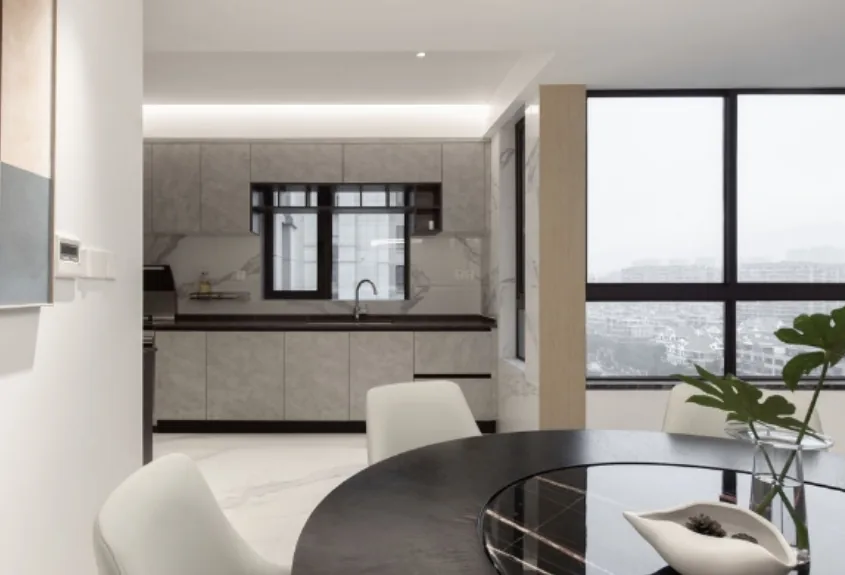
The kitchen–dining area is where a home feels warm; sunlight, gentle breezes, and children’s laughter serve as both inspiration and essential ingredients for cooking. By combining the dining and kitchen spaces, we make efficient use of shared areas and layered spatial dynamics, maximizing the permeation and interaction between adjacent zones. Here, love and food alike become sources of energy.
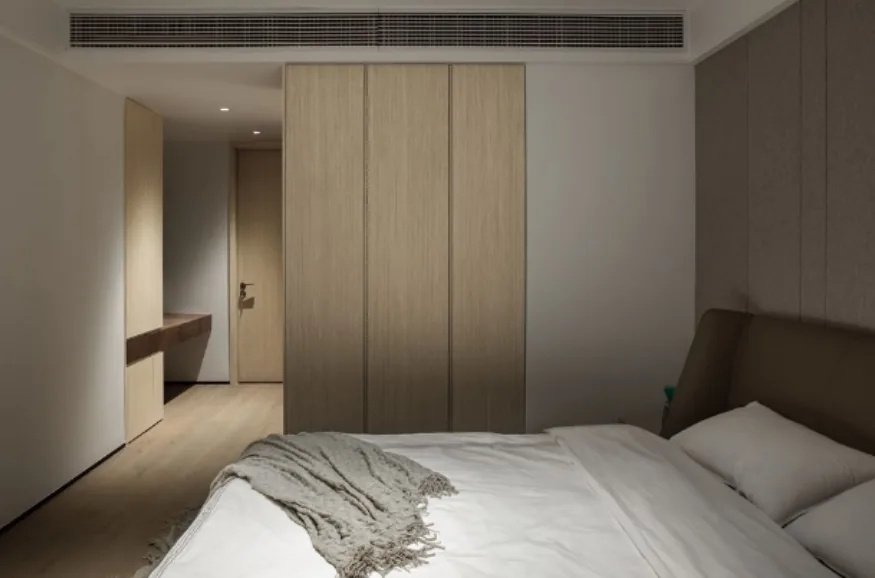
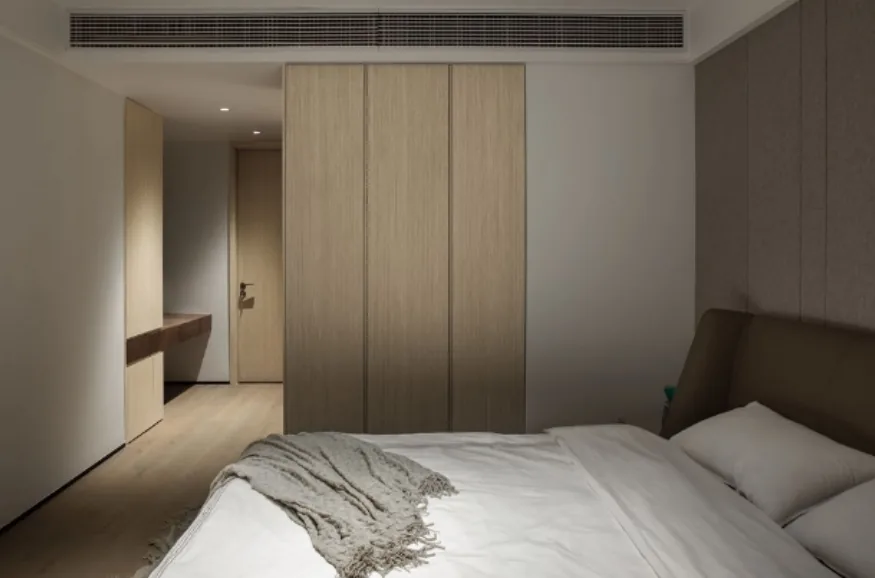
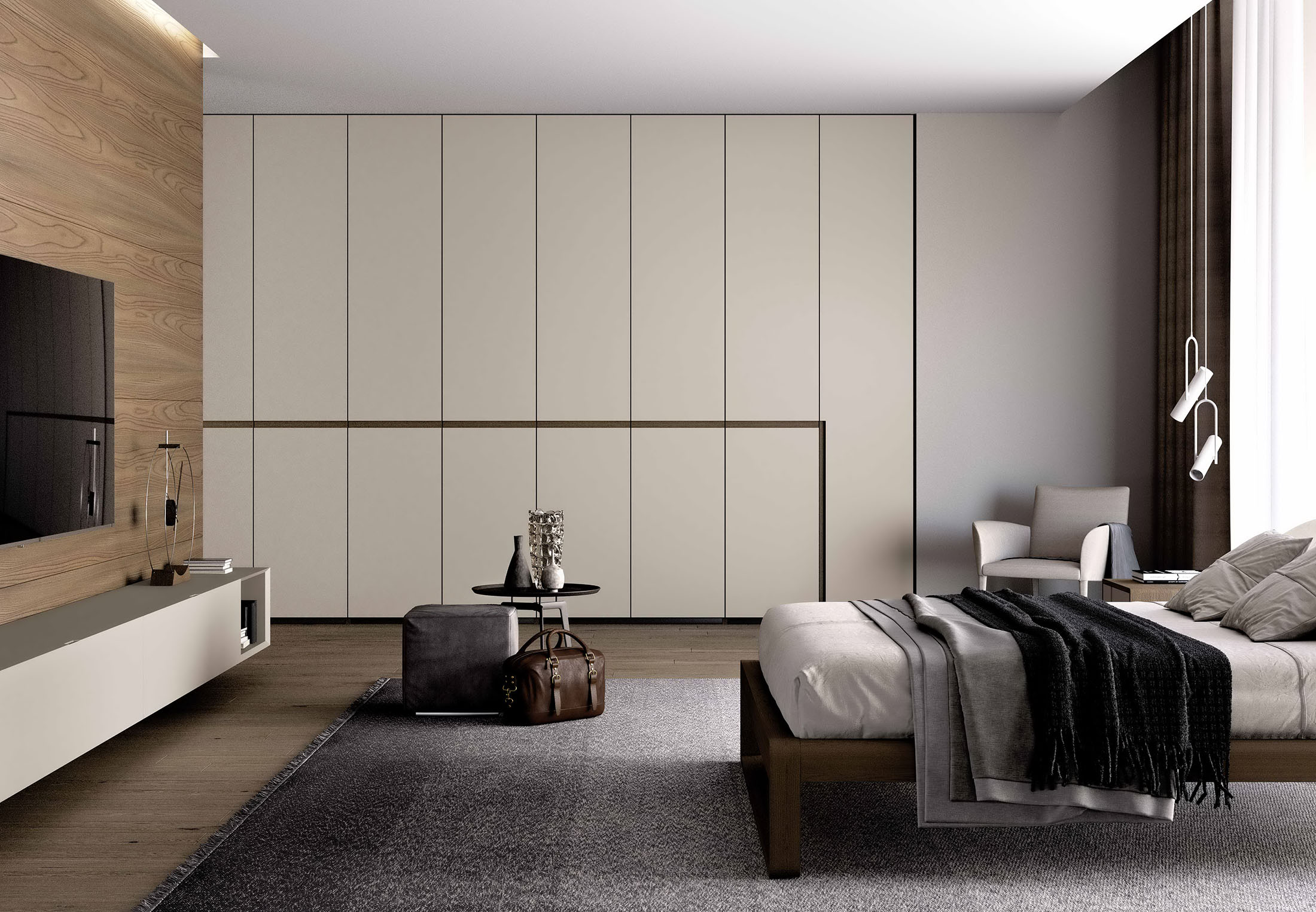
In the master bedroom, the vanity, dressing area, and sleeping space are integrated, creating transitional zones that enhance privacy and order. Moving away from traditional partitioned rooms, this design reimagines space through flexible reuse, defining a new lifestyle. Everyday chores and clutter are gently tucked away, nestled within clean lines and the soothing comfort of nature.
That wraps up our introduction to this modern minimalist whole‑home design. If you like it, feel free to leave us a comment below!
More Articles

More Posts
How should the internal structure of a custom wardrobe be designed to maximize usability? The zoning logic determines storage efficiency.
Living Knowledge · 2026.10.29

How should the internal structure of a custom wardrobe be designed to maximize usability? The zoning logic determines storage efficiency.

How should you design the internal structure of a custom wardrobe to make it truly functional? The zoning logic determines storage efficiency. The effectiveness of a custom wardrobe depends on whether its internal layout aligns with your household’s actual clothing inventory and your habits for putting things in and taking them out. The correct design sequence is: first, take stock of your clothes; second, determine the zones; and only then consider the overall style. This article provides a set of zoning principles and dimension guidelines that you can apply directly. 1. Inventory First, Design Later: A wardrobe is a reflection of your clothing collection...

How to coordinate color schemes for whole-house customization? The 60-30-10 rule and four space-specific strategies.
Living Knowledge · 2026.10.29

How to coordinate color schemes for whole-house customization? The 60-30-10 rule and four space-specific strategies.

How do you coordinate colors for whole‑house customization? The 60–30–10 rule and four space‑specific strategies. The most common reason why color schemes in whole‑house customization fall flat isn’t that the colors themselves are unattractive, but rather that there are too many colors, the proportions are out of balance, or the materials and colors aren’t well integrated. Master one fundamental principle—the 60–30–10 ratio—and then choose a strategy based on the specific spatial conditions, and you’ll be able to make color choices you won’t regret. I. The 60–30–10 Rule: Let each color...

A Guide to Avoiding Pitfalls in Whole-House Customization: 6 Things You Must Confirm Before Signing the Contract
Living Knowledge · 2026.10.29

A Guide to Avoiding Pitfalls in Whole-House Customization: 6 Things You Must Confirm Before Signing the Contract

1. Board Material Environmental Safety: Rely on Test Reports, Not Verbal Promises It’s common for sellers to tout “environmentally friendly boards” without providing any official test reports. The formaldehyde emission limit for E1‑grade boards is ≤0.124 mg/m³; some retailers use this as a claim of eco‑friendliness, but it falls short for households with elderly residents or young children. A more reliable choice would be ENF‑grade (≤0.025 mg/m³) or E0‑grade (≤0.05 mg/m³), ...

BOOK A CONSULTATION

Want to Apply These Ideas to Your Own Home?

It can explain the apartment area, decoration stage and preferred style. The BOSNIE team will combine the home encyclopedia, real cases and product systems to provide one-to-one custom suggestions for the entire home.

Whole-House Design Case | Where You Feel At Ease Is Home | BOSNIE Official Website