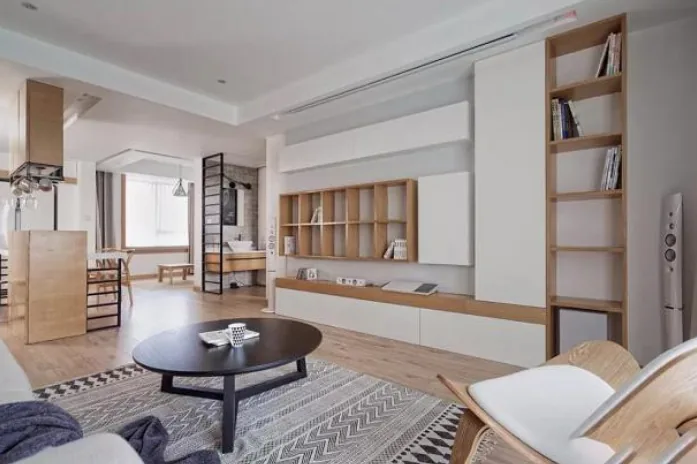
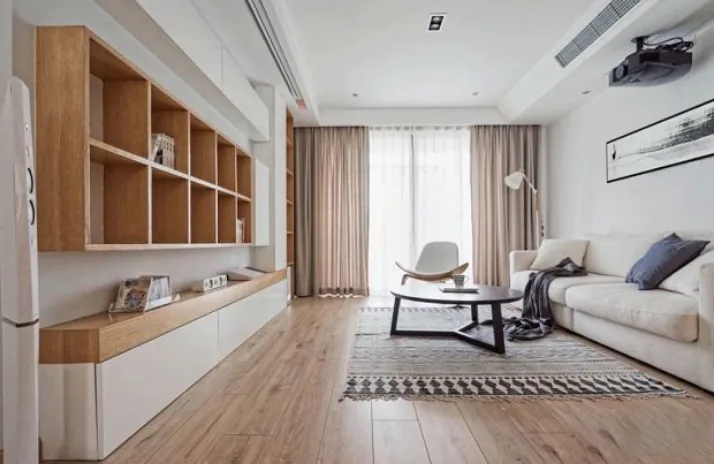
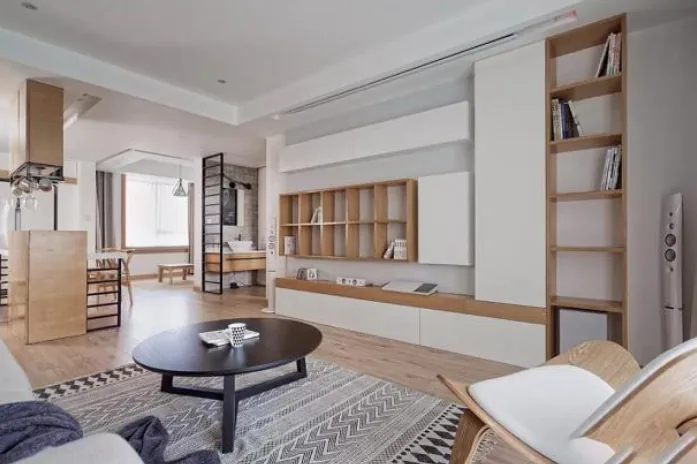
This case showcases a Japanese‑style minimalist whole‑house design. Let’s take a look together!
The living room eschews bold colors, embracing instead a natural ambiance. Rather than opting for an elaborate ceiling, the space relies on ample natural light to brighten the area considerably. The overall effect is open, spacious, and luminous—just looking at it evokes a sense of comfort. On the north side, the wall has been removed to create an open‑plan tatami area; when the curtains are drawn, it transforms into a private, cozy retreat.
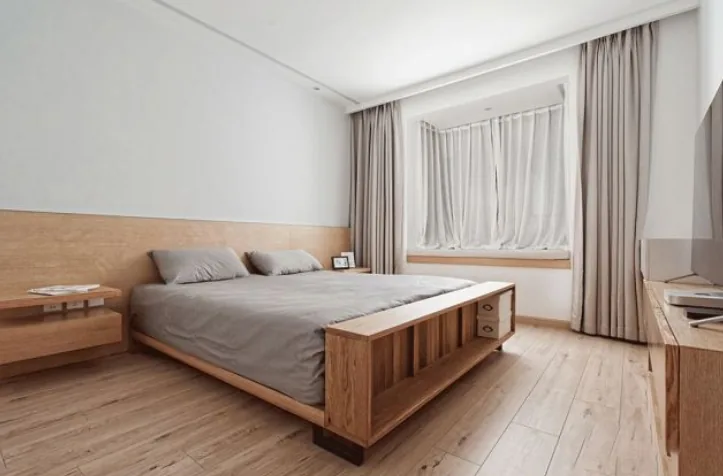
The bedroom exudes simplicity and elegance, with seamless engineered flooring that highlights its natural grain and beautiful groove lines. It also features a lighting scheme without a central overhead fixture, relying instead on natural light. A subtle LED strip along the headboard, complemented by recessed downlights on either side of the ceiling, provides ample illumination for everyday use. The solid wood particleboard wardrobe keeps a low profile while maintaining a gentle, understated presence.
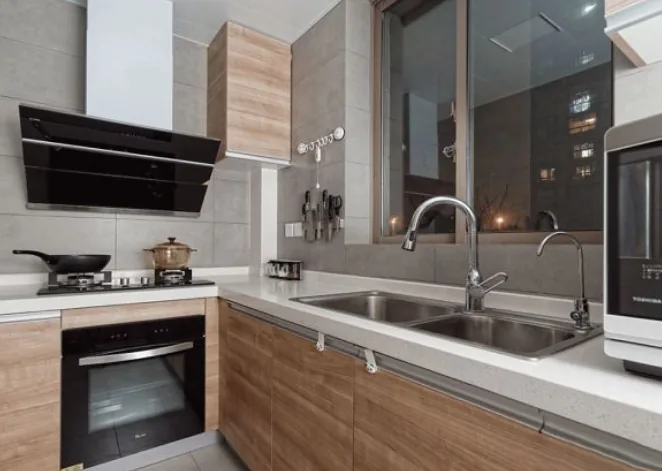
The L‑shaped kitchen cabinets offer both practicality and convenience without feeling cramped. Adding upper cabinets significantly expands storage capacity.
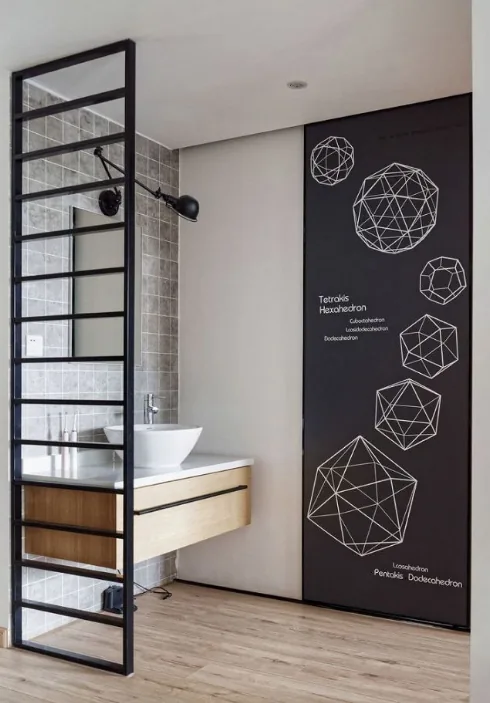
The bathroom adopts a dry–wet separation layout. To the right, the backdrop boasts striking geometric aesthetics, while the dry zone features fully floating cabinets and countertops—a design that requires considerable craftsmanship. The sliding door is a mirrored panel, with geometric decals applied to the back, creating the illusion of a blackboard wall—simple yet sophisticated.
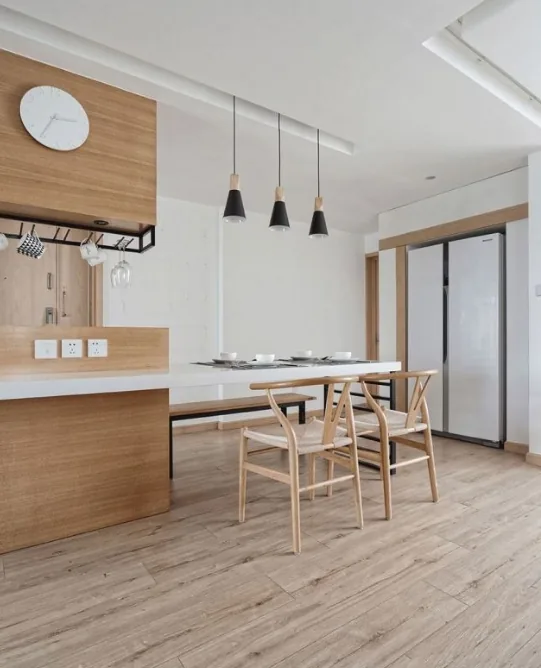
The dining area maintains a clean, uncluttered aesthetic, highlighting the essence of Japanese minimalism. A generously sized double‑door refrigerator has been cleverly integrated into the space, making it exceptionally convenient to use.
That concludes our overview of this Japanese‑style minimalist whole‑house design. If you like it, feel free to leave us a comment below!