Whole-House Design Case | Sophisticated Color and Fixture Pairings
Living Knowledge · 2023.05.10

Whole-House Design Case | Sophisticated Color and Fixture Pairings

This case showcases a whole-house design in the Chinese style. Let’s take a closer look! The entryway features a floor‑to‑ceiling full‑length mirror, lending the space a striking visual impact. Of course, some people worry that having a mirror right when you open the front door might be inauspicious—such matters are subjective, as everything has its pros and cons; the key is to choose what you like and what feels most convenient. The living room exudes a refined Chinese elegance and cultural flair. Attention to detail underscores a discerning taste, with a harmonious blend of square and round elements that perfectly embodies the “beauty of square and circle” in traditional Chinese aesthetics. The central section of the TV wall boasts a marble‑look slab with a texture that is quite...

This case introduces a full-house design in Chinese style. Let's take a look at this project together!

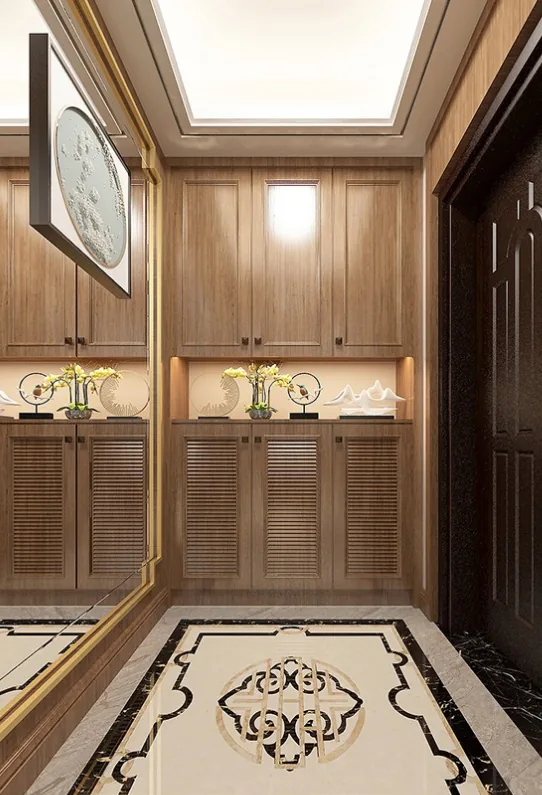
A full-wall, floor-to-ceiling mirror has been installed in the entryway, adding a strong visual impact. Of course, some people worry that having a mirror right when you open the front door might be inauspicious—such matters are subjective; everything has its pros and cons. The key is to choose what you like and what works best for you.
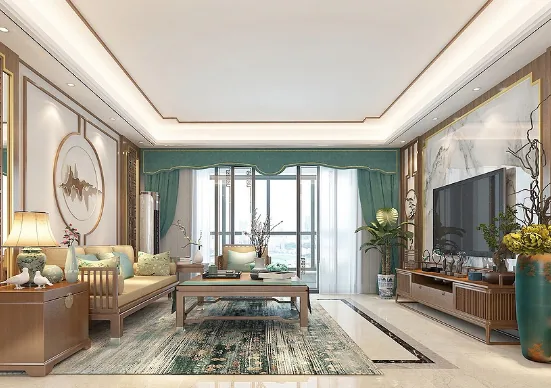
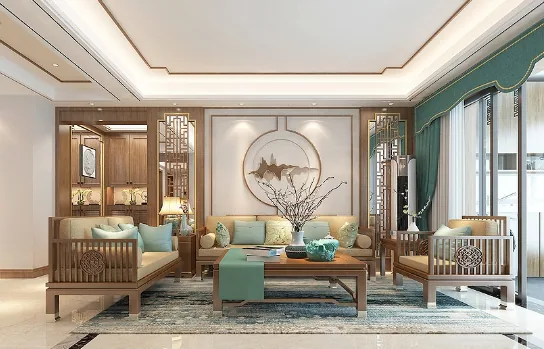
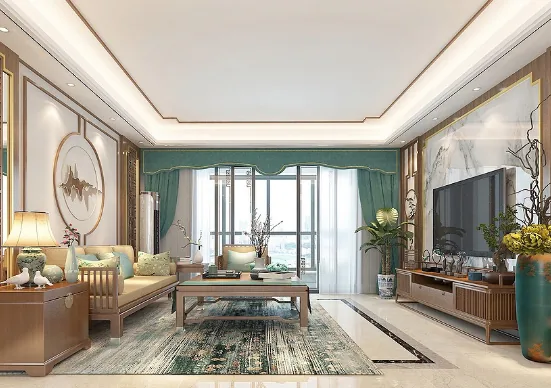
The living room exudes a distinct Chinese charm and cultural atmosphere. Attention to detail highlights refined taste, with a harmonious blend of square and round elements that embodies the traditional Chinese aesthetic of “roundness within squareness.” The central section of the TV wall features natural‑veined marble slabs with vivid colors, while symmetrical wooden accents on either side echo the sofa backdrop, lending the space an air of elegance and composure.
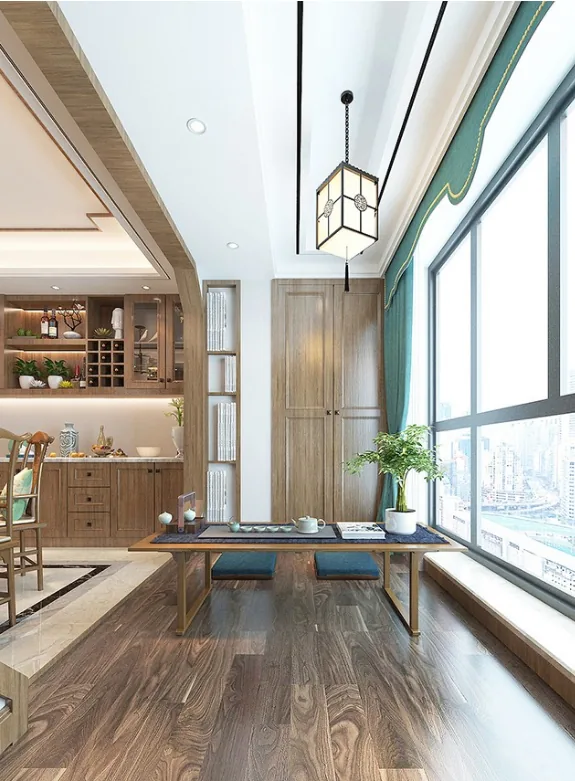
This study is located next to the dining area, which actually aligns well with the principles of spatial flow. When guests arrive, they can sit here to enjoy tea and conversation while waiting for the meal, fostering greater interaction between the two zones. An octagonal doorway separates the open‑plan study from the dining area, enhancing the room’s Chinese flair. A large floor‑to‑ceiling window provides exceptional visual appeal and abundant natural light.
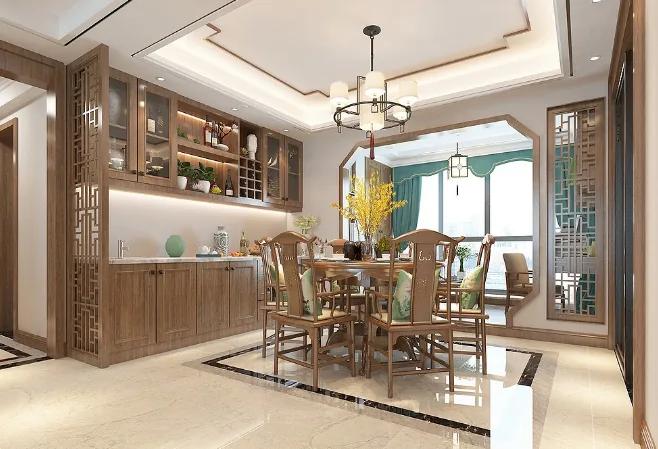
Both the depth and width of the dining room are quite generous, so even with a round table and a wine cabinet in place, there remains ample walking space. A single Chinese‑style chandelier serves as the perfect finishing touch, infusing the dining area with warmth and a sense of welcome.
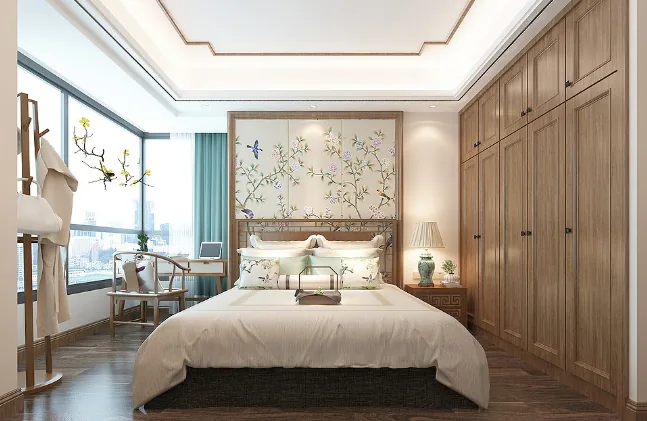
The master bedroom boasts excellent storage solutions: a clothes rack on the floor, a built‑in wardrobe along one wall, and a dressing table beside the bed, all enhancing the room’s practicality.
That concludes our introduction to this Chinese‑style, whole‑house design project. If you enjoyed it, feel free to leave us a comment and join the conversation!
More Articles

More Posts
How should the internal structure of a custom wardrobe be designed to maximize usability? The zoning logic determines storage efficiency.
Living Knowledge · 2026.10.29

How should the internal structure of a custom wardrobe be designed to maximize usability? The zoning logic determines storage efficiency.

How should you design the internal structure of a custom wardrobe to make it truly functional? The zoning logic determines storage efficiency. The effectiveness of a custom wardrobe depends on whether its internal layout aligns with your household’s actual clothing inventory and your habits for putting things in and taking them out. The correct design sequence is: first, take stock of your clothes; second, determine the zones; and only then consider the overall style. This article provides a set of zoning principles and dimension guidelines that you can apply directly. 1. Inventory First, Design Later: A wardrobe is a reflection of your clothing collection...

How to coordinate color schemes for whole-house customization? The 60-30-10 rule and four space-specific strategies.
Living Knowledge · 2026.10.29

How to coordinate color schemes for whole-house customization? The 60-30-10 rule and four space-specific strategies.

How do you coordinate colors for whole‑house customization? The 60–30–10 rule and four space‑specific strategies. The most common reason why color schemes in whole‑house customization fall flat isn’t that the colors themselves are unattractive, but rather that there are too many colors, the proportions are out of balance, or the materials and colors aren’t well integrated. Master one fundamental principle—the 60–30–10 ratio—and then choose a strategy based on the specific spatial conditions, and you’ll be able to make color choices you won’t regret. I. The 60–30–10 Rule: Let each color...

A Guide to Avoiding Pitfalls in Whole-House Customization: 6 Things You Must Confirm Before Signing the Contract
Living Knowledge · 2026.10.29

A Guide to Avoiding Pitfalls in Whole-House Customization: 6 Things You Must Confirm Before Signing the Contract

1. Board Material Environmental Safety: Rely on Test Reports, Not Verbal Promises It’s common for sellers to tout “environmentally friendly boards” without providing any official test reports. The formaldehyde emission limit for E1‑grade boards is ≤0.124 mg/m³; some retailers use this as a claim of eco‑friendliness, but it falls short for households with elderly residents or young children. A more reliable choice would be ENF‑grade (≤0.025 mg/m³) or E0‑grade (≤0.05 mg/m³), ...

BOOK A CONSULTATION

Want to Apply These Ideas to Your Own Home?

It can explain the apartment area, decoration stage and preferred style. The BOSNIE team will combine the home encyclopedia, real cases and product systems to provide one-to-one custom suggestions for the entire home.

Whole-House Design Case | Sophisticated Color and Fixture Pairings | BOSNIE Official Website