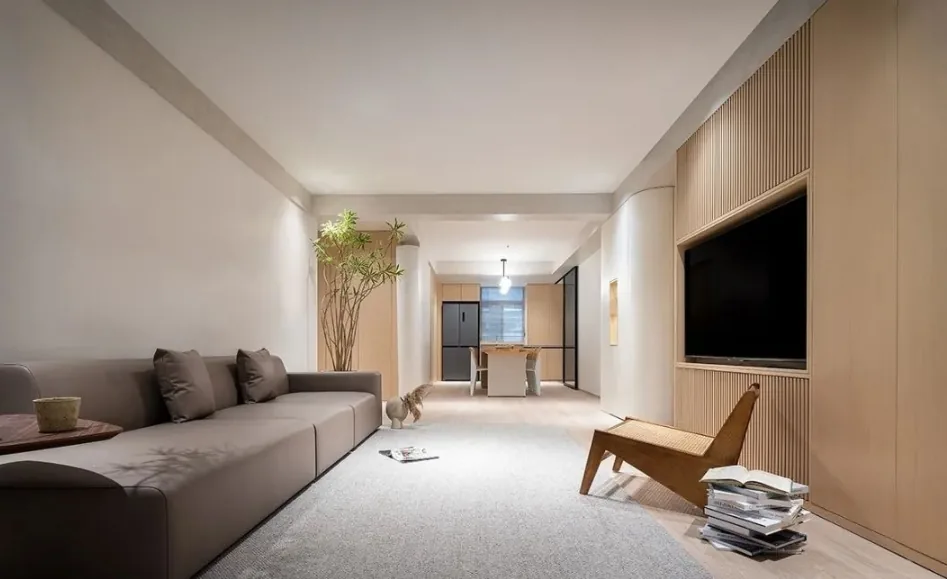
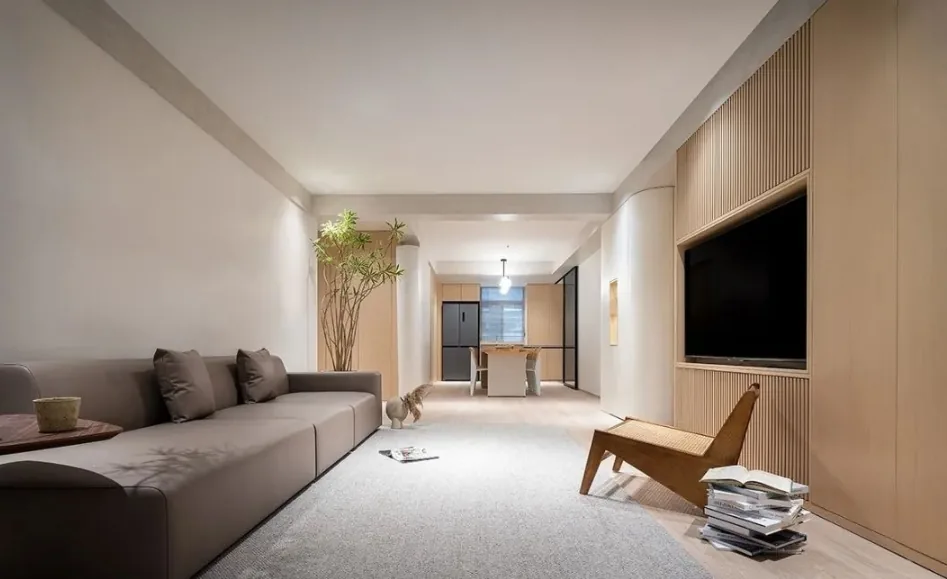
This project showcases a whole-house design in a natural wood aesthetic—let’s explore this BOSNIE case study together.
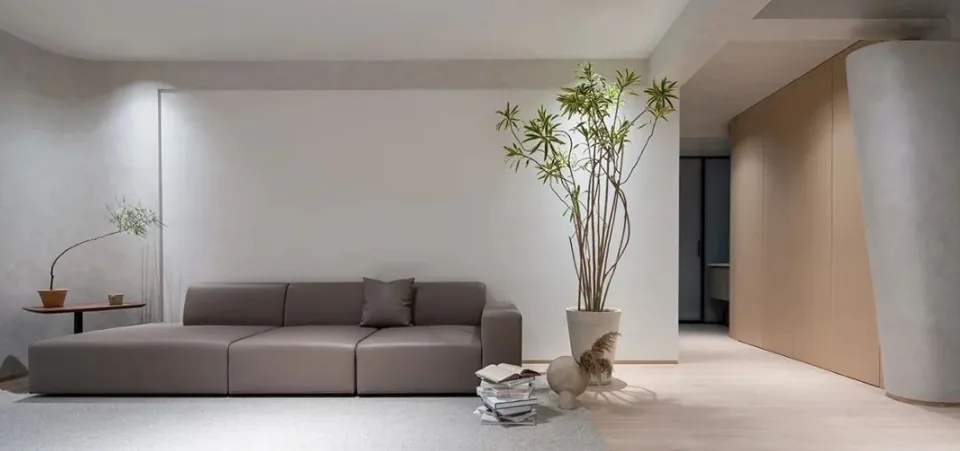
The living and dining areas are seamlessly connected by the building’s original structural beams, blurring functional boundaries. Ceiling height remains unaffected by these beams, while load-bearing columns in the hallway are sculpted with asymmetrical curves to create a naturally tapered entryway—wide at the top and narrow at the bottom—that balances visual elegance with structural security, resolving spatial challenges efficiently without compromising function or aesthetics.
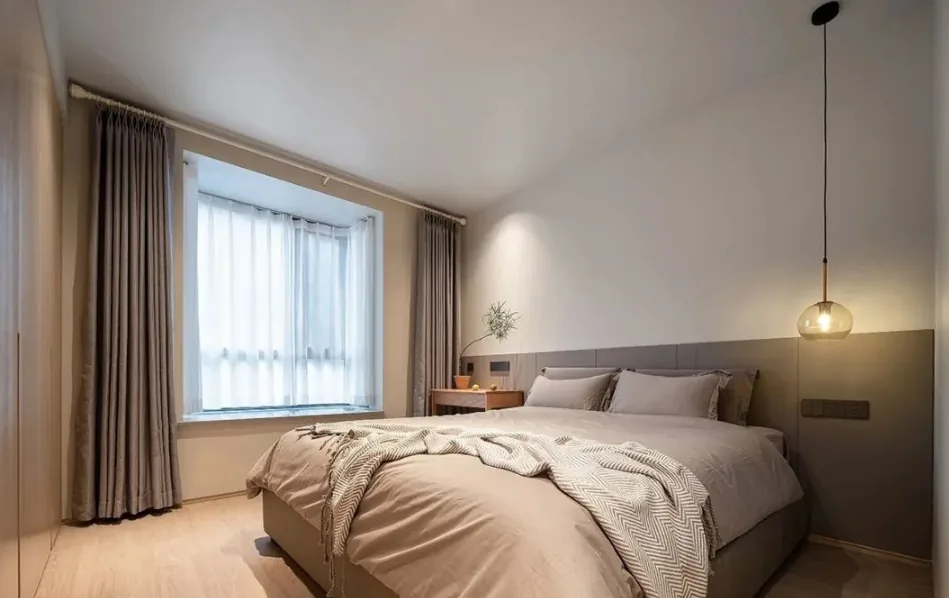
The master bedroom centers on white walls paired with natural-toned cabinetry, extending organic texture into this private sanctuary. A full-wall cabinet system with frameless doors unifies the walk-in closet and bookshelf, delivering clean, integrated storage that subtly extends the reach of natural light.
As the heart of daily life, the Western and Chinese kitchens are separated by sliding doors matched to the surrounding color palette—creating a flexible, transitional boundary. Thoughtful attention was paid to aesthetics, functionality, and material selection to ensure seamless integration with interior décor, enabling dynamic interaction between function and space while maximizing efficiency.
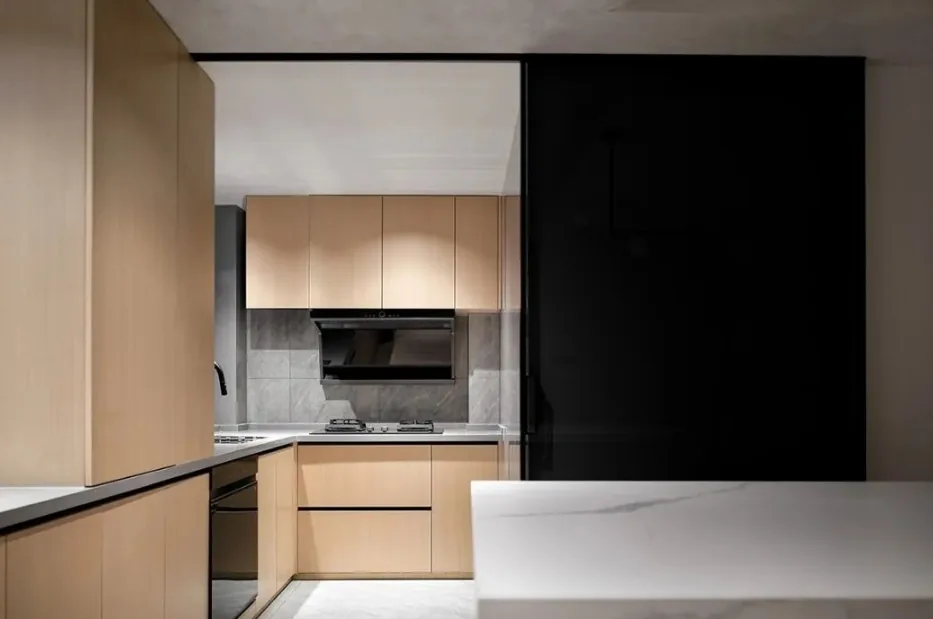
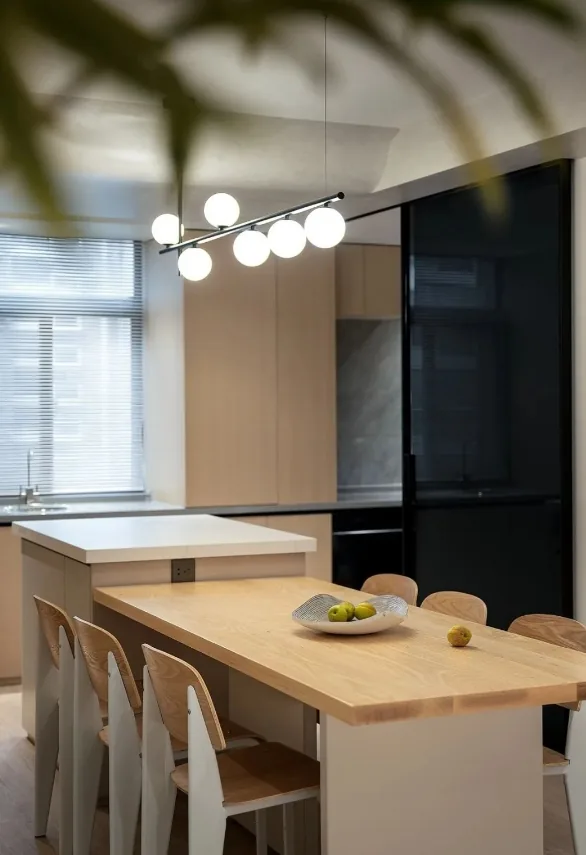
The dining area incorporates multiple functional zones: a refrigerator cabinet zone, an island zone, a dining table zone, and a prep counter zone. The more functions it accommodates, the greater the storage demand—yet concealed storage solutions maintain a serene, uncluttered atmosphere without sacrificing warmth, homeliness, or the joy of organized living.
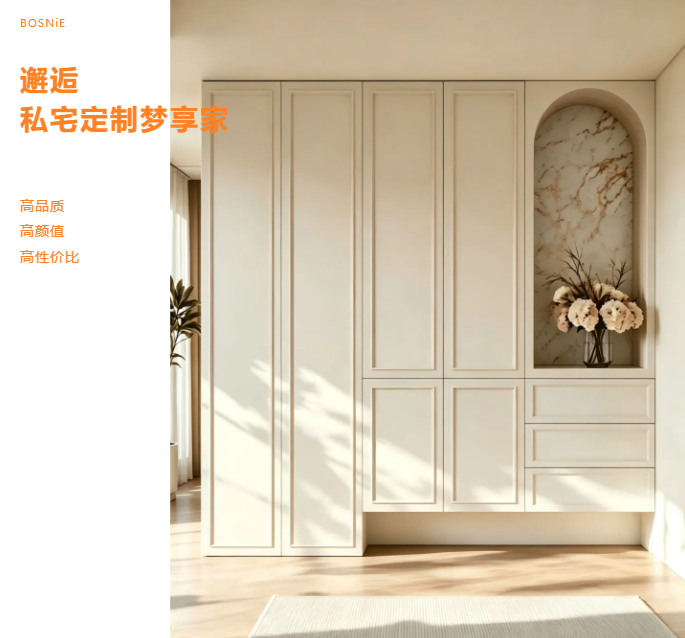
The entryway is a microcosm of home: how you design and treat it reflects how you regard the very act of ‘coming home.’
That concludes our presentation of this natural-wood aesthetic whole-house design project. If you enjoyed it, feel free to leave a comment and interact with BOSNIE’s editorial team!