Whole-House Design Case | A Soft, Serene Ambiance Rendered in Light Warm Grays
Living Knowledge · 2023.05.20

Whole-House Design Case | A Soft, Serene Ambiance Rendered in Light Warm Grays

This case introduces a minimalist‑style whole‑house design. Let’s take a look together! To diminish the imposing presence of the large beams and columns, one side is clad with floor‑to‑ceiling mirrors to meet the overall furnishing needs. The interplay of reality and reflection through the mirrored surface softens the sense of tightness in the narrow, elongated entryway, while an integrated shoe cabinet extends along the upper beam, smoothing out fragmented lines and establishing a safe, stable starting point for circulation. Living Room/Study Natural wood tones echo the warm sunlight, bathing the space in a fresh, tranquil atmosphere. The flowing light unifies the open layout, and the living room embraces the concept of furniture as the core element, followed by...

This case presents a minimalist, whole‑house design. Let’s take a look at it together!

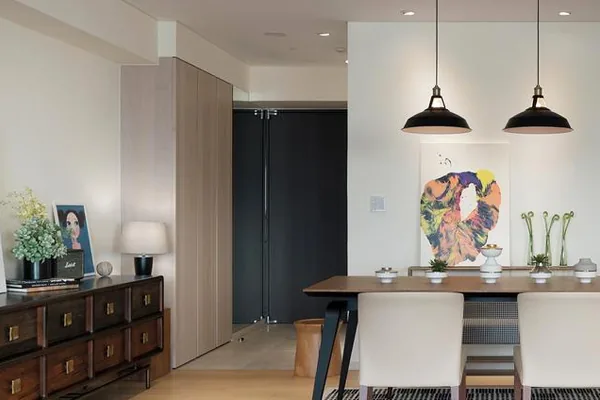
To diminish the imposing presence of the bulky beams and columns, one side is clad with floor-to-ceiling mirrors to meet the need for a cohesive finish. The interplay of reality and reflection through the mirrored surface softens the sense of tightness in the narrow, dust-collecting entryway, while extending along the overhead beam into a shoe‑storage cabinet, smoothing out overly fragmented lines and creating a safe, stable starting point for circulation.
Living Room/Study

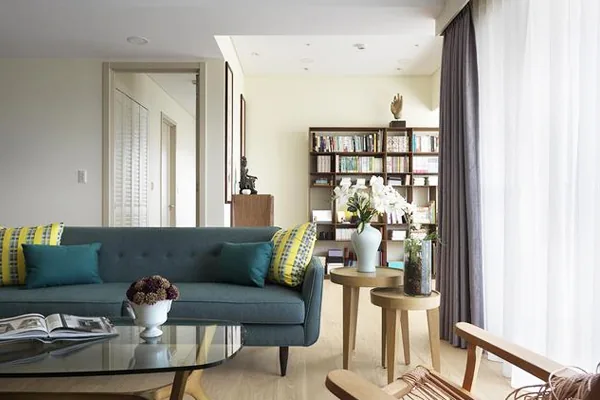
Natural wood harmonizes with warm daylight, bathing the room in freshness and tranquility. Flowing light unifies the open space, and the living room embraces the concept of “soft furnishings as the main focus.” After extensive deliberation, we selected high-contrast pieces such as a forest-green sofa and a vibrant red lounge chair, injecting a striking personal touch. Alongside, we paired them with log‑toned side tables and woven armchairs, their organic, gentle forms balancing the bold contrasts and precisely shaping an inviting scene for welcoming guests, casual conversation, and relaxed lounging.
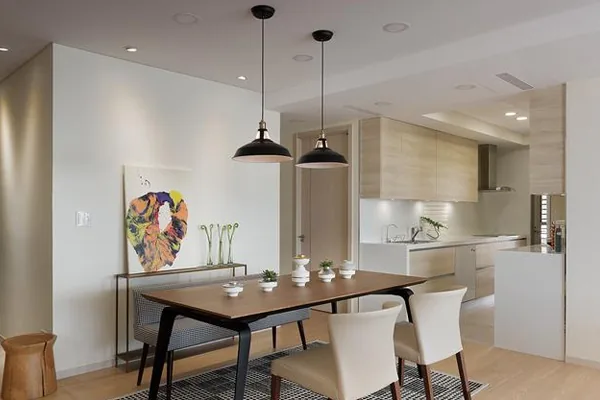
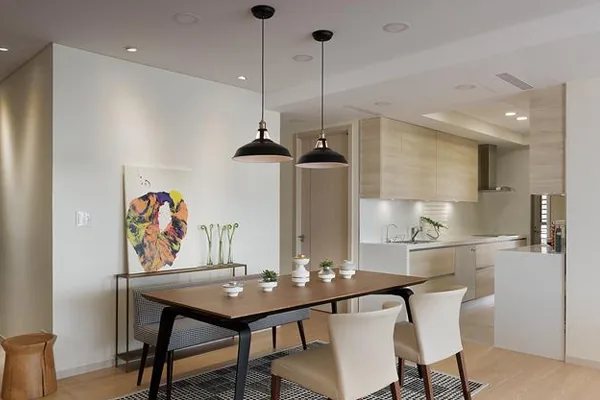
In the dining area, footsteps follow the island‑style wooden flooring as they move forward. After carefully considering the relationship between natural light and circulation, we decided to align the dining zone and seating direction with the kitchen opening, creating a streamlined, efficient flow while inviting warm, bright light—always ready to become a cherished guest at cozy meals or a serene companion during quiet reading moments.
Kitchen

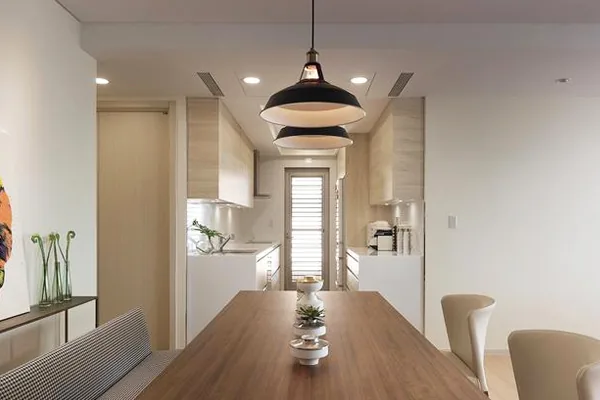
After removing the old, enclosed partition walls, we restored the kitchen’s broad, open frontage, allowing sunlight and ventilation to circulate freely. At the same time, we completely revamped the dual‑sized cabinetry, significantly improving the fluidity of the cooking workflow. Not only does this neatly accommodate the large refrigerator, but it also carves out a prep counter for conveniently placing small appliances like the coffee maker. Brushed wood doors infuse a fresh, warm ambiance, complemented by smooth, white engineered stone that wraps seamlessly from the countertop up the vertical sink wall—a refined, integrated design that makes cleaning and maintenance effortless.
Master Bedroom

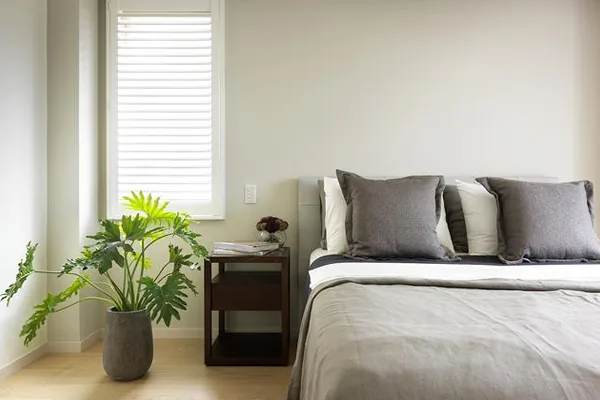
In the master bedroom, where comfort is paramount, soft, warm gray sets a gentle, tranquil tone, enhanced by classic American elements that evoke a leisurely atmosphere. Upon entering, the walk-in closet features wooden louvered folding doors to promote natural ventilation, while the ceiling is coated with diatomaceous earth and the walls are fitted with moisture‑regulating panels to absorb humidity, ensuring a clean, dry storage environment. We also tailored the hanging system to the homeowner’s clothing types and organizing habits, maximizing convenience and accessibility.
Bathroom

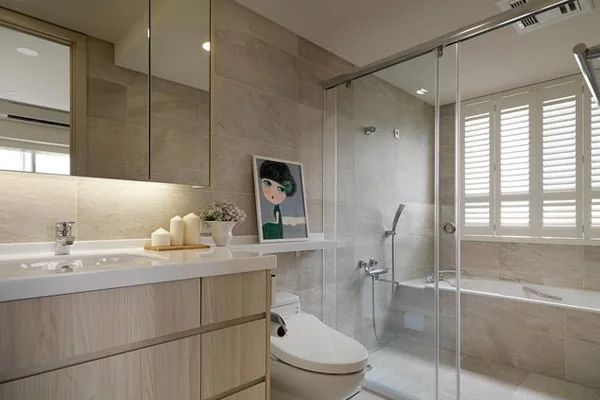
To cater to the female homeowner’s preferences, the master bathroom is fully equipped with Japanese fixtures, arranged in a four‑piece layout to achieve effective wet‑dry separation and streamline the washing process. Continuing our use of diatomaceous earth and moisture‑regulating panels to control indoor humidity, we chose slate‑quartz tiles suitable for both floors and walls to create a clean, understated base, enhancing slip resistance and walking safety. Additionally, waterproof wooden louvers were selected to prevent damage from frequent splashing.
That’s all for this minimalist, whole-home design case. If you like it, feel free to leave us a comment and join the giveaway!
More Articles

More Posts
How should the internal structure of a custom wardrobe be designed to maximize usability? The zoning logic determines storage efficiency.
Living Knowledge · 2026.10.29

How should the internal structure of a custom wardrobe be designed to maximize usability? The zoning logic determines storage efficiency.

How should you design the internal structure of a custom wardrobe to make it truly functional? The zoning logic determines storage efficiency. The effectiveness of a custom wardrobe depends on whether its internal layout aligns with your household’s actual clothing inventory and your habits for putting things in and taking them out. The correct design sequence is: first, take stock of your clothes; second, determine the zones; and only then consider the overall style. This article provides a set of zoning principles and dimension guidelines that you can apply directly. 1. Inventory First, Design Later: A wardrobe is a reflection of your clothing collection...

How to coordinate color schemes for whole-house customization? The 60-30-10 rule and four space-specific strategies.
Living Knowledge · 2026.10.29

How to coordinate color schemes for whole-house customization? The 60-30-10 rule and four space-specific strategies.

How do you coordinate colors for whole‑house customization? The 60–30–10 rule and four space‑specific strategies. The most common reason why color schemes in whole‑house customization fall flat isn’t that the colors themselves are unattractive, but rather that there are too many colors, the proportions are out of balance, or the materials and colors aren’t well integrated. Master one fundamental principle—the 60–30–10 ratio—and then choose a strategy based on the specific spatial conditions, and you’ll be able to make color choices you won’t regret. I. The 60–30–10 Rule: Let each color...

A Guide to Avoiding Pitfalls in Whole-House Customization: 6 Things You Must Confirm Before Signing the Contract
Living Knowledge · 2026.10.29

A Guide to Avoiding Pitfalls in Whole-House Customization: 6 Things You Must Confirm Before Signing the Contract

1. Board Material Environmental Safety: Rely on Test Reports, Not Verbal Promises It’s common for sellers to tout “environmentally friendly boards” without providing any official test reports. The formaldehyde emission limit for E1‑grade boards is ≤0.124 mg/m³; some retailers use this as a claim of eco‑friendliness, but it falls short for households with elderly residents or young children. A more reliable choice would be ENF‑grade (≤0.025 mg/m³) or E0‑grade (≤0.05 mg/m³), ...

BOOK A CONSULTATION

Want to Apply These Ideas to Your Own Home?

It can explain the apartment area, decoration stage and preferred style. The BOSNIE team will combine the home encyclopedia, real cases and product systems to provide one-to-one custom suggestions for the entire home.

Whole-House Design Case | A Soft, Serene Ambiance Rendered in Light Warm Grays | BOSNIE Official Website