This project showcases a whole-house design in American style—join BOSNIE’s editorial team as we explore this inspiring case.
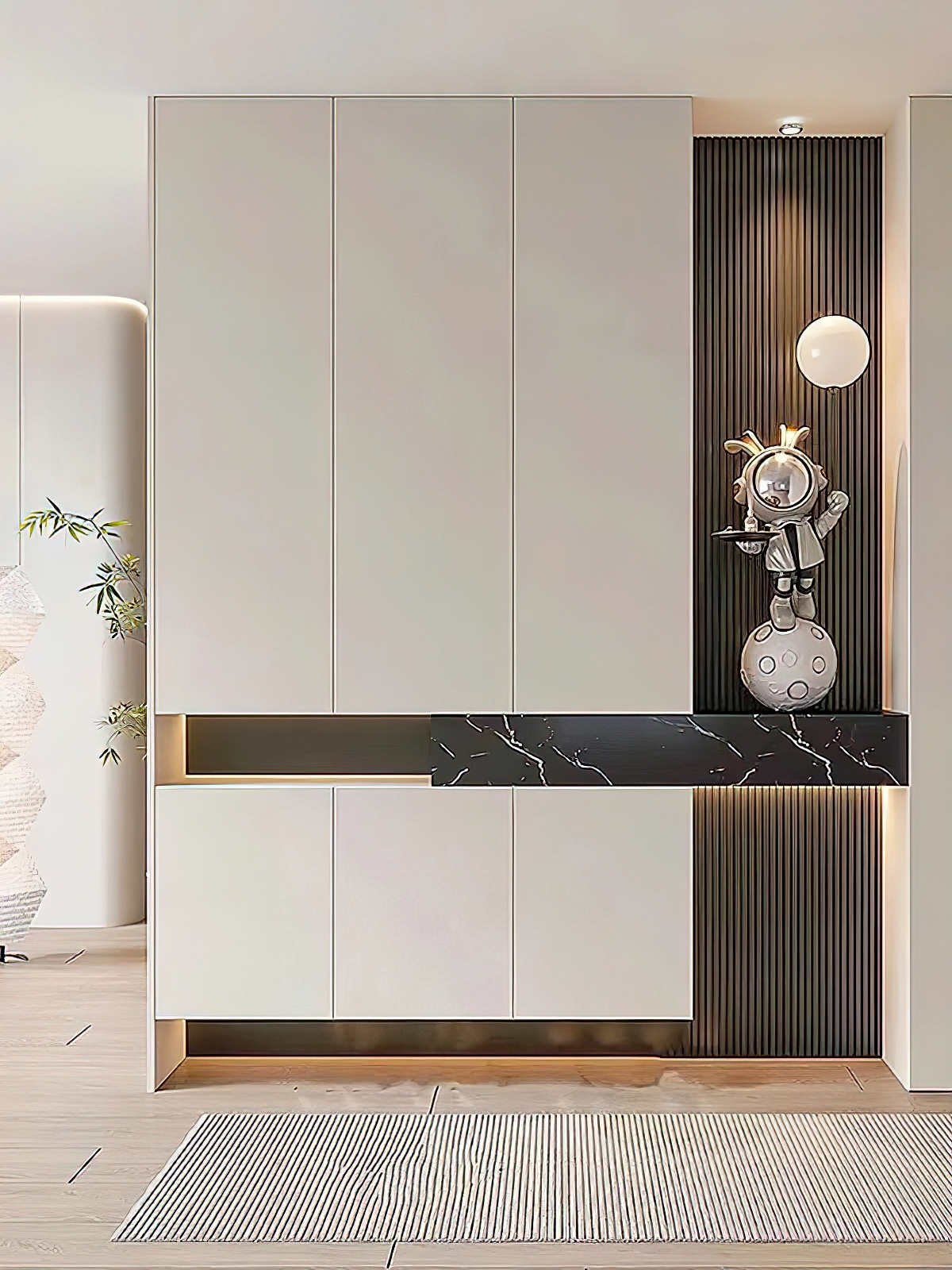
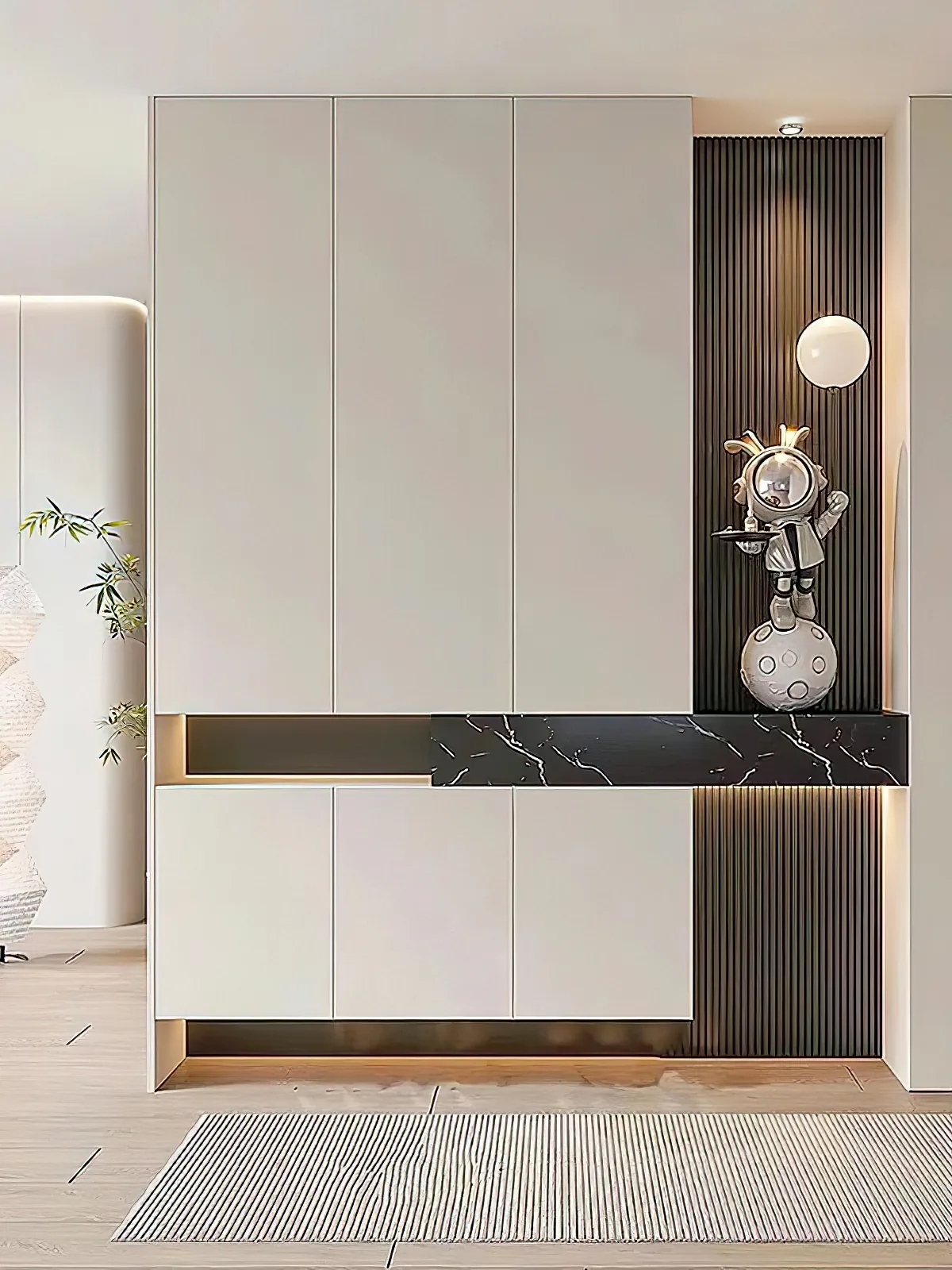
The entryway is the first space guests see upon entering a home, so whether for daily living or hosting visitors, it should evoke an immediate sense of ease and comfort—this is the core principle behind entryway design. Its style should harmonize with the living room; decorative elements need not be overly elaborate. A shoe cabinet, full-length mirror, and a shoe-changing bench are all practical additions that enhance functionality.
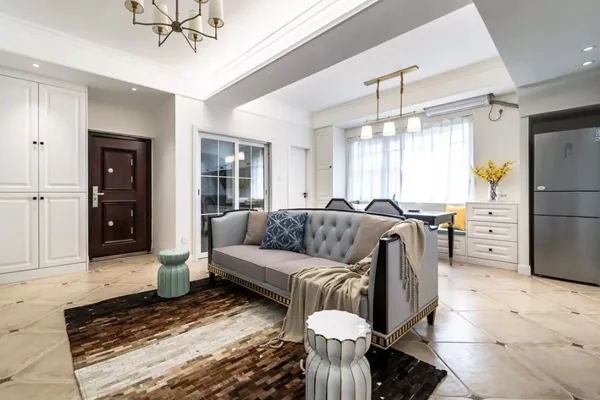
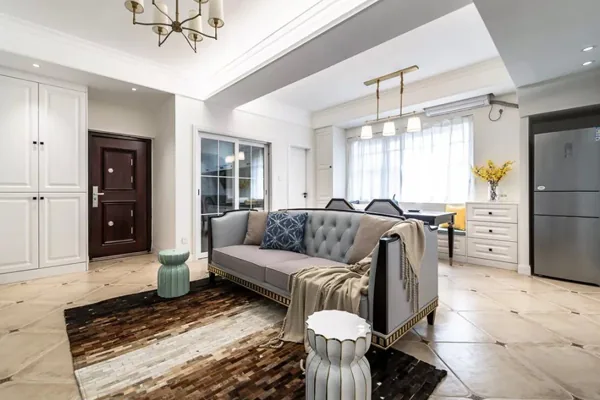
The living room is compact in size. To optimize space, the coffee table was omitted, and the sofa serves as a subtle divider between the living and dining areas. Creative carpeting covers the entire floor, while antique-style tiles lend a distinctive American aesthetic.
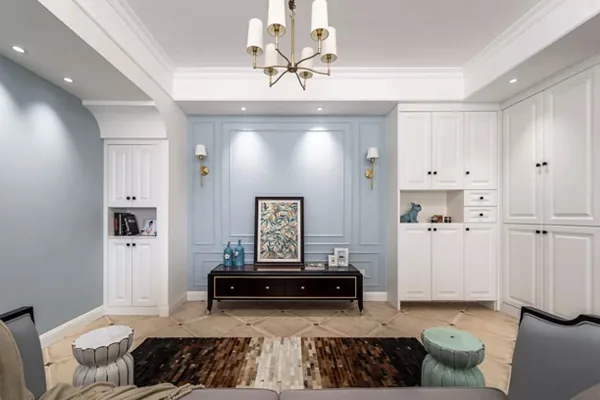
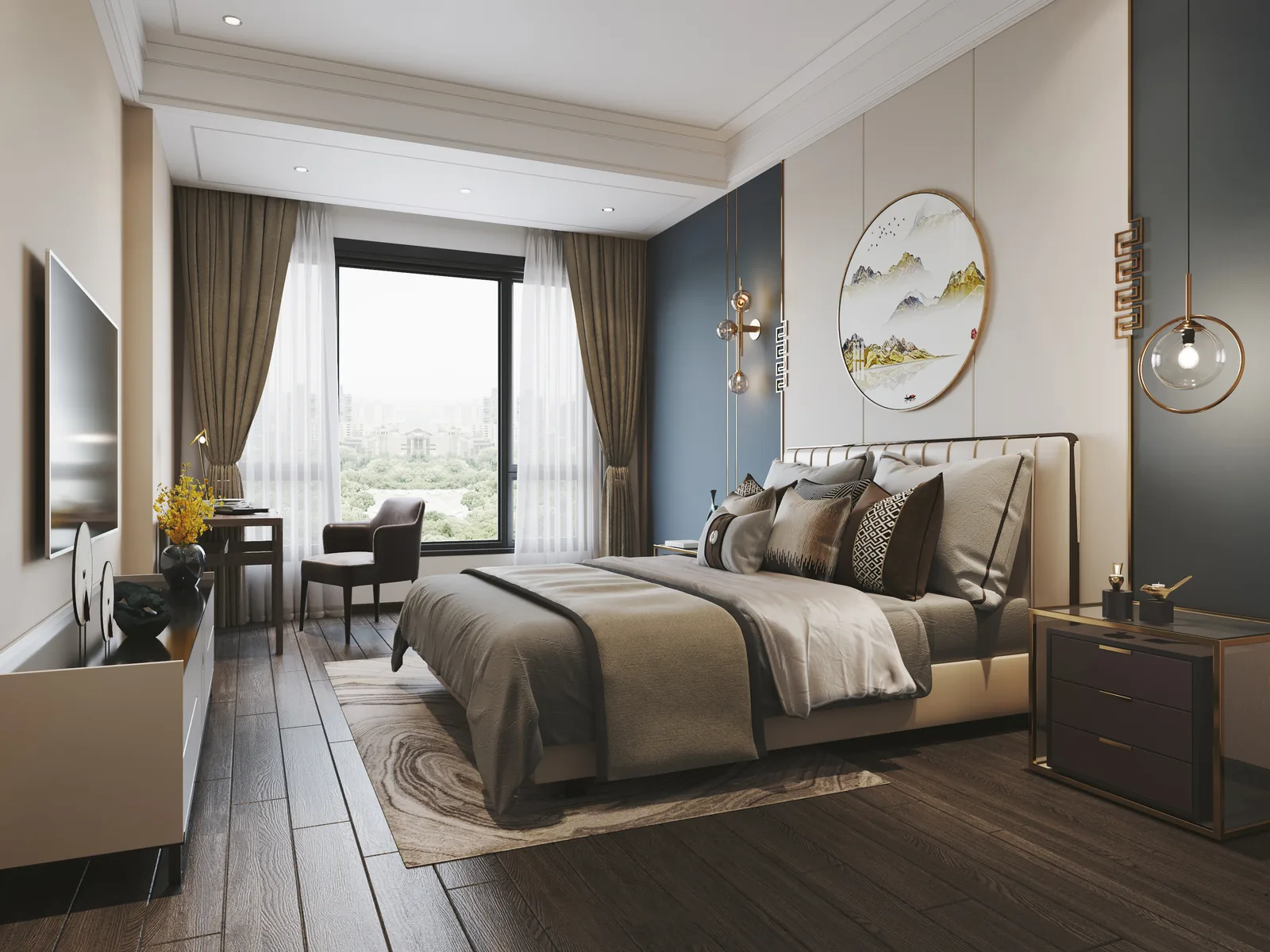
In many bedrooms, clothing is stored solely within wardrobes, leaving the room feeling sparse. If space permits, consider adding a small walk-in closet in a corner to store items not requiring immediate hanging or folding. This approach enables organized garment storage while making efficient use of bedroom space.
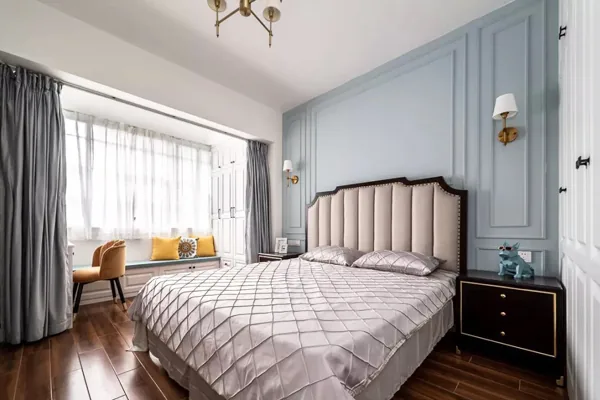
The bathroom features a dry-wet separation layout: the shower enclosure, toilet, and vanity are arranged linearly. The gray-blue vanity coordinates seamlessly with other spaces, and the addition of metallic accents elevates its sophistication.
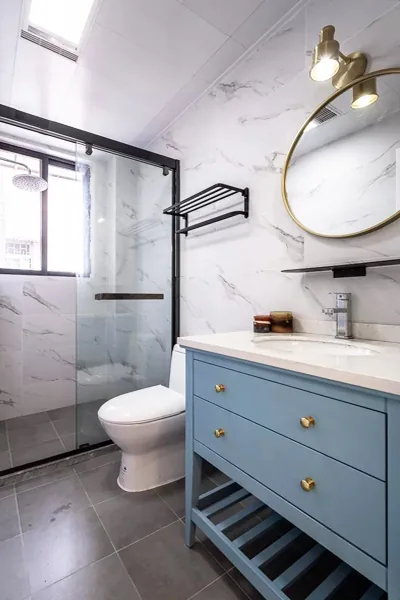
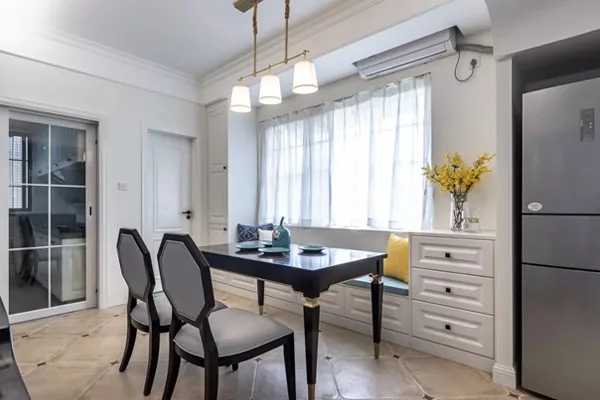
The dining area incorporates a built-in banquet-style seating unit with integrated storage cabinets. Positioned adjacent to the window, the banquette allows diners to enjoy outdoor views during meals, while the refrigerator is seamlessly recessed into the wall for a cohesive, streamlined appearance.
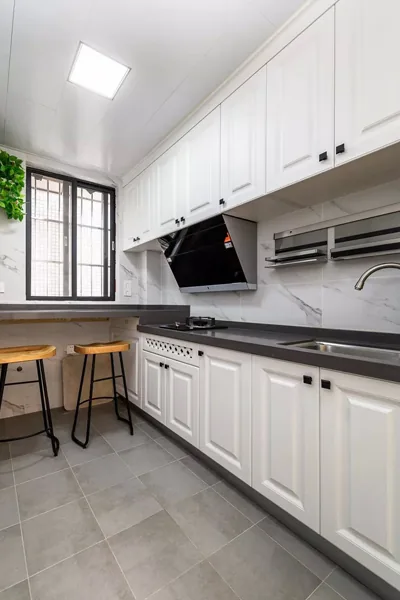
The kitchen features a linear cabinet layout complemented by a compact bar counter. Gray-toned flooring pairs elegantly with white cabinet doors, a black countertop, and marble wall tiles—creating a richly layered, visually balanced space.
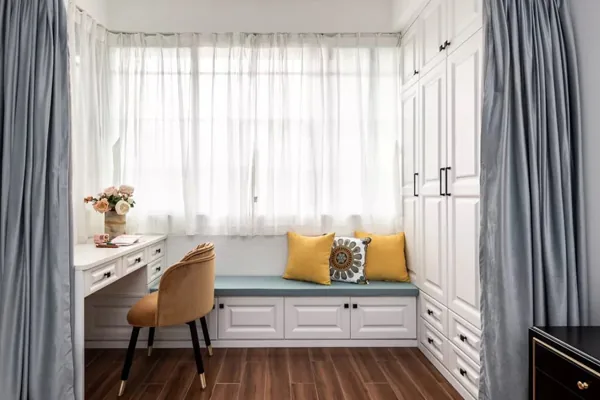
Today’s study serves far more than academic purposes: for many, it doubles as both a workspace and a leisure zone—often housing computers and multimedia equipment. Lighting should be moderate; overly bright illumination over extended periods may cause visual fatigue and reduce work efficiency.
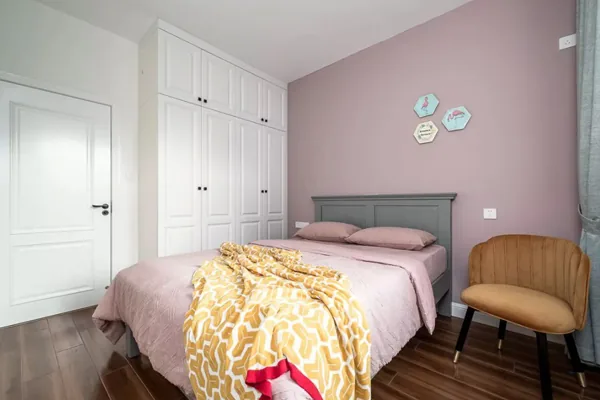
Children’s rooms should reflect their natural energy and vitality. Bright, vivid colors foster cheerful moods and support emotional well-being. Color choices directly influence children’s emotions and development—so thoughtful palette selection is essential. Avoid dull, somber tones, which can hinder healthy physical, psychological, and personality development.
That concludes our presentation of this American-style whole-house design project. If you enjoyed it, feel free to leave a comment for BOSNIE’s editorial team!