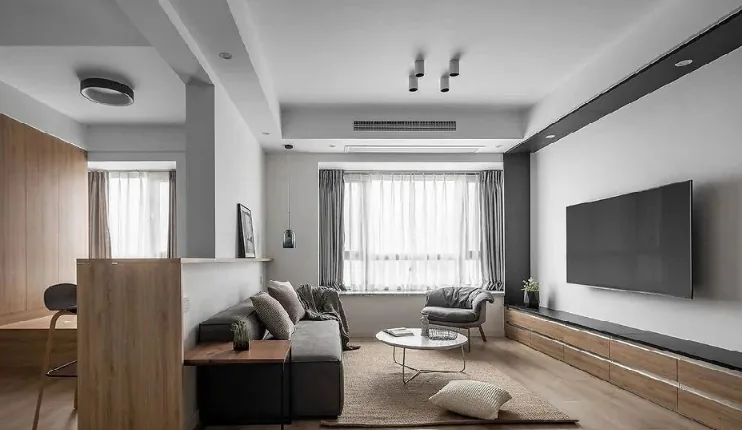
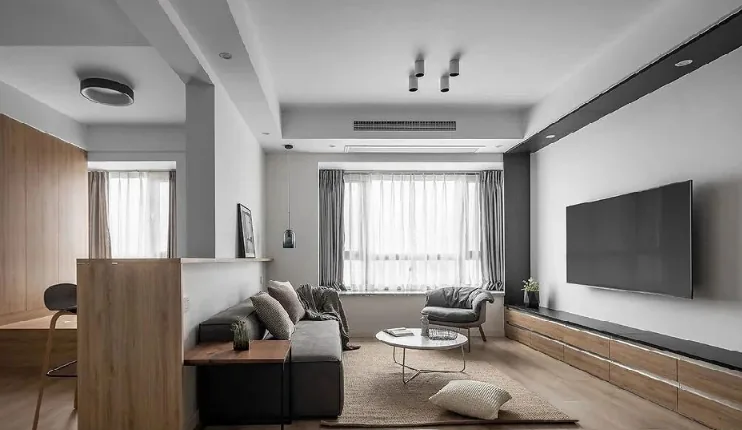
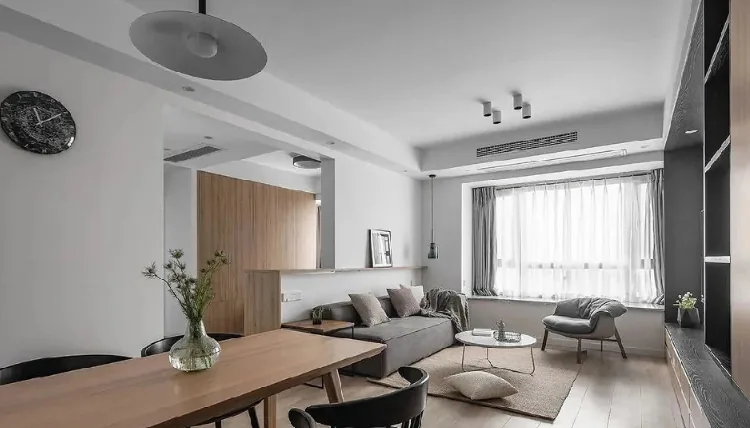
After the living room and study were connected, the space expanded. Two central air-conditioning units were installed, and a bar counter was built into the wall behind the sofa, serving as both a breakfast area and a desk. Wrapped around the wall, the bar counter acts as a transitional element between the living room and the study; though differentiated only by material, it introduces additional functionality and visual breaks.
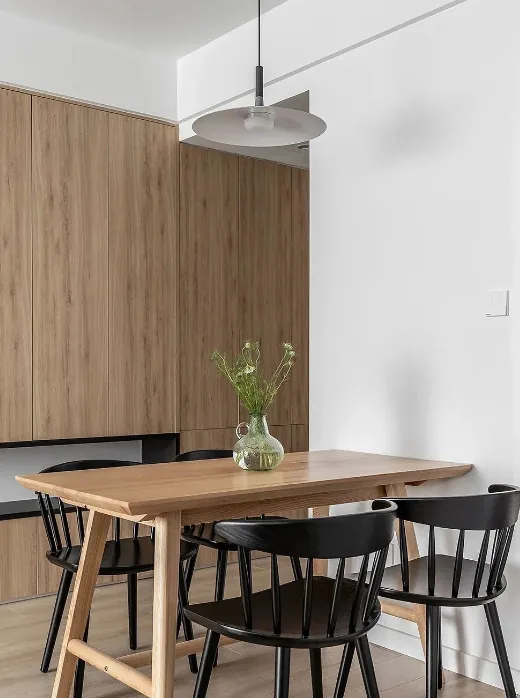
Starting from the entryway, a continuous row of shoe cabinets extends seamlessly into the dining‑room sideboard, maximizing storage while the combination of wood tones and black instantly enriches the wall’s presence.
The boundaries between spaces do not have to be rigidly defined; within the aesthetic principle of maintaining spatial harmony, they can exist in a more fluid, blurred state. A kitchen door concealed within the wall and alongside the refrigerator ensures privacy during cooking yet opens and closes with ease, respecting the distinct character and function of each space.
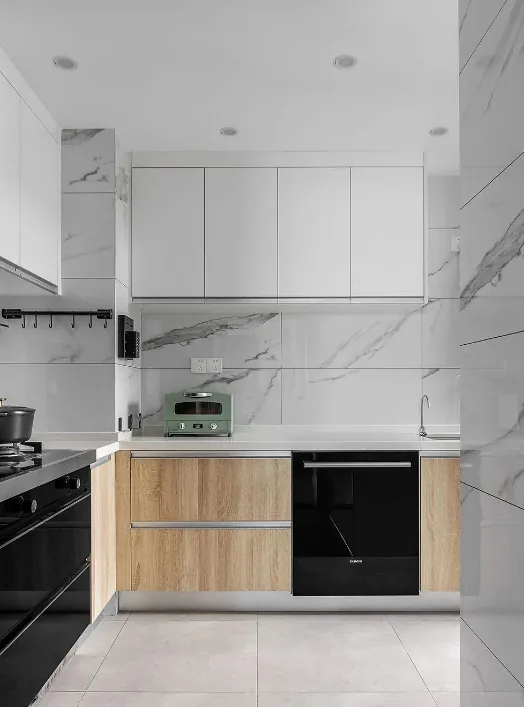
What we wanted was simple: for the kitchen to borrow light and space from the utility balcony, allowing both areas to operate independently and freely. Integrated stoves are increasingly popular, and one of their advantages is that the space once occupied by a bulky range hood can now be transformed into generous storage cabinets.
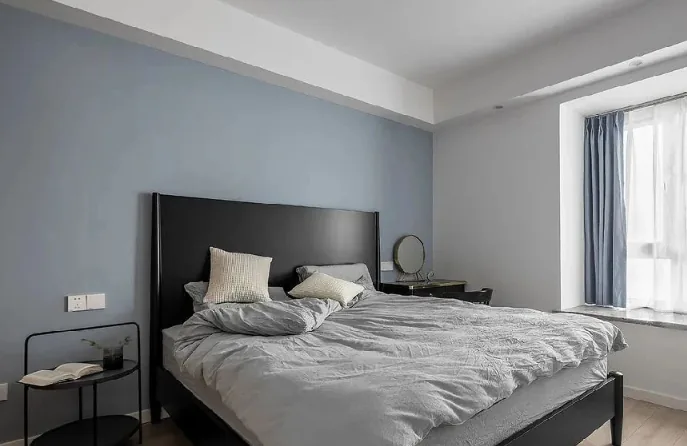
In bedroom design, comfort is always a key consideration, with color, lighting, and materials serving as its defining elements. Striking a balance, a gray‑blue accent wall combines the deep, refined elegance of gray with the subtle warmth of blue—neither cold and heavy nor melancholy and frivolous.
One side features a shelving unit, while the other accommodates a vanity, fully meeting the needs of the homeowner.
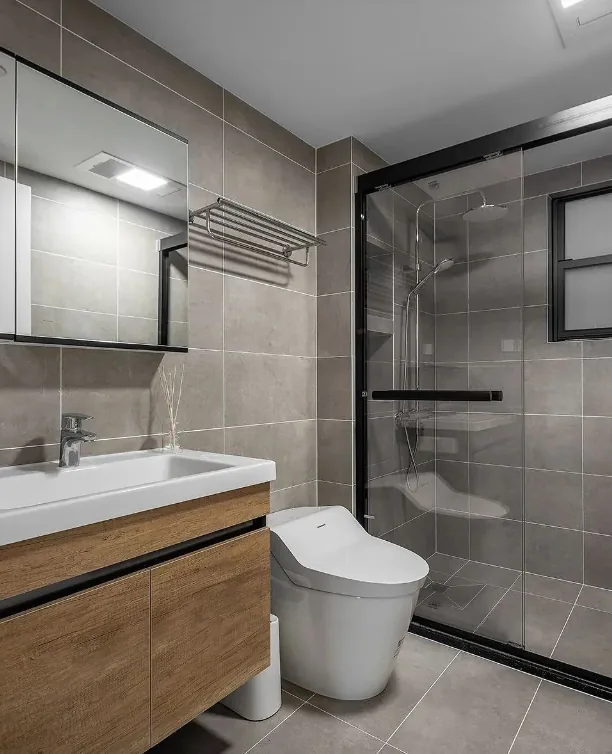
A wet‑dry‑separated bathroom effectively lightens the visual load, presenting a clean and orderly appearance.